


Cool white, persistent room-temperature phosphorescence in carbon dots embedded in a silica gel matrix
Literature Information
Publication Date
2017-05-31
DOI
10.1039/C7CP02731A
Impact Factor
3.676
Authors
Julin Joseph, Aji A. Anappara
View Original
Abstract
Herein we report the observation of room-temperature phosphorescence from carbon dots (CDs) embedded in a silica gel matrix. The precursors used in the synthesis (malonic acid and ethylene diamine) were chosen to have the surface of the CDs rich in CO and CN functionalities. The CDs in an aqueous dispersion exhibit an intense blue fluorescence and upon incorporation into silica gel demonstrate a green after-glow, which is visible even to the naked eye. The phosphorescence measurements indicated that the life-time of phosphorescence emission is about 1.8 s, under 380 nm excitation, which is the highest magnitude reported for CDs in solid-state matrices. Moreover, the 1931 CIE color parameters corresponding to the phosphorescence emission are in the white gamut region of the chromaticity diagram.
Recommended Journals

Nature Medicine

Organic Process Research & Development

Russian Journal of Applied Chemistry

Current Opinion in Solid State & Materials Science

Journal of Peptide Science

Acta Materialia

Journal of Saudi Chemical Society

Russian Chemical Bulletin

New Journal of Chemistry

Russian Journal of Coordination Chemistry
Related Literature
Fibrous polyaniline@manganese oxide nanocomposites as supercapacitor electrode materials and cathode catalysts for improved power production in microbial fuel cells
Sajid Ali Ansari, Nazish Parveen, Thi Hiep Han, Mohammad Omaish Ansari, Moo Hwan Cho
2016-03-11
Paper
DOI: 10.1039/C6CP00159A
How the number of fitting points for the slope of the mean-square displacement influences the experimentally determined particle size distribution from single-particle tracking
Dominique Ernst, Jürgen Köhler
2013-02-04
Communication
DOI: 10.1039/C3CP44391D
Tuning cesium–guanidinium in formamidinium tin triiodide perovskites with an ethylenediammonium additive for efficient and stable lead-free perovskite solar cells
Gabriella A. Tosado, Erjin Zheng, Qiuming Yu
2020-11-25
Paper
DOI: 10.1039/D0MA00520G
Sustainable route to methyl-9-hydroxononanoate (polymer precursor) by oxidative cleavage of fatty acid methyl ester from rapeseed oil
Kévin Louis, Laurence Vivier, Jean-Marc Clacens, Markus Brandhorst, Jean-Luc Dubois, Karine De Oliveira Vigier, Yannick Pouilloux
2013-10-04
Communication
DOI: 10.1039/C3GC41491D
Quantum-dot-encapsulated core–shell barcode particles from droplet microfluidics
Feika Bian, Huan Wang, Lingyu Sun, Yuxiao Liu, Yuanjin Zhao
2018-07-19
Paper
DOI: 10.1039/C8TB00946E
Glyoxylamide-based self-assembly hydrogels for sustained ciprofloxacin delivery
Vina R. Aldilla, Shashidhar Nizalapur, Christopher E. Marjo, Anne M. Rich, Kitty K. K. Ho, David StC. Black
2018-08-28
Paper
DOI: 10.1039/C8TB01290C
Isoreticular zirconium-based metal–organic frameworks: discovering mechanical trends and elastic anomalies controlling chemical structure stability
Matthew R. Ryder, Bartolomeo Civalleri, Jin-Chong Tan
2016-03-04
Paper
DOI: 10.1039/C6CP00864J
A biodegradable polyphosphoester-functionalized poly(disulfide) nanocarrier for reduction-triggered intracellular drug delivery
Pengfei Ju, Jian Hu, Fei Li, Youwen Cao, Lei Li, Dongjian Shi, Ying Hao, Mingzu Zhang, Jinlin He, Peihong Ni
2018-07-19
Paper
DOI: 10.1039/C8TB01566J
Critical factors governing vertical phase separation in polymer–PCBM blend films for organic solar cells
Min Kim, Jaewon Lee, Sae Byeok Jo, Dong Hun Sin, Hyomin Ko, Hansol Lee, Seung Goo Lee, Kilwon Cho
2016-09-16
Paper
DOI: 10.1039/C6TA06508B
You might also like
Compound Q&A
Are there alternatives to 1-(4-Chlorophenyl)-N-hydroxymethanimine (CAS: 3848-36-0) in synthesis?
When considering alternatives to 1-(4-Chlorophenyl)-N-hydroxymethanimine (CAS: 3...
3848-36-01-(4-Chlorophenyl)-N...
Compound Q&A
How should (1R,9S,10S,12S,14E,16S,19R,20R,21S,22R)-3,9,21-Trihydroxy-5,10,12,14,16,20,22-heptamethyl-23,24-dioxatetracyclo[17.3.1.1~6,9~.0~2,7~]tetracosa-2,5,7,14-tetraen-4-one (CAS: 183202-73-5) be stored?
This compound should be stored in a cool, dry place away from direct sunlight. I...
183202-73-5(1R,9S,10S,12S,14E,1...
Compound Q&A
How is 3-(4-Bromophenyl)-5-(2-fluorophenyl)-1,2,4-oxadiazole (CAS: 419553-16-5) typically synthesized?
3-(4-Bromophenyl)-5-(2-fluorophenyl)-1,2,4-oxadiazole is synthesized through a m...
419553-16-53-(4-Bromophenyl)-5-...
Compound Q&A
How is 5-Chloro-2-(4-chlorophenyl)-4-methyl-6-[3-(1-piperidinyl)propoxy]pyrimidine (CAS: 1639220-19-1) typically synthesized?
5-Chloro-2-(4-chlorophenyl)-4-methyl-6-[3-(1-piperidinyl)propoxy]pyrimidine (CAS...
1639220-19-15-Chloro-2-(4-chloro...
Compound Q&A
What industries use 2-Chloro-4-(difluoromethoxy)pyridine (CAS: 1206978-15-5)?
2-Chloro-4-(difluoromethoxy)pyridine is used in the pharmaceutical industry for ...
1206978-15-52-Chloro-4-(difluoro...
Compound Q&A
What regulatory guidelines apply to 3-Chloro-6-methylpyridazine (CAS: 1121-79-5)?
3-Chloro-6-methylpyridazine (CAS: 1121-79-5) is classified under the Globally Ha...
1121-79-53-Chloro-6-methylpyr...
Compound Q&A
Are there alternatives to Methyl 4,5-dimethyl-2-nitrobenzoate in synthesis?
Several alternatives can be used in the synthesis of Methyl 4,5-dimethyl-2-nitro...
90922-74-0Methyl 4,5-dimethyl-...
Compound Q&A
Are there alternatives to (2E,2'E)-3,3'-(1,4-Phenylene)bisacrylaldehyde in synthesis?
Alternatives to (2E,2'E)-3,3'-(1,4-Phenylene)bisacrylaldehyde include other acry...
63405-68-5(2E,2'E)-3,3'-(1,4-P...
Compound Q&A
What is 3-Amino-5-chloropyridin-2-ol hydrochloride (CAS: 1261906-29-9)?
3-Amino-5-chloropyridin-2-ol hydrochloride is an organic compound with the CAS n...
1261906-29-93-Amino-5-chloropyri...
Compound Q&A
What precautions should be taken when handling 6,7-Difluoro-2,3-dihydro-4H-chromen-4-one (CAS: 1092349-93-3)?
When handling 6,7-Difluoro-2,3-dihydro-4H-chromen-4-one, it is essential to wear...
1092349-93-36,7-Difluoro-2,3-dih...
Source Journal
Physical Chemistry Chemical Physics

CiteScore:
5.5
Self-citation Rate:
10.3%
Articles per Year:
3036
Physical Chemistry Chemical Physics (PCCP) is an international journal co-owned by 19 physical chemistry and physics societies from around the world. This journal publishes original, cutting-edge research in physical chemistry, chemical physics and biophysical chemistry. To be suitable for publication in PCCP, articles must include significant innovation and/or insight into physical chemistry; this is the most important criterion that reviewers and Editors will judge against when evaluating submissions. The journal has a broad scope and welcomes contributions spanning experiment, theory, computation and data science. Topical coverage includes spectroscopy, dynamics, kinetics, statistical mechanics, thermodynamics, electrochemistry, catalysis, surface science, quantum mechanics, quantum computing and machine learning. Interdisciplinary research areas such as polymers and soft matter, materials, nanoscience, energy, surfaces/interfaces, and biophysical chemistry are welcomed if they demonstrate significant innovation and/or insight into physical chemistry. Joined experimental/theoretical studies are particularly appreciated when complementary and based on up-to-date approaches.
Recommended Compounds
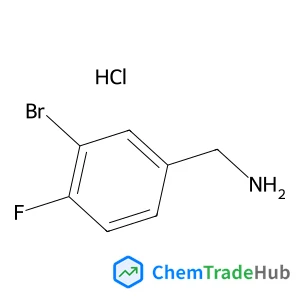
1-(3-Bromo-4-fluorophenyl)methanamine hydrochloride (1:1)
CAS Number:
202865-68-7
Molecular Formula:
C7H8BrClFN
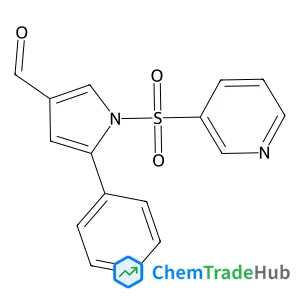
5-Phenyl-1-(pyridin-3-ylsulfonyl)-1H-pyrrole-3-carbaldehyde
CAS Number:
881676-90-0
Molecular Formula:
C16H12N2O3S
Recommended Suppliers



Disclaimer
This page provides academic journal information for reference and research purposes only. We are not affiliated with any journal publishers and do not handle publication submissions. For publication-related inquiries, please contact the respective journal publishers directly.
If you notice any inaccuracies in the information displayed, please contact us at support@chemtradehub.com. We will promptly review and address your concerns.