













The importance of solvent reorganisation in the effect of an ionic liquid on a unimolecular substitution process
Literature Information
Publication Date
2008-06-09
DOI
10.1039/B805255G
Impact Factor
6.222
Authors
Hon Man Yau, Susan A. Barnes, James M. Hook, Tristan G. A. Youngs, Anna K. Croft, Jason B. Harper
View Original
Abstract
Temperature dependent rate studies demonstrate an enthalpic benefit and an entropic cost associated with the change in the rate of a unimolecular substitution process on addition of a high proportion of an ionic liquid, the latter effect being supported by molecular dynamics simulations.
Recommended Journals
Related Literature
Optical and electronic properties of neutral and charged oligodiacetylene clusters
2002-05-14
Paper
DOI: 10.1039/B111624J
Electropolymerization of 2-methoxyaniline. Polymerization kinetics and phenazine insertion at low monomer concentration
F. A. Viva, E. M. Andrade, M. I. Florit, F. V. Molina
2002-04-26
Paper
DOI: 10.1039/B110705D
Coupling between dipole-bound and valence states: the nitromethane anion
2002-05-13
Paper
DOI: 10.1039/B202143A
Nano-Raman imaging of Cu–TCNQ clusters in TCNQ thin films by scanning near-field optical microscopy
P. G. Gucciardi, S. Trusso, C. Vasi, S. Patanè, M. Allegrini
2002-05-07
Paper
DOI: 10.1039/B110475F
Surface photochemistry on confined systems: UV-laser-induced photodesorption of NO from Pd-nanostructures on Al2O3
Margarethe Kampling, Katharina Al-Shamery, Hans-Joachim Freund, Markus Wilde, Katsuyuki Fukutani, Yoshitada Murata
2002-05-09
Paper
DOI: 10.1039/B201357F
Dielectric spectroscopy of ion-pairing and hydration in aqueous tetra-n-alkylammonium halide solutions
Richard Buchner, Christian Hölzl, Jochen Stauber, Josef Barthel
2002-04-29
Paper
DOI: 10.1039/B110361J
Structure and mobility of cyclohexane as a solvent for trans-polyisoprene
2002-05-01
Paper
DOI: 10.1039/B111437A
Site selective hydroxylation of the MgO surface
O. Diwald, M. Sterrer, E. Knözinger
2002-05-14
Paper
DOI: 10.1039/B110334B
A Mössbauer study of In–Fe2O3/HZSM-5 catalysts for the selective catalytic reduction of NO by methane
Xiaodong Wang, Xuqun Zhao, Jianyi Shen, Xiaoying Sun, Tao Zhang, Liwu Lin
2002-05-15
Paper
DOI: 10.1039/B110515A
NO reduction with CO in the presence of O2 over Al2O3-supported and Cu-based catalysts
Takashi Yamamoto, Tsunehiro Tanaka, Ryoji Kuma, Sosuke Suzuki, Fumiaki Amano, Yutaka Shimooka, Yoshiumi Kohno, Takuzo Funabiki, Satohiro Yoshida
2002-04-29
Paper
DOI: 10.1039/B201120B
You might also like
Compound Q&A
How should waste containing (6-Bromo-2-naphthyl)oxy](dimethyl)(2-methyl-2-propanyl)silane be handled?
Waste containing (6-Bromo-2-naphthyl)oxy](dimethyl)(2-methyl-2-propanyl)silane (...
100751-65-3[(6-Bromo-2-naphthyl...
Compound Q&A
How is 7-Fluoro-4-isoquinolinecarboxylic acid (CAS: 1841081-40-0) typically synthesized?
7-Fluoro-4-isoquinolinecarboxylic acid can be synthesized via a multi-step proce...
1841081-40-07-Fluoro-4-isoquinol...
Compound Q&A
What are the physical and chemical properties of 2,3,5,6-Tetrabromothieno[3,2-b]thiophene (CAS: 124638-53-5)?
2,3,5,6-Tetrabromothieno[3,2-b]thiophene is a crystalline compound with a high m...
124638-53-52,3,5,6-Tetrabromoth...
Compound Q&A
Is 1-[4-(Benzylamino)-7,8-dihydro-5H-pyrano[4,3-d]pyrimidin-2-yl]-2-methyl-1H-indole-4-carboxamide (CAS: 1542705-92-9) safe?
1-[4-(Benzylamino)-7,8-dihydro-5H-pyrano[4,3-d]pyrimidin-2-yl]-2-methyl-1H-indol...
1542705-92-91-[4-(Benzylamino)-7...
Compound Q&A
What is the market or research trend for imidazo[5,1-d]-1,2,3,5-tetrazine-8-carboxylic acid, 3,4-dihydro-3-methyl-4-oxo- (CAS: 113942-30-6)?
The market for imidazo[5,1-d]-1,2,3,5-tetrazine-8-carboxylic acid, 3,4-dihydro-3...
113942-30-6Imidazo[5,1-d]-1,2,3...
Compound Q&A
What is 3-(Triisopropylsilyl)propiolaldehyde (CAS: 163271-80-5)?
3-(Triisopropylsilyl)propiolaldehyde is a synthetic organic compound with the CA...
163271-80-53-(Triisopropylsilyl...
Compound Q&A
What regulatory guidelines apply to 6-Nitro-2H-1,4-benzoxazin-3(4H)-one (CAS: 81721-87-1)?
6-Nitro-2H-1,4-benzoxazin-3(4H)-one (CAS: 81721-87-1) is subject to various regu...
81721-87-16-Nitro-2H-1,4-benzo...
Compound Q&A
How should waste containing (3-Fluorophenyl)(4-{[(2-methyl-2-propanyl)oxy]carbonyl}-1-piperazinyl)acetic acid (CAS: 885272-91-3) be handled?
Waste containing (3-Fluorophenyl)(4-{[(2-methyl-2-propanyl)oxy]carbonyl}-1-piper...
885272-91-3(3-Fluorophenyl)(4-{...
Compound Q&A
What are the physical and chemical properties of N,N'-4,4'-Biphenyldiyldiisonicotinamide (CAS: 55119-40-9)?
N,N'-4,4'-Biphenyldiyldiisonicotinamide is a white crystalline solid with a mole...
55119-40-9N,N'-4,4'-Biphenyldi...
Compound Q&A
What industries use 6-Bromo-8-fluoro-2-quinazolinol (CAS: 1036756-15-6)?
6-Bromo-8-fluoro-2-quinazolinol is primarily used in the pharmaceutical industry...
1036756-15-66-Bromo-8-fluoro-2-q...
Source Journal
Chemical Communications

CiteScore:
8.6
Self-citation Rate:
4.7%
Articles per Year:
2458
ChemComm publishes urgent research which is of outstanding significance and interest to experts in the field, while also appealing to the journal’s broad chemistry readership. Our communication format is ideally suited to short, urgent studies that are of such importance that they require accelerated publication. Our scope covers all topics in chemistry, and research at the interface of chemistry and other disciplines (such as materials science, nanoscience, physics, engineering and biology) where there is a significant novelty in the chemistry aspects. Major topic areas covered include: Analytical Chemistry Catalysis Chemical Biology and medicinal chemistry Computational Chemistry and Machine Learning Energy and sustainable chemistry Environmental Chemistry Green Chemistry Inorganic Chemistry Materials Chemistry Nanoscience Organic Chemistry Physical Chemistry Polymer Chemistry Supramolecular Chemistry
Recommended Compounds

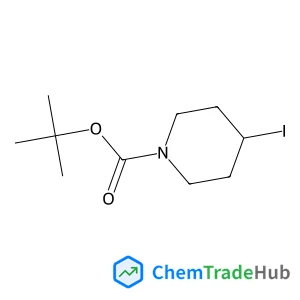
2-Methyl-2-propanyl 4-iodo-1-piperidinecarboxylate
CAS Number:
301673-14-3
Molecular Formula:
C10H18INO2
Recommended Suppliers





Disclaimer
This page provides academic journal information for reference and research purposes only. We are not affiliated with any journal publishers and do not handle publication submissions. For publication-related inquiries, please contact the respective journal publishers directly.
If you notice any inaccuracies in the information displayed, please contact us at support@chemtradehub.com. We will promptly review and address your concerns.