












The VUV electronic spectroscopy of acetone studied by synchrotron radiation
Literature Information
Publication Date
2007-11-16
DOI
10.1039/B708580J
Impact Factor
3.676
Authors
M. Nobre, A. Fernandes, F. Ferreira da Silva, R. Antunes, D. Almeida, V. Kokhan, S. V. Hoffmann, N. J. Mason, S. Eden
View Original
Abstract
The electronic state spectroscopy of acetone (CH3)2CO has been investigated using high-resolution VUV photoabsorption spectroscopy in the energy range 3.7–10.8 eV. New vibronic structure has been observed, notably in the low energy absorption band assigned to the 11A1 → 11A2 (ny → π*) transition. The local absorption maximum at 7.85 eV has been tentatively attributed to the 41A1 (π → π*) transition. Six Rydberg series converging to the lowest ionisation energy (9.708 eV) have been assigned as well as a newly-resolved ns Rydberg series converging to the first ionic excited state (12.590 eV). Rydberg orbitals of each series have been classified according to the magnitude of the quantum defect (δ) and are extended to higher quantum numbers than in the previous analyses.
Related Literature
Template-free synthesis of monodisperse Cu2WO4(OH)2 round and elliptical hollow spheres with a ligand-assisted dissolution process
Wei Cheng, Kaibin Tang, Zhongping Liu, Jie Sheng, Yunxia Qi
2009-10-14
Communication
DOI: 10.1039/B914086G
Molecular recognition of cationic phenothiazinium and phenoxazinium dyes with π-extended 2′-deoxyadenosine nucleotides
Karina Mondragón-Vásquez, Hugo Morales-Rojas
2009-10-06
Communication
DOI: 10.1039/B913315A
Pyrimidine based highly sensitive fluorescent receptor for Al3+ showing dual signalling mechanism
K. K. Upadhyay, Ajit Kumar
2010-08-31
Paper
DOI: 10.1039/C0OB00171F
Intrinsic acidity and electrophilicity of gaseous propargyl/allenyl carbocations
Priscila M. Lalli, Yuri E. Corilo, Patrícia V. Abdelnur, Marcos N. Eberlin
2010-03-29
Paper
DOI: 10.1039/C001985B
Electrochemistry at carbon nanotubes: perspective and issues
Ioana Dumitrescu, Patrick R. Unwin, Julie V. Macpherson
2009-09-23
Feature Article
DOI: 10.1039/B909734A
Solution-processable semiconducting thin-film transistors using single-walled carbon nanotubes chemically modified by organic radical initiators
Chun Wei Lee, Xuanding Han, Fuming Chen, Yanping Xu, Yizhong Huang, Mary B. Chan-Park, Peng Chen, Lain-Jong Li
2009-10-27
Communication
DOI: 10.1039/B915508B
Highly efficient macrolactonization of ω-hydroxy acids using benzotriazole esters: synthesis of Sansalvamide A
José Antonio Morales-Serna, Ericka Sánchez, Ricardo Velázquez, Jorge Bernal, Eréndira García-Ríos, Rubén Gaviño, Guillermo Negrón-Silva, Jorge Cárdenas
2010-08-31
Paper
DOI: 10.1039/C0OB00161A
Synthesis of homogeneous antifreeze glycopeptidesvia a ligation–desulfurisation strategy
James Garner, Katrina A. Jolliffe, Margaret M. Harding, Richard J. Payne
2009-10-21
Communication
DOI: 10.1039/B918021D
Development of 2,6-carboxy-substituted boron dipyrromethene (BODIPY) as a novel scaffold of ratiometric fluorescent probes for live cell imaging
Yasuteru Urano, Hirotatsu Kojima, Takuya Terai, Kenjiro Hanaoka
2009-10-08
Communication
DOI: 10.1039/B917209B
Theoretical investigations on the formation of nitrobenzanthrone-DNA Adducts
Volker M. Arlt, David H. Phillips, Jóhannes Reynisson
2011-05-26
Paper
DOI: 10.1039/C1OB05570D
You might also like
Compound Q&A
What industries use (1R,3S)-1,3-Cyclopentanediol (CAS: 16326-97-9)?
(1R,3S)-1,3-Cyclopentanediol finds applications in various industries. In the ph...
16326-97-9(1R,3S)-1,3-Cyclopen...
Compound Q&A
What precautions should be taken when handling N'-[4-(Dimethylamino)phenyl]-N,N-dimethyl-1,4-benzenediamine (CAS: 637-31-0)?
When handling N'-[4-(Dimethylamino)phenyl]-N,N-dimethyl-1,4-benzenediamine, it i...
637-31-0N'-[4-(Dimethylamino...
Compound Q&A
Are there alternatives to 5-(2,4-Difluorophenyl)-2-methoxypyrimidine (CAS: 1352318-16-1) in synthesis?
There are several alternatives to 5-(2,4-Difluorophenyl)-2-methoxypyrimidine in ...
1352318-16-15-(2,4-Difluoropheny...
Compound Q&A
What regulatory guidelines apply to 1-(3-Methoxyphenoxy)propan-2-ol (CAS: 382141-68-6)?
1-(3-Methoxyphenoxy)propan-2-ol (CAS: 382141-68-6) must comply with the Globally...
382141-68-61-(3-Methoxyphenoxy)...
Compound Q&A
Is Tetrodotoxin Citrate (CAS: 18660-81-6) safe?
Tetrodotoxin Citrate is extremely dangerous and should be handled with extreme c...
18660-81-6Tetrodotoxin Citrate
Compound Q&A
What are the main uses of 2-Methyl-2-propanyl [(1R,3S)-3-hydroxycyclopentyl]carbamate (CAS: 225641-84-9)?
2-Methyl-2-propanyl [(1R,3S)-3-hydroxycyclopentyl]carbamate (CAS: 225641-84-9) i...
225641-84-92-Methyl-2-propanyl ...
Compound Q&A
How should waste containing 4-(2-Hydroxyhexafluoroisopropyl)Benzoic Acid (CAS: 16261-80-6) be handled?
Waste containing 4-(2-Hydroxyhexafluoroisopropyl)Benzoic Acid (CAS: 16261-80-6) ...
16261-80-64-(2-Hydroxyhexafluo...
Compound Q&A
How is 2-Methyl-2-proanyl {(2S)-1-[(benzyloxy)amino]-3-hydroxy-3-methyl-1-oxo-2-butanyl}carbamate (CAS: 102507-19-7) typically synthesized?
2-Methyl-2-proanyl {(2S)-1-[(benzyloxy)amino]-3-hydroxy-3-methyl-1-oxo-2-butanyl...
102507-19-72-Methyl-2-propanyl ...
Compound Q&A
What is Benzeneethanamine, α-ethyl-, hydrochloride (1:1) (CAS: 20735-15-3)?
Benzeneethanamine, α-ethyl-, hydrochloride (1:1) is an organic compound with the...
20735-15-3Benzeneethanamine, α...
Compound Q&A
Are there alternatives to 3-{(E)-[4-(Dimethylamino)phenyl]diazenyl}benzoic acid (CAS: 20691-84-3) in synthesis?
In the synthesis of compounds similar to 3-{(E)-[4-(Dimethylamino)phenyl]diazeny...
20691-84-33-{(E)-[4-(Dimethyla...
Source Journal
Physical Chemistry Chemical Physics

CiteScore:
5.5
Self-citation Rate:
10.3%
Articles per Year:
3036
Physical Chemistry Chemical Physics (PCCP) is an international journal co-owned by 19 physical chemistry and physics societies from around the world. This journal publishes original, cutting-edge research in physical chemistry, chemical physics and biophysical chemistry. To be suitable for publication in PCCP, articles must include significant innovation and/or insight into physical chemistry; this is the most important criterion that reviewers and Editors will judge against when evaluating submissions. The journal has a broad scope and welcomes contributions spanning experiment, theory, computation and data science. Topical coverage includes spectroscopy, dynamics, kinetics, statistical mechanics, thermodynamics, electrochemistry, catalysis, surface science, quantum mechanics, quantum computing and machine learning. Interdisciplinary research areas such as polymers and soft matter, materials, nanoscience, energy, surfaces/interfaces, and biophysical chemistry are welcomed if they demonstrate significant innovation and/or insight into physical chemistry. Joined experimental/theoretical studies are particularly appreciated when complementary and based on up-to-date approaches.
Recommended Compounds
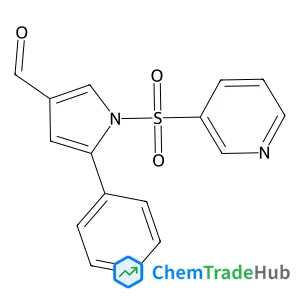
5-Phenyl-1-(pyridin-3-ylsulfonyl)-1H-pyrrole-3-carbaldehyde
CAS Number:
881676-90-0
Molecular Formula:
C16H12N2O3S
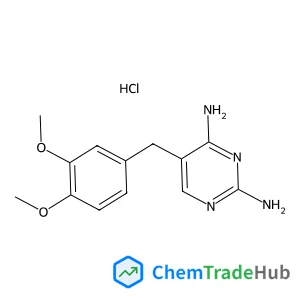
5-(3,4-Dimethoxybenzyl)-2,4-pyrimidinediamine hydrochloride (1:1)
CAS Number:
2507-23-5
Molecular Formula:
C13H17ClN4O2
Recommended Suppliers





Disclaimer
This page provides academic journal information for reference and research purposes only. We are not affiliated with any journal publishers and do not handle publication submissions. For publication-related inquiries, please contact the respective journal publishers directly.
If you notice any inaccuracies in the information displayed, please contact us at support@chemtradehub.com. We will promptly review and address your concerns.