












A trisulfide-linked glycoprotein
Literature Information
Publication Date
2007-07-04
DOI
10.1039/B706682A
Impact Factor
6.222
Authors
Gonçalo J. L. Bernardes, Justin P. Marston, Andrei S. Batsanov, Judith A. K. Howard, Benjamin G. Davis
View Original
Abstract
The first member of a novel class of chemoselective reagents, glycosyl methanedithiosulfonates, has been synthesized, identified and employed in the first examples of chemical, site-selective construction of a trisulfide-modified protein with complete conversion.
Recommended Journals
Related Literature
Low-frequency depolarized Raman-spectral density of liquid water from femtosecond optical Kerr-effect measurements: Lineshape analysis of restricted translational modes
Kathrin Winkler, Jörg Lindner, Peter Vöhringer
2002-05-01
Paper
DOI: 10.1039/B200299J
Solubilization of organic compounds into as-synthesized spherical mesoporous silica
Yoshikazu Miyake, Toshimi Yumoto, Hajime Kitamura, Taichi Sugimoto
2002-05-10
Paper
DOI: 10.1039/B200074C
Development of kinetic models for the formation and degradation of unsaturated hydrocarbons at high temperature
2002-05-02
Paper
DOI: 10.1039/B110563A
Mechanism of the reaction of OH radicals with acetone and acetaldehyde at 251 and 296 K
Geoffrey S. Tyndall, John J. Orlando, Timothy J. Wallington, Michael D. Hurley, Masashi Goto, Masahiro Kawasaki
2002-04-25
Paper
DOI: 10.1039/B111195G
Dynamical response of liquid water in confined geometry by laser and neutron spectroscopies
Vincenza Crupi, A. Josè Dianoux, Domenico Majolino, Placido Migliardo, Valentina Venuti
2002-05-14
Paper
DOI: 10.1039/B200115M
The effect of water on the enantioselective hydrogenation of ethyl pyruvate and butane-2,3-dione using cinchona-modified Pt/Al2O3
Richard P. K. Wells, Neil R. McGuire, Xiaobao Li, Robert L. Jenkins, Paul J. Collier, Robin Whyman, Graham J. Hutchings
2002-05-14
Paper
DOI: 10.1039/B200099G
Phase behaviour of room temperature ionic liquid solutions: an unusually large co-solvent effect in (water + ethanol)
Vesna Najdanovic-Visak, José M. S. S. Esperança, Luís P. N. Rebelo, Manuel Nunes da Ponte, Henrique J. R. Guedes, Kenneth R. Seddon, Jerzy Szydlowski
2002-04-02
Communication
DOI: 10.1039/B201723G
Optical and electronic properties of neutral and charged oligodiacetylene clusters
2002-05-14
Paper
DOI: 10.1039/B111624J
Active sites in sol–gel prepared silica-alumina for photoinduced non-oxidative methane coupling
Hisao Yoshida, Norimitsu Matsushita, Yuko Kato, Tadashi Hattori
2002-04-22
Paper
DOI: 10.1039/B111101A
You might also like
Compound Q&A
How should waste containing (6-Bromo-2-naphthyl)oxy](dimethyl)(2-methyl-2-propanyl)silane be handled?
Waste containing (6-Bromo-2-naphthyl)oxy](dimethyl)(2-methyl-2-propanyl)silane (...
100751-65-3[(6-Bromo-2-naphthyl...
Compound Q&A
How is 7-Fluoro-4-isoquinolinecarboxylic acid (CAS: 1841081-40-0) typically synthesized?
7-Fluoro-4-isoquinolinecarboxylic acid can be synthesized via a multi-step proce...
1841081-40-07-Fluoro-4-isoquinol...
Compound Q&A
What are the physical and chemical properties of 2,3,5,6-Tetrabromothieno[3,2-b]thiophene (CAS: 124638-53-5)?
2,3,5,6-Tetrabromothieno[3,2-b]thiophene is a crystalline compound with a high m...
124638-53-52,3,5,6-Tetrabromoth...
Compound Q&A
Is 1-[4-(Benzylamino)-7,8-dihydro-5H-pyrano[4,3-d]pyrimidin-2-yl]-2-methyl-1H-indole-4-carboxamide (CAS: 1542705-92-9) safe?
1-[4-(Benzylamino)-7,8-dihydro-5H-pyrano[4,3-d]pyrimidin-2-yl]-2-methyl-1H-indol...
1542705-92-91-[4-(Benzylamino)-7...
Compound Q&A
What is the market or research trend for imidazo[5,1-d]-1,2,3,5-tetrazine-8-carboxylic acid, 3,4-dihydro-3-methyl-4-oxo- (CAS: 113942-30-6)?
The market for imidazo[5,1-d]-1,2,3,5-tetrazine-8-carboxylic acid, 3,4-dihydro-3...
113942-30-6Imidazo[5,1-d]-1,2,3...
Compound Q&A
What is 3-(Triisopropylsilyl)propiolaldehyde (CAS: 163271-80-5)?
3-(Triisopropylsilyl)propiolaldehyde is a synthetic organic compound with the CA...
163271-80-53-(Triisopropylsilyl...
Compound Q&A
What regulatory guidelines apply to 6-Nitro-2H-1,4-benzoxazin-3(4H)-one (CAS: 81721-87-1)?
6-Nitro-2H-1,4-benzoxazin-3(4H)-one (CAS: 81721-87-1) is subject to various regu...
81721-87-16-Nitro-2H-1,4-benzo...
Compound Q&A
How should waste containing (3-Fluorophenyl)(4-{[(2-methyl-2-propanyl)oxy]carbonyl}-1-piperazinyl)acetic acid (CAS: 885272-91-3) be handled?
Waste containing (3-Fluorophenyl)(4-{[(2-methyl-2-propanyl)oxy]carbonyl}-1-piper...
885272-91-3(3-Fluorophenyl)(4-{...
Compound Q&A
What are the physical and chemical properties of N,N'-4,4'-Biphenyldiyldiisonicotinamide (CAS: 55119-40-9)?
N,N'-4,4'-Biphenyldiyldiisonicotinamide is a white crystalline solid with a mole...
55119-40-9N,N'-4,4'-Biphenyldi...
Compound Q&A
What industries use 6-Bromo-8-fluoro-2-quinazolinol (CAS: 1036756-15-6)?
6-Bromo-8-fluoro-2-quinazolinol is primarily used in the pharmaceutical industry...
1036756-15-66-Bromo-8-fluoro-2-q...
Source Journal
Chemical Communications

CiteScore:
8.6
Self-citation Rate:
4.7%
Articles per Year:
2458
ChemComm publishes urgent research which is of outstanding significance and interest to experts in the field, while also appealing to the journal’s broad chemistry readership. Our communication format is ideally suited to short, urgent studies that are of such importance that they require accelerated publication. Our scope covers all topics in chemistry, and research at the interface of chemistry and other disciplines (such as materials science, nanoscience, physics, engineering and biology) where there is a significant novelty in the chemistry aspects. Major topic areas covered include: Analytical Chemistry Catalysis Chemical Biology and medicinal chemistry Computational Chemistry and Machine Learning Energy and sustainable chemistry Environmental Chemistry Green Chemistry Inorganic Chemistry Materials Chemistry Nanoscience Organic Chemistry Physical Chemistry Polymer Chemistry Supramolecular Chemistry
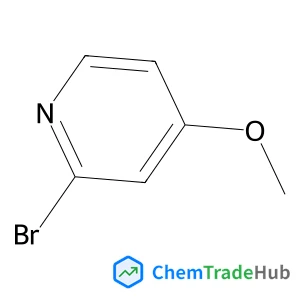
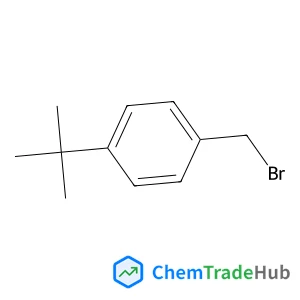
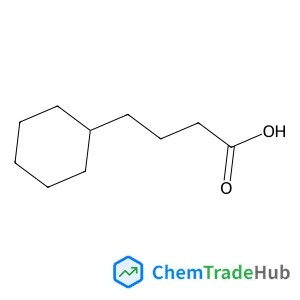
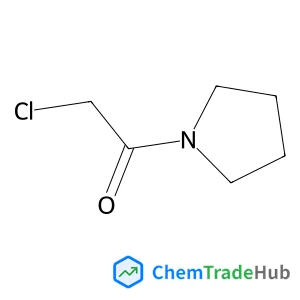
Recommended Compounds
Recommended Suppliers





Disclaimer
This page provides academic journal information for reference and research purposes only. We are not affiliated with any journal publishers and do not handle publication submissions. For publication-related inquiries, please contact the respective journal publishers directly.
If you notice any inaccuracies in the information displayed, please contact us at support@chemtradehub.com. We will promptly review and address your concerns.