













Active sites in sol–gel prepared silica-alumina for photoinduced non-oxidative methane coupling
Literature Information
Publication Date
2002-04-22
DOI
10.1039/B111101A
Impact Factor
3.676
Authors
Hisao Yoshida, Norimitsu Matsushita, Yuko Kato, Tadashi Hattori
View Original
Abstract
The photoinduced non-oxidative methane coupling at room temperature was examined by using a series of silica-alumina samples prepared by a sol–gel method, in order to clarify the photoactive sites of silica-alumina. The maximum yield of ethane, the main product in this reaction condition, was obtained on the sample containing around 20 mol% of Al. The variation of ethane yield was consistent with the variation of UV-absorption intensity. Ethene as the minor product, which is obtained by thermal desorption after photoreaction, was produced on the samples of larger Al content. The aluminium sites in the low Al content samples exhibited higher specific activity and higher ethane selectivity than those in high Al content samples. The silica-alumina sample was characterized by using N2-adsorption, XRD, XPS and Al K-edge XANES. In addition to UV spectroscopy, phosphorescence emission spectroscopy was also applied to clarify the photoactivation properties of silica-alumina. It is concluded that the highly dispersed and isolated tetrahedral AlO4 species in silica matrix, which exhibit the fine structural phosphorescence spectra centred at 520 nm, would be the highly active sites for ethane formation. On the other hand, the aggregated Al oxide species would be the active sites for producing both ethane and ethene with low activity.
Related Literature
Recent advances in tunable metal–support interactions for enhancing the photocatalytic nitrogen reduction reaction
Bing-Hao Wang, Guang-Hui Chen, Biao Hu, Xiong Wang, Sheng Tian, Xing-Sheng Hu, Yang Li, Chao Peng
2023-09-15
Review Article
DOI: 10.1039/D3EY00191A
Polyamidoxime (PAO) granules for solar-enhanced uranium extraction from seawater
Xue Zhang, Qianhong Gao, Dadong Shao
2023-11-24
Paper
DOI: 10.1039/D3VA00179B
Single atom catalysts for water electrolysis: from catalyst-coated substrate to catalyst-coated membrane
Sun Hwa Park, Ki Chang Kwon, Jong Hun Kang, Min Sang Kwon
2023-10-05
Review Article
DOI: 10.1039/D3EY00165B
Modified Cu–Zn–Al mixed oxide dual function materials enable reactive carbon capture to methanol
Chae Jeong-Potter, Martha A. Arellano-Treviño, W. Wilson McNeary, Alexander J. Hill, Daniel A. Ruddy, Anh T. To
2023-11-08
Communication
DOI: 10.1039/D3EY00254C
Reaction microenvironment control in membrane electrode assemblies for CO2 electrolysis
Dunfeng Gao, Juan-Jesús Velasco-Vélez, Guoxiong Wang
2023-09-13
Perspective
DOI: 10.1039/D3EY00155E
Tough tetrazine-functionalized styrene–butadiene rubber with self-adhesion through zinc–nitrogen coordination
Katsuhiko Tsunoda, Hideyuki Otsuka
2023-09-12
Paper
DOI: 10.1039/D3LP00112A
Probing the structure–property relationships of supported copper oxide nanoclusters for methane activation
Xijun Wang, Kaihang Shi, Anyang Peng, Randall Q. Snurr
2023-11-16
Paper
DOI: 10.1039/D3EY00234A
You might also like
Compound Q&A
How should waste containing (6-Bromo-2-naphthyl)oxy](dimethyl)(2-methyl-2-propanyl)silane be handled?
Waste containing (6-Bromo-2-naphthyl)oxy](dimethyl)(2-methyl-2-propanyl)silane (...
100751-65-3[(6-Bromo-2-naphthyl...
Compound Q&A
How is 7-Fluoro-4-isoquinolinecarboxylic acid (CAS: 1841081-40-0) typically synthesized?
7-Fluoro-4-isoquinolinecarboxylic acid can be synthesized via a multi-step proce...
1841081-40-07-Fluoro-4-isoquinol...
Compound Q&A
What are the physical and chemical properties of 2,3,5,6-Tetrabromothieno[3,2-b]thiophene (CAS: 124638-53-5)?
2,3,5,6-Tetrabromothieno[3,2-b]thiophene is a crystalline compound with a high m...
124638-53-52,3,5,6-Tetrabromoth...
Compound Q&A
Is 1-[4-(Benzylamino)-7,8-dihydro-5H-pyrano[4,3-d]pyrimidin-2-yl]-2-methyl-1H-indole-4-carboxamide (CAS: 1542705-92-9) safe?
1-[4-(Benzylamino)-7,8-dihydro-5H-pyrano[4,3-d]pyrimidin-2-yl]-2-methyl-1H-indol...
1542705-92-91-[4-(Benzylamino)-7...
Compound Q&A
What is the market or research trend for imidazo[5,1-d]-1,2,3,5-tetrazine-8-carboxylic acid, 3,4-dihydro-3-methyl-4-oxo- (CAS: 113942-30-6)?
The market for imidazo[5,1-d]-1,2,3,5-tetrazine-8-carboxylic acid, 3,4-dihydro-3...
113942-30-6Imidazo[5,1-d]-1,2,3...
Compound Q&A
What is 3-(Triisopropylsilyl)propiolaldehyde (CAS: 163271-80-5)?
3-(Triisopropylsilyl)propiolaldehyde is a synthetic organic compound with the CA...
163271-80-53-(Triisopropylsilyl...
Compound Q&A
What regulatory guidelines apply to 6-Nitro-2H-1,4-benzoxazin-3(4H)-one (CAS: 81721-87-1)?
6-Nitro-2H-1,4-benzoxazin-3(4H)-one (CAS: 81721-87-1) is subject to various regu...
81721-87-16-Nitro-2H-1,4-benzo...
Compound Q&A
How should waste containing (3-Fluorophenyl)(4-{[(2-methyl-2-propanyl)oxy]carbonyl}-1-piperazinyl)acetic acid (CAS: 885272-91-3) be handled?
Waste containing (3-Fluorophenyl)(4-{[(2-methyl-2-propanyl)oxy]carbonyl}-1-piper...
885272-91-3(3-Fluorophenyl)(4-{...
Compound Q&A
What are the physical and chemical properties of N,N'-4,4'-Biphenyldiyldiisonicotinamide (CAS: 55119-40-9)?
N,N'-4,4'-Biphenyldiyldiisonicotinamide is a white crystalline solid with a mole...
55119-40-9N,N'-4,4'-Biphenyldi...
Compound Q&A
What industries use 6-Bromo-8-fluoro-2-quinazolinol (CAS: 1036756-15-6)?
6-Bromo-8-fluoro-2-quinazolinol is primarily used in the pharmaceutical industry...
1036756-15-66-Bromo-8-fluoro-2-q...
Source Journal
Physical Chemistry Chemical Physics

CiteScore:
5.5
Self-citation Rate:
10.3%
Articles per Year:
3036
Physical Chemistry Chemical Physics (PCCP) is an international journal co-owned by 19 physical chemistry and physics societies from around the world. This journal publishes original, cutting-edge research in physical chemistry, chemical physics and biophysical chemistry. To be suitable for publication in PCCP, articles must include significant innovation and/or insight into physical chemistry; this is the most important criterion that reviewers and Editors will judge against when evaluating submissions. The journal has a broad scope and welcomes contributions spanning experiment, theory, computation and data science. Topical coverage includes spectroscopy, dynamics, kinetics, statistical mechanics, thermodynamics, electrochemistry, catalysis, surface science, quantum mechanics, quantum computing and machine learning. Interdisciplinary research areas such as polymers and soft matter, materials, nanoscience, energy, surfaces/interfaces, and biophysical chemistry are welcomed if they demonstrate significant innovation and/or insight into physical chemistry. Joined experimental/theoretical studies are particularly appreciated when complementary and based on up-to-date approaches.
Recommended Compounds


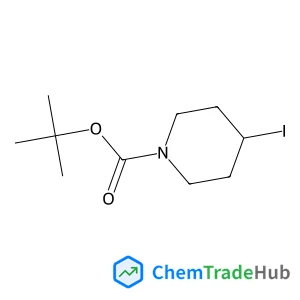
2-Methyl-2-propanyl 4-iodo-1-piperidinecarboxylate
CAS Number:
301673-14-3
Molecular Formula:
C10H18INO2
Recommended Suppliers




Disclaimer
This page provides academic journal information for reference and research purposes only. We are not affiliated with any journal publishers and do not handle publication submissions. For publication-related inquiries, please contact the respective journal publishers directly.
If you notice any inaccuracies in the information displayed, please contact us at support@chemtradehub.com. We will promptly review and address your concerns.