













The effect of water on the enantioselective hydrogenation of ethyl pyruvate and butane-2,3-dione using cinchona-modified Pt/Al2O3
Literature Information
Publication Date
2002-05-14
DOI
10.1039/B200099G
Impact Factor
3.676
Authors
Richard P. K. Wells, Neil R. McGuire, Xiaobao Li, Robert L. Jenkins, Paul J. Collier, Robin Whyman, Graham J. Hutchings
View Original
Abstract
A detailed study of Pt/alumina modified with cinchona alkaloids for the catalytic enantioselective hydrogenation of ethyl pyruvate to ethyl lactate and of butane-2,3-dione to 3-hydroxybutan-2-one is reported. Catalytic and 1H NMR spectroscopic studies have been carried out on both systems to investigate the influence of water on modifier conformation and enantioselectivity. Interestingly, the presence of small amounts of water has been shown to result in an increase the proportion of the open 3 conformer of cinchonidine when it is present in dilute solutions. Increased enantioselectivity, coupled with an increase in the proportion of the open 3 conformation of cinchonidine, is observed after pretreatment of the pyruvate ester with the modifier prior to admission to the reaction vessel. In contrast, no analogous effects are observed with butane-2,3-dione. It is proposed that the enhancements in enantioselectivity are a consequence of hydrolysis of ethyl pyruvate by a process that is catalysed by the basic cinchona modifier. The pyruvic acid formed during the hydrolysis interacts with the modifier and this leads to a further enhancement in the concentration of open 3 conformer present. The results contribute to an understanding of the widely variable enantioselectivities reported in the literature for this reaction.
Related Literature
Structural engineering of catalysts for ammonia electrosynthesis from nitrate: recent advances and challenges
Wenxi Qiu, Yuanting Liu, Minghao Xie, Zhaoyu Jin, Panpan Li, Guihua Yu
2023-09-26
Review Article
DOI: 10.1039/D3EY00184A
Identification and functional characterization of novel plant UDP-glycosyltransferase (LbUGT72B10) for the bioremediation of 3,4-dichloroaniline
Valeria Della Gala, Ditte Hededam Welner
2023-09-25
Paper
DOI: 10.1039/D3SU00220A
Gas-phase errors in computational electrocatalysis: a review
Santiago Builes, Francesc Illas
2023-09-29
Review Article
DOI: 10.1039/D3EY00126A
Subambient passive radiative cooling effects of barium sulfate and calcium carbonate paints under Malaysia's tropical climate
William Raphael Joseph, Jun Yeang Tan, Apurav Krishna Koyande, Ianatul Khoiroh, Jerry Joynson, Steve Willis
2023-10-24
Paper
DOI: 10.1039/D3VA00161J
Single atom catalysts for water electrolysis: from catalyst-coated substrate to catalyst-coated membrane
Sun Hwa Park, Ki Chang Kwon, Jong Hun Kang, Min Sang Kwon
2023-10-05
Review Article
DOI: 10.1039/D3EY00165B
Highly selective Ag foam gas diffusion electrodes for CO2 electroreduction by pulsed hydrogen bubble templation
Hendrik Hoffmann, Maximilian Kutter, Jens Osiewacz, Melanie-Cornelia Paulisch-Rinke, Steffen Lechner, Barbara Ellendorff, Annika Hilgert, Ingo Manke, Thomas Turek, Christina Roth
2023-10-09
Paper
DOI: 10.1039/D3EY00220A
Selective catalytic reduction of NOx with NH3 over copper-based catalysts: recent advances and future prospects
Guoquan Liu, He Zhang, Yi Li, Pengfei Wang, Sihui Zhan
2023-11-07
Minireview
DOI: 10.1039/D3EY00210A
Superior single- and multi-component siloxane removal from water using a faulted silica DON zeolite adsorbent
Dariana R. Vega-Santander, Rodinson Arrieta-Pérez, Daniela Rivera-Mirabal, Gabriela Del Valle-Pérez, Miguel Sepúlveda-Pagán, Juan C. Muñoz-Senmache, Yomaira J. Pagán-Torres, Arturo J. Hernández-Maldonado
2023-11-10
Paper
DOI: 10.1039/D3VA00282A
You might also like
Compound Q&A
How should waste containing (6-Bromo-2-naphthyl)oxy](dimethyl)(2-methyl-2-propanyl)silane be handled?
Waste containing (6-Bromo-2-naphthyl)oxy](dimethyl)(2-methyl-2-propanyl)silane (...
100751-65-3[(6-Bromo-2-naphthyl...
Compound Q&A
How is 7-Fluoro-4-isoquinolinecarboxylic acid (CAS: 1841081-40-0) typically synthesized?
7-Fluoro-4-isoquinolinecarboxylic acid can be synthesized via a multi-step proce...
1841081-40-07-Fluoro-4-isoquinol...
Compound Q&A
What are the physical and chemical properties of 2,3,5,6-Tetrabromothieno[3,2-b]thiophene (CAS: 124638-53-5)?
2,3,5,6-Tetrabromothieno[3,2-b]thiophene is a crystalline compound with a high m...
124638-53-52,3,5,6-Tetrabromoth...
Compound Q&A
Is 1-[4-(Benzylamino)-7,8-dihydro-5H-pyrano[4,3-d]pyrimidin-2-yl]-2-methyl-1H-indole-4-carboxamide (CAS: 1542705-92-9) safe?
1-[4-(Benzylamino)-7,8-dihydro-5H-pyrano[4,3-d]pyrimidin-2-yl]-2-methyl-1H-indol...
1542705-92-91-[4-(Benzylamino)-7...
Compound Q&A
What is the market or research trend for imidazo[5,1-d]-1,2,3,5-tetrazine-8-carboxylic acid, 3,4-dihydro-3-methyl-4-oxo- (CAS: 113942-30-6)?
The market for imidazo[5,1-d]-1,2,3,5-tetrazine-8-carboxylic acid, 3,4-dihydro-3...
113942-30-6Imidazo[5,1-d]-1,2,3...
Compound Q&A
What is 3-(Triisopropylsilyl)propiolaldehyde (CAS: 163271-80-5)?
3-(Triisopropylsilyl)propiolaldehyde is a synthetic organic compound with the CA...
163271-80-53-(Triisopropylsilyl...
Compound Q&A
What regulatory guidelines apply to 6-Nitro-2H-1,4-benzoxazin-3(4H)-one (CAS: 81721-87-1)?
6-Nitro-2H-1,4-benzoxazin-3(4H)-one (CAS: 81721-87-1) is subject to various regu...
81721-87-16-Nitro-2H-1,4-benzo...
Compound Q&A
How should waste containing (3-Fluorophenyl)(4-{[(2-methyl-2-propanyl)oxy]carbonyl}-1-piperazinyl)acetic acid (CAS: 885272-91-3) be handled?
Waste containing (3-Fluorophenyl)(4-{[(2-methyl-2-propanyl)oxy]carbonyl}-1-piper...
885272-91-3(3-Fluorophenyl)(4-{...
Compound Q&A
What are the physical and chemical properties of N,N'-4,4'-Biphenyldiyldiisonicotinamide (CAS: 55119-40-9)?
N,N'-4,4'-Biphenyldiyldiisonicotinamide is a white crystalline solid with a mole...
55119-40-9N,N'-4,4'-Biphenyldi...
Compound Q&A
What industries use 6-Bromo-8-fluoro-2-quinazolinol (CAS: 1036756-15-6)?
6-Bromo-8-fluoro-2-quinazolinol is primarily used in the pharmaceutical industry...
1036756-15-66-Bromo-8-fluoro-2-q...
Source Journal
Physical Chemistry Chemical Physics

CiteScore:
5.5
Self-citation Rate:
10.3%
Articles per Year:
3036
Physical Chemistry Chemical Physics (PCCP) is an international journal co-owned by 19 physical chemistry and physics societies from around the world. This journal publishes original, cutting-edge research in physical chemistry, chemical physics and biophysical chemistry. To be suitable for publication in PCCP, articles must include significant innovation and/or insight into physical chemistry; this is the most important criterion that reviewers and Editors will judge against when evaluating submissions. The journal has a broad scope and welcomes contributions spanning experiment, theory, computation and data science. Topical coverage includes spectroscopy, dynamics, kinetics, statistical mechanics, thermodynamics, electrochemistry, catalysis, surface science, quantum mechanics, quantum computing and machine learning. Interdisciplinary research areas such as polymers and soft matter, materials, nanoscience, energy, surfaces/interfaces, and biophysical chemistry are welcomed if they demonstrate significant innovation and/or insight into physical chemistry. Joined experimental/theoretical studies are particularly appreciated when complementary and based on up-to-date approaches.
Recommended Compounds



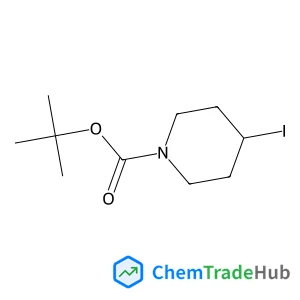
2-Methyl-2-propanyl 4-iodo-1-piperidinecarboxylate
CAS Number:
301673-14-3
Molecular Formula:
C10H18INO2
Recommended Suppliers




Disclaimer
This page provides academic journal information for reference and research purposes only. We are not affiliated with any journal publishers and do not handle publication submissions. For publication-related inquiries, please contact the respective journal publishers directly.
If you notice any inaccuracies in the information displayed, please contact us at support@chemtradehub.com. We will promptly review and address your concerns.