![N-{[(2-Methyl-2-propanyl)oxy]carbonyl}-L-methionylglycine structure](https://static.chemtradehub.com/structs/234/23446-03-9-e1e5.webp "N-{[(2-Methyl-2-propanyl)oxy]carbonyl}-L-methionylglycine structure")
N-{[(2-Methyl-2-propanyl)oxy]carbonyl}-L-methionylglycine
CAS Number:
23446-03-9
Molecular Formula:
C12H22N2O5S
Jens C. Markwart, Alexander Battig, Tobias Urbaniak, Katharina Haag, Katharina Koschek, Bernhard Schartel, Frederik R. Wurm
Recycling of crosslinked fiber-reinforced polymers is difficult. Moreover, as they are often based on flammable resins, additional additives are needed. So-called “vitrimers” open the possibility of recycling and reprocessing and repairing with dynamically crosslinked chemistries. To date, vitrimer-based composites still need flame retardant additives, such as organophosphates. An additive-free vitrimer composite has not been reported. Herein, we synthesized an intrinsic flame-retardant vitrimer, relying on vinylogous polyurethanes containing covalently installed phosphonates as flame-retardant units and prepared glass-fiber-reinforced composites. We studied recycling and flame retardant properties and compared the data to phosphorus-free vitrimers and conventional epoxy resins (with and without additive flame retardant). Our phosphonate-based vitrimer proved in first tests, a flame retardant effect comparable to commercial flame retardant resins. The bending strength and bending modulus for the phosphorus-vitrimer glass fiber composites were comparable to glass fiber composites with permanently cross-linked epoxies. In summary, we were able to prove that the covalent installation of phosphonates into vitrimers allows the preparation of recyclable and intrinsic flame retardant composites that do not need flame retardant additives. We believe this concept can be expanded to other polymer networks and additives to generate recyclable and sustainable high-performance materials.
James Bonner, Lance E. Talbert, Nicholas Akkawi, Ryan R. Julian
DOI: 10.1039/C8AN01582A
Anthony J. Lucio, Scott K. Shaw
DOI: 10.1039/C8AN01085D
Yinghong Zhang, Lijuan Li, Tao Li, Ying Xin, Junxiu Liu, Furong Ma, Lanqun Mao
DOI: 10.1039/C8AN01300D
Daojin Li, Zijun Bie, Fangfang Wang, Enhui Guo
DOI: 10.1039/C8AN01044G
Jie Xu, Yuchen Wei, Wu Yang, Lulu Yang, Zhongsheng Yi
DOI: 10.1039/C8AN00435H
S. Mordechai, E. Shufan, B. S. Porat Katz, A. Salman
DOI: 10.1039/C6AN01580H
Genki Sakata, Minoru Mizuhata
DOI: 10.1039/C7AN00067G
David T. Buckley, Christopher J. Hogan, Jr.
DOI: 10.1039/C7AN00328E
Borja Cantero-Tubilla, Larry P. Walker
DOI: 10.1039/C8AN01137K
N-(4-Methoxybenzyl)-2-pyridinamine (CAS: 52818-63-0) is increasingly being used ...
When handling Ethyl 4-(2-chlorophenyl)-1,3-thiazole-2-carboxylate, appropriate p...
Diethyldiselane (CAS: 628-39-7) is classified under the Globally Harmonized Syst...
The market for oxocopper (CAS: 12053-18-8) is primarily driven by its use in cat...
The market for 5-{[(2-Methyl-2-propanyl)oxy]carbonyl}-5-azaspiro[2.4]heptane-7-c...
2-(1-Pyrrolidinyl)-4-pyridinamine is a chemical compound with the CAS number 359...
2-(3-Pyridinyl)-1-azabicyclo[2.2.2]octane (CAS: 91556-75-1) is a crystalline sol...
(S)-Alpha-allyl-proline hydrochloride is usually synthesized via a Wittig reacti...
3-Methyl-1,2-oxazole-5-carboxylic acid (CAS: 4857-42-5) is an organic compound w...
Lys-SMCC-DM1 is synthesized via a multi-step process involving the coupling of S...

Polymer Chemistry welcomes submissions in all areas of polymer science that have a strong focus on macromolecular chemistry. Manuscripts may cover a broad range of fields, yet no direct application focus is required.
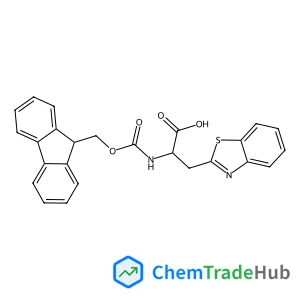
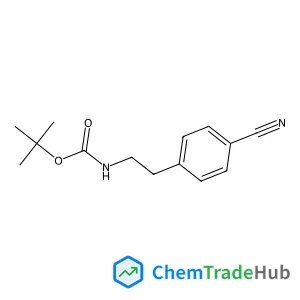
![1,10-bis(3,5-dimethylphenyl)-12-hydroxy-4,5,6,7-tetrahydroiindeno[7,1-de:1',7'-fg][1,3,2]dioxaphosphocine 12-oxide structure](https://static.chemtradehub.com/structs/141/1412439-82-7-b9a9.webp "1,10-bis(3,5-dimethylphenyl)-12-hydroxy-4,5,6,7-tetrahydroiindeno[7,1-de:1',7'-fg][1,3,2]dioxaphosphocine 12-oxide structure")