












A novel Heck reaction catalyzed by Co hollow nanospheres in ligand-free condition
Literature Information
Publication Date
2007-01-29
DOI
10.1039/B617556B
Impact Factor
6.222
Authors
Ping Zhou, Yingguang Li, Peipei Sun, Jiahong Zhou, Jianchun Bao
View Original
Abstract
Heck reaction catalyzed by cobalt hollow nanospheres has been developed; the coupling of alkenes with aryl iodide or aryl bromide in the presence of potassium carbonate provides the corresponding products with moderate to good yields, which reveals obvious advantages such as low-cost catalyst, ligand-free condition, the recyclability of the catalyst and simple experimental operation.
Recommended Journals
Related Literature
Fast photo-processes in triazole-based push–pull systems
Peter D. Zoon, Ivo H. M. van Stokkum, Albert M. Brouwer
2010-01-27
Paper
DOI: 10.1039/B921322H
Direct calorimetric measurement of grain boundary and surface enthalpies in yttria-stabilized zirconia
Hugo J. Avila-Paredes, Jinfeng Zhao, Zuhair A. Munir
2009-01-12
Communication
DOI: 10.1039/B819740G
Editorial Highlight: Molecules in confined spaces
Bert M. Weckhuysen
2009-03-24
Paper
DOI: 10.1039/B905015A
Dynamics on the microsecond timescale in hydrous silicates studied by solid-state 2H NMR spectroscopy
John M. Griffin, Andrew J. Miller, Andrew J. Berry, Stephen Wimperis, Sharon E. Ashbrook
2010-02-03
Paper
DOI: 10.1039/B924666E
Temperature evolution of structure and bonding of formic acid and formate on fully oxidized and highly reduced CeO2(111)
Wesley O. Gordon, Ye Xu, David R. Mullins, Steven H. Overbury
2009-10-19
Paper
DOI: 10.1039/B913310K
Theoretical and REMPI spectroscopic study on phenylhydrazine and phenylhydrazine–(Ar)n (n = 1, 2) van der Waals complexes
Daoqing Xiao, Dan Yu, Xiling Xu, Zijun Yu, Min Cheng, Yikui Du, Weijun Zheng, Qihe Zhu, Cunhao Zhang
2009-02-27
Paper
DOI: 10.1039/B818688J
Spectroscopical properties of organic/metal nanohybrids
Giovanna Dellepiane, Carla Cuniberti, Marina Alloisio, Anna Demartini
2010-02-03
Paper
DOI: 10.1039/B912921A
Photoinduced multi-electron transfer in the Dn–A system consisting of multi-phthalocyanines linked to one carbon nanotube
Xiaofeng Cui, Qiang Liu, Fushi Zhang
2009-03-13
Paper
DOI: 10.1039/B819521H
Band gap engineering of ZnOvia doping with manganese: effect of Mn clustering
Hilkka Saal, Thomas Bredow, Michael Binnewies
2009-03-26
Paper
DOI: 10.1039/B901596E
You might also like
Compound Q&A
What precautions should be taken when handling 2-Chloro-1,2-bis(4-methylphenyl)ethanone (CAS: 71193-32-3)?
When handling 2-Chloro-1,2-bis(4-methylphenyl)ethanone (CAS: 71193-32-3), it is ...
71193-32-32-Chloro-1,2-bis(4-m...
Compound Q&A
What industries use 4-Ethoxy-3-(5-methyl-4-oxo-7-propyl-1,4-dihydroimidazo[5,1-f][1,2,4]triazin-2-yl)benzenesulfonyl chloride (CAS: 224789-26-8)?
4-Ethoxy-3-(5-methyl-4-oxo-7-propyl-1,4-dihydroimidazo[5,1-f][1,2,4]triazin-2-yl...
224789-26-84-Ethoxy-3-(5-methyl...
Compound Q&A
How should Methyl 3-Oxo-4-Androsten-17-Carboxylate (CAS: 2681-55-2) be stored?
Methyl 3-Oxo-4-Androsten-17-Carboxylate (CAS: 2681-55-2) should be stored in a c...
2681-55-2Methyl 3-Oxo-4-Andro...
Compound Q&A
What are the main uses of (R)-3-Amino-4-(3-hexylphenylamino)-4-oxobutylphosphonic acid (CAS: 909725-61-7)?
(R)-3-Amino-4-(3-hexylphenylamino)-4-oxobutylphosphonic acid is primarily used i...
909725-61-7(R)-3-Amino-4-(3-hex...
Compound Q&A
What regulatory guidelines apply to 2-Methyl-2-propanyl 3-amino-3-carbamoyl-1-azetidinecarboxylate (CAS: 1254120-14-3)?
2-Methyl-2-propanyl 3-amino-3-carbamoyl-1-azetidinecarboxylate (CAS: 1254120-14-...
1254120-14-32-Methyl-2-propanyl ...
Compound Q&A
Are there alternatives to (E)-4-(tert-Butoxy)-4-oxobut-2-enoic acid (CAS: 135355-96-3) in synthesis?
There are alternative reagents that can be used in synthesis instead of (E)-4-(t...
135355-96-3(E)-4-(tert-Butoxy)-...
Compound Q&A
What are the physical and chemical properties of [2-(3-Chlorophenyl)-1,3-thiazol-4-yl]methanol (CAS: 121202-20-8)?
[2-(3-Chlorophenyl)-1,3-thiazol-4-yl]methanol (CAS: 121202-20-8) is a crystallin...
121202-20-8[2-(3-Chlorophenyl)-...
Compound Q&A
What is the market or research trend for Methyl (2S)-[(4S)-2,2-dimethyl-1,3-dioxolan-4-yl]{[(4-methylphenyl)sulfonyl]oxy}acetate (CAS: 166249-17-8)?
The market and research trends for Methyl (2S)-[(4S)-2,2-dimethyl-1,3-dioxolan-4...
166249-17-8Methyl (2S)-[(4S)-2,...
Compound Q&A
What is the market or research trend for 1-Bromo-2-isocyanatoethane (CAS: 42865-19-0)?
The market for 1-Bromo-2-isocyanatoethane (CAS: 42865-19-0) is driven by its use...
42865-19-01-Bromo-2-isocyanato...
Compound Q&A
What are the main uses of 4-Nitro-D-phenylalanine hydrochloride (CAS: 147065-06-3)?
4-Nitro-D-phenylalanine hydrochloride (CAS: 147065-06-3) is primarily used in re...
147065-06-34-Nitro-D-phenylalan...
Source Journal
Chemical Communications

CiteScore:
8.6
Self-citation Rate:
4.7%
Articles per Year:
2458
ChemComm publishes urgent research which is of outstanding significance and interest to experts in the field, while also appealing to the journal’s broad chemistry readership. Our communication format is ideally suited to short, urgent studies that are of such importance that they require accelerated publication. Our scope covers all topics in chemistry, and research at the interface of chemistry and other disciplines (such as materials science, nanoscience, physics, engineering and biology) where there is a significant novelty in the chemistry aspects. Major topic areas covered include: Analytical Chemistry Catalysis Chemical Biology and medicinal chemistry Computational Chemistry and Machine Learning Energy and sustainable chemistry Environmental Chemistry Green Chemistry Inorganic Chemistry Materials Chemistry Nanoscience Organic Chemistry Physical Chemistry Polymer Chemistry Supramolecular Chemistry
Recommended Compounds
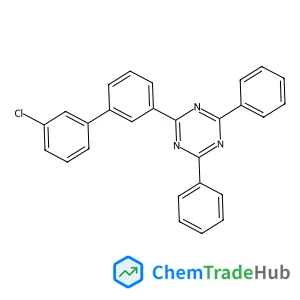
2-(3'-Chlorobiphenyl-3-yl)-4,6-diphenyl-1,3,5-triazine
CAS Number:
1443049-83-9
Molecular Formula:
C27H18ClN3


Recommended Suppliers




Disclaimer
This page provides academic journal information for reference and research purposes only. We are not affiliated with any journal publishers and do not handle publication submissions. For publication-related inquiries, please contact the respective journal publishers directly.
If you notice any inaccuracies in the information displayed, please contact us at support@chemtradehub.com. We will promptly review and address your concerns.