













Temperature evolution of structure and bonding of formic acid and formate on fully oxidized and highly reduced CeO2(111)
Literature Information
Publication Date
2009-10-19
DOI
10.1039/B913310K
Impact Factor
3.676
Authors
Wesley O. Gordon, Ye Xu, David R. Mullins, Steven H. Overbury
View Original
Abstract
Adsorption of formate on oxide surfaces plays a role in water-gas shift (WGS) and other reactions related to H2 production and CO2 utilization. CeO2 is of particular interest because its reducibility affects the redox of organic molecules. In this work, the adsorption and thermal evolution of formic acid and formate on highly ordered films of fully oxidized CeO2(111) and highly reduced CeOx(111) surfaces have been studied using reflection absorption infrared spectroscopy (RAIRS) under ultra-high vacuum conditions, and the experimental results are combined with density functional theory (DFT) calculations to probe the identity, symmetry, and bonding of the surface intermediates. Disordered ice, ordered α-polymorph and molecular formic acid bonded through the carbonyl are observed at low temperatures. By 250 K, desorption and deprotonation lead to formate coexisting with hydroxyl on CeO2(111), identified to be a bridging bidentate formate species that is coordinated to Ce cations in nearly C2v symmetry and interacting strongly with neighboring H. Changes in the spectra at higher temperatures are consistent with additional tilting of the formate, resulting in Cs(2) or lower symmetry. This change in bonding is caused primarily by interaction with oxygen vacancies introduced by water desorption at 300 K. On reduced CeOx, multiple low-symmetry formate states exist likewise due to interactions with oxygen vacancies. Isotopic studies demonstrate that the formyl hydrogen does not contribute to H incorporated in hydroxyl on the surface, and that both formate oxygen atoms may exchange with lattice oxygen at 400 K. The combined experimental and theoretical results thus provide important insights on the surface reaction pathways of formic acid on ceria.
Related Literature
How ions block the single-file water transport through a carbon nanotube
Zhenglong Su, Jingyi Chen, Yunzhen Zhao, Jiaye Su
2019-05-04
Paper
DOI: 10.1039/C9CP01714C
Coexistence of structurally similar but electronically distinct isomers of delocalized cation radicals as a basis for the development of functional materials
Marat R. Talipov, Esther Steiner
2019-05-07
Paper
DOI: 10.1039/C9CP02271F
Synergetic light trapping effects in organic solar cells with a patterned semi-transparent electrode
2019-05-09
Paper
DOI: 10.1039/C9CP00581A
Exclusion principle repulsion effects on the covalent bond beyond the Born–Oppenheimer approximation
A. Sarsa, J. M. Alcaraz-Pelegrina, C. Le Sech
2019-04-18
Paper
DOI: 10.1039/C9CP01063G
Improved phase stability of the CsPbI3 perovskite via organic cation doping
Jiajia Zhang, Lei Yang, Yu Zhong, Hequn Hao, Mei Yang, Renyong Liu
2019-05-03
Paper
DOI: 10.1039/C9CP01211G
Proton transport properties of proton-conducting phosphate glasses at their glass transition temperatures
Takahisa Omata, Satoshi Tsukuda, Tomohiro Ishiyama, Junji Nishii, Toshiharu Yamashita, Hiroshi Kawazoe
2019-05-09
Paper
DOI: 10.1039/C9CP01502G
Tuning the electronic and magnetic properties of antimonene nanosheets via point defects and external fields: first-principles calculations
Mitra Ghergherehchi, Saber Farjami Shayesteh
2019-04-25
Paper
DOI: 10.1039/C9CP01378D
Hydration-mediated stiffening of collective membrane dynamics by cholesterol
Christopher Päslack, Matthias Heyden, Lars V. Schäfer
2019-04-30
Paper
DOI: 10.1039/C9CP01431D
Effect of bovine serum albumin on tartrate-modified manganese ferrite nano hollow spheres: spectroscopic and toxicity study
Indranil Chakraborty, Urmila Saha, Dipika Mandal, Suprabhat Mukherjee, Nikhilesh Joardar, Santi P. Sinha Babu, Gopinatha Suresh Kumar, Kalyan Mandal
2019-04-30
Paper
DOI: 10.1039/C9CP01877H
Exciton dissociation in an NIR-active triohybrid nanocrystal leading to efficient generation of reactive oxygen species
Jayita Patwari, Harmit Joshi, Harahari Mandal, Lopamudra Roy, Chinmoy Bhattacharya, Samir Kumar Pal
2019-04-18
Paper
DOI: 10.1039/C9CP01923E
You might also like
Compound Q&A
What precautions should be taken when handling 2-Chloro-1,2-bis(4-methylphenyl)ethanone (CAS: 71193-32-3)?
When handling 2-Chloro-1,2-bis(4-methylphenyl)ethanone (CAS: 71193-32-3), it is ...
71193-32-32-Chloro-1,2-bis(4-m...
Compound Q&A
What industries use 4-Ethoxy-3-(5-methyl-4-oxo-7-propyl-1,4-dihydroimidazo[5,1-f][1,2,4]triazin-2-yl)benzenesulfonyl chloride (CAS: 224789-26-8)?
4-Ethoxy-3-(5-methyl-4-oxo-7-propyl-1,4-dihydroimidazo[5,1-f][1,2,4]triazin-2-yl...
224789-26-84-Ethoxy-3-(5-methyl...
Compound Q&A
How should Methyl 3-Oxo-4-Androsten-17-Carboxylate (CAS: 2681-55-2) be stored?
Methyl 3-Oxo-4-Androsten-17-Carboxylate (CAS: 2681-55-2) should be stored in a c...
2681-55-2Methyl 3-Oxo-4-Andro...
Compound Q&A
What are the main uses of (R)-3-Amino-4-(3-hexylphenylamino)-4-oxobutylphosphonic acid (CAS: 909725-61-7)?
(R)-3-Amino-4-(3-hexylphenylamino)-4-oxobutylphosphonic acid is primarily used i...
909725-61-7(R)-3-Amino-4-(3-hex...
Compound Q&A
What regulatory guidelines apply to 2-Methyl-2-propanyl 3-amino-3-carbamoyl-1-azetidinecarboxylate (CAS: 1254120-14-3)?
2-Methyl-2-propanyl 3-amino-3-carbamoyl-1-azetidinecarboxylate (CAS: 1254120-14-...
1254120-14-32-Methyl-2-propanyl ...
Compound Q&A
Are there alternatives to (E)-4-(tert-Butoxy)-4-oxobut-2-enoic acid (CAS: 135355-96-3) in synthesis?
There are alternative reagents that can be used in synthesis instead of (E)-4-(t...
135355-96-3(E)-4-(tert-Butoxy)-...
Compound Q&A
What are the physical and chemical properties of [2-(3-Chlorophenyl)-1,3-thiazol-4-yl]methanol (CAS: 121202-20-8)?
[2-(3-Chlorophenyl)-1,3-thiazol-4-yl]methanol (CAS: 121202-20-8) is a crystallin...
121202-20-8[2-(3-Chlorophenyl)-...
Compound Q&A
What is the market or research trend for Methyl (2S)-[(4S)-2,2-dimethyl-1,3-dioxolan-4-yl]{[(4-methylphenyl)sulfonyl]oxy}acetate (CAS: 166249-17-8)?
The market and research trends for Methyl (2S)-[(4S)-2,2-dimethyl-1,3-dioxolan-4...
166249-17-8Methyl (2S)-[(4S)-2,...
Compound Q&A
What is the market or research trend for 1-Bromo-2-isocyanatoethane (CAS: 42865-19-0)?
The market for 1-Bromo-2-isocyanatoethane (CAS: 42865-19-0) is driven by its use...
42865-19-01-Bromo-2-isocyanato...
Compound Q&A
What are the main uses of 4-Nitro-D-phenylalanine hydrochloride (CAS: 147065-06-3)?
4-Nitro-D-phenylalanine hydrochloride (CAS: 147065-06-3) is primarily used in re...
147065-06-34-Nitro-D-phenylalan...
Source Journal
Physical Chemistry Chemical Physics

CiteScore:
5.5
Self-citation Rate:
10.3%
Articles per Year:
3036
Physical Chemistry Chemical Physics (PCCP) is an international journal co-owned by 19 physical chemistry and physics societies from around the world. This journal publishes original, cutting-edge research in physical chemistry, chemical physics and biophysical chemistry. To be suitable for publication in PCCP, articles must include significant innovation and/or insight into physical chemistry; this is the most important criterion that reviewers and Editors will judge against when evaluating submissions. The journal has a broad scope and welcomes contributions spanning experiment, theory, computation and data science. Topical coverage includes spectroscopy, dynamics, kinetics, statistical mechanics, thermodynamics, electrochemistry, catalysis, surface science, quantum mechanics, quantum computing and machine learning. Interdisciplinary research areas such as polymers and soft matter, materials, nanoscience, energy, surfaces/interfaces, and biophysical chemistry are welcomed if they demonstrate significant innovation and/or insight into physical chemistry. Joined experimental/theoretical studies are particularly appreciated when complementary and based on up-to-date approaches.
Recommended Compounds
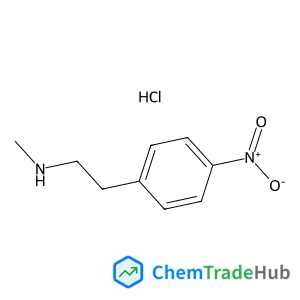
N-Methyl-2-(4-nitrophenyl)ethanamine hydrochloride (1:1)
CAS Number:
166943-39-1
Molecular Formula:
C9H13ClN2O2


3,5-Dihydroxy-4-(3-methylbutanoyl)-2,6,6-tris(3-methyl-2-buten-1-yl)-2,4-cyclohexadien-1-one
CAS Number:
468-28-0
Molecular Formula:
C26H38O4
Recommended Suppliers




Disclaimer
This page provides academic journal information for reference and research purposes only. We are not affiliated with any journal publishers and do not handle publication submissions. For publication-related inquiries, please contact the respective journal publishers directly.
If you notice any inaccuracies in the information displayed, please contact us at support@chemtradehub.com. We will promptly review and address your concerns.