












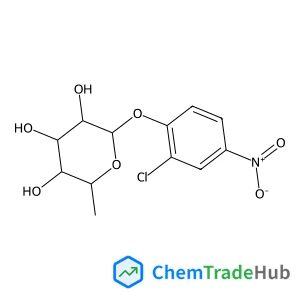
2-Chloro-4-nitrophenyl 6-deoxy-alpha-L-galactopyranoside
CAS Number:
157843-41-9
Molecular Formula:
C12H14ClNO7
The first page of this article is displayed as the abstract.
Shasha Liu, Chao Jin, Dongxing Zheng, Xin Pang, Yuchen Wang, Ping Wang, Wanchao Zheng, Haili Bai
DOI: 10.1039/C9CP01809C
James N. Bull, Christopher W. West, Cate S. Anstöter, Gabriel da Silva, Evan J. Bieske, Jan R. R. Verlet
DOI: 10.1039/C9CP01624D
Yoshihiro Koyama, Kiyoto Matsuishi, Takahiro Takekiyo, Hiroshi Abe, Yukihiro Yoshimura
DOI: 10.1039/C9CP01730E
Wei-Dong Li
DOI: 10.1039/C9CP01702J
Geraldine Dantelle, Marija Matulionyte, Denis Testemale, Alexandra Cantarano, Alain Ibanez, Fiorenzo Vetrone
DOI: 10.1039/C9CP01808E
Yosuke Ugata, Morgan L. Thomas, Kazuhide Ueno, Masayoshi Watanabe
DOI: 10.1039/C9CP01839E
DOI: 10.1039/C8CP07136E
Angelo Giussani, Graham A. Worth
DOI: 10.1039/C9CP00705A
Audrey R. Smith, Simone Di Muzio, Fabio Ramondo, Giovanni Meloni
DOI: 10.1039/C8CP07571A
Christopher J. Hogan Jr
DOI: 10.1039/C9CP01394F
When handling 2-Chloro-1,2-bis(4-methylphenyl)ethanone (CAS: 71193-32-3), it is ...
4-Ethoxy-3-(5-methyl-4-oxo-7-propyl-1,4-dihydroimidazo[5,1-f][1,2,4]triazin-2-yl...
Methyl 3-Oxo-4-Androsten-17-Carboxylate (CAS: 2681-55-2) should be stored in a c...
(R)-3-Amino-4-(3-hexylphenylamino)-4-oxobutylphosphonic acid is primarily used i...
2-Methyl-2-propanyl 3-amino-3-carbamoyl-1-azetidinecarboxylate (CAS: 1254120-14-...
There are alternative reagents that can be used in synthesis instead of (E)-4-(t...
[2-(3-Chlorophenyl)-1,3-thiazol-4-yl]methanol (CAS: 121202-20-8) is a crystallin...
The market and research trends for Methyl (2S)-[(4S)-2,2-dimethyl-1,3-dioxolan-4...
The market for 1-Bromo-2-isocyanatoethane (CAS: 42865-19-0) is driven by its use...
4-Nitro-D-phenylalanine hydrochloride (CAS: 147065-06-3) is primarily used in re...

Physical Chemistry Chemical Physics (PCCP) is an international journal co-owned by 19 physical chemistry and physics societies from around the world. This journal publishes original, cutting-edge research in physical chemistry, chemical physics and biophysical chemistry. To be suitable for publication in PCCP, articles must include significant innovation and/or insight into physical chemistry; this is the most important criterion that reviewers and Editors will judge against when evaluating submissions. The journal has a broad scope and welcomes contributions spanning experiment, theory, computation and data science. Topical coverage includes spectroscopy, dynamics, kinetics, statistical mechanics, thermodynamics, electrochemistry, catalysis, surface science, quantum mechanics, quantum computing and machine learning. Interdisciplinary research areas such as polymers and soft matter, materials, nanoscience, energy, surfaces/interfaces, and biophysical chemistry are welcomed if they demonstrate significant innovation and/or insight into physical chemistry. Joined experimental/theoretical studies are particularly appreciated when complementary and based on up-to-date approaches.
![4-[2-(Trichlorosilyl)ethyl]benzenesulfonyl chloride structure](https://static.chemtradehub.com/structs/797/79793-00-3-de16.webp "4-[2-(Trichlorosilyl)ethyl]benzenesulfonyl chloride structure")







