












The dynamics of water exchange in gadolinium DOTA complexes studied by transition path sampling and potential of mean force methods
Literature Information
Publication Date
2007-01-30
DOI
10.1039/B617068D
Impact Factor
3.676
Authors
View Original
Abstract
The mechanism of water exchange at the Gd centre of the two isomers of [Gd(III)DOTA]− (gadolinate(1–), [1,4,7,10-tetraazacyclododecane-1,4,7,10-tetraacetato(4–)-N1,N4,N7,N10,O1,O4,O7,O10]) has been explored using transition path sampling and potential of mean force methods to sample those regions of phase space inaccessible to standard molecular dynamics simulation. We find that there are definite differences in the details of the solvent rearrangement accompanying the exchange of the capping water molecule for the two isomers. We conclude that these solvent effects, rather than any differences in the binding energy of the capping water, are central in determining the exchange rate. We find that the potential of mean force studies yield absolute and relative rates of water exchange for the two isomers that are in good agreement with experiment.
Recommended Journals
Related Literature
Synthesis of fused conjugated polymers containing imidazo[2,1-b]thiazole units by multicomponent one-pot polymerization
Ru Dong, Qi Chen, Xuediao Cai, Qi Zhang, Zhike Liu
2020-07-14
Paper
DOI: 10.1039/D0PY00680G
Eco-friendly functional two-component flame-retardant waterborne polyurethane coatings: a review
Haosheng Pang, Yunjun Luo, Bing Zhang
2021-09-06
Review Article
DOI: 10.1039/D1PY00920F
Direct fluorination as a one-step ATRP initiator immobilization for convenient surface grafting of phenyl ring-containing substrates
Taijun He, Zhenyu Xing, Yixing Wang, Difeng Wu, Yang Liu, Xiangyang Liu
2020-07-31
Paper
DOI: 10.1039/D0PY00860E
Dependence of the liquid crystalline properties on the exactly controlled single-site functionalized density of mesogens focused on the alternating copolymer model
Ruixue Zhang, Xuwen Li, Hongwei Ma, Li Han, Chao Li, Songbo Zhang, Hongyuan Bai, Yang Li
2021-11-01
Paper
DOI: 10.1039/D1PY01310F
Tellurophene-containing π-conjugated polymers with unique heteroatom–heteroatom interactions by post-element-transformation of an organotitanium polymer
Hiroki Nishiyama, Feng Zheng, Shinsuke Inagi, Hiroyuki Fueno, Ikuyoshi Tomita
2020-07-07
Communication
DOI: 10.1039/D0PY00724B
Highly efficient terpolymerizations of ethylene/propylene/ENB with a half-titanocene catalytic system
Yi-Cong Wang, Pei-Yi Cheng, Zhi-Qian Zhang, Ke-Xin Fan, Rui-Qi Lu, Shu Zhang, Yi-Xian Wu
2021-10-29
Paper
DOI: 10.1039/D1PY01140E
High chemical recyclability of vinyl lactone acrylic bioplastics
Reid A. Gilsdorf, Matthew A. Nicki, Eugene Y.-X. Chen
2020-07-01
Paper
DOI: 10.1039/D0PY00786B
Porous polycaprolactone and polycarbonate poly(urethane urea)s via emulsion templating: structures, properties, cell growth‡
Katya Kapilov-Buchman, Tslil Bialystocki, Danna Niezni, Luba Perry, Shulamit Levenberg, Michael S. Silverstein
2021-11-01
Paper
DOI: 10.1039/D1PY01106E
Single-chain crosslinked polymers via the transesterification of folded polymers: from efficient synthesis to crystallinity control
Daiki Ito, Yoshihiko Kimura, Makoto Ouchi, Takaya Terashima
2020-07-07
Paper
DOI: 10.1039/D0PY00758G
You might also like
Compound Q&A
What is the market or research trend for N-(4-Methoxybenzyl)-2-pyridinamine (CAS: 52818-63-0)?
N-(4-Methoxybenzyl)-2-pyridinamine (CAS: 52818-63-0) is increasingly being used ...
52818-63-0N-(4-Methoxybenzyl)-...
Compound Q&A
What precautions should be taken when handling Ethyl 4-(2-chlorophenyl)-1,3-thiazole-2-carboxylate (CAS: 1050507-06-6)?
When handling Ethyl 4-(2-chlorophenyl)-1,3-thiazole-2-carboxylate, appropriate p...
1050507-06-6Ethyl 4-(2-chlorophe...
Compound Q&A
What regulatory guidelines apply to diethyldiselane (CAS: 628-39-7)?
Diethyldiselane (CAS: 628-39-7) is classified under the Globally Harmonized Syst...
628-39-7Diethyldiselane
Compound Q&A
What is the market or research trend for oxocopper (CAS: 12053-18-8)?
The market for oxocopper (CAS: 12053-18-8) is primarily driven by its use in cat...
12053-18-8oxocopper; oxo-(oxoc...
Compound Q&A
What is the market or research trend for 5-{[(2-Methyl-2-propanyl)oxy]carbonyl}-5-azaspiro[2.4]heptane-7-carboxylic acid?
The market for 5-{[(2-Methyl-2-propanyl)oxy]carbonyl}-5-azaspiro[2.4]heptane-7-c...
1268519-54-55-{[(2-Methyl-2-prop...
Compound Q&A
What is 2-(1-Pyrrolidinyl)-4-pyridinamine (CAS: 35981-63-6)?
2-(1-Pyrrolidinyl)-4-pyridinamine is a chemical compound with the CAS number 359...
35981-63-62-(1-Pyrrolidinyl)-4...
Compound Q&A
What are the physical and chemical properties of 2-(3-Pyridinyl)-1-azabicyclo[2.2.2]octane (CAS: 91556-75-1)?
2-(3-Pyridinyl)-1-azabicyclo[2.2.2]octane (CAS: 91556-75-1) is a crystalline sol...
91556-75-12-(3-Pyridinyl)-1-az...
Compound Q&A
How is (S)-Alpha-allyl-proline hydrochloride (CAS: 129704-91-2) typically synthesized?
(S)-Alpha-allyl-proline hydrochloride is usually synthesized via a Wittig reacti...
129704-91-2(S)-Alpha-allyl-prol...
Compound Q&A
What is 3-Methyl-1,2-oxazole-5-carboxylic acid (CAS: 4857-42-5)?
3-Methyl-1,2-oxazole-5-carboxylic acid (CAS: 4857-42-5) is an organic compound w...
4857-42-53-Methyl-1,2-oxazole...
Compound Q&A
How is Lys-SMCC-DM1 (CAS: 1281816-04-3) typically synthesized?
Lys-SMCC-DM1 is synthesized via a multi-step process involving the coupling of S...
1281816-04-3Lys-SMCC-DM1
Source Journal
Physical Chemistry Chemical Physics

CiteScore:
5.5
Self-citation Rate:
10.3%
Articles per Year:
3036
Physical Chemistry Chemical Physics (PCCP) is an international journal co-owned by 19 physical chemistry and physics societies from around the world. This journal publishes original, cutting-edge research in physical chemistry, chemical physics and biophysical chemistry. To be suitable for publication in PCCP, articles must include significant innovation and/or insight into physical chemistry; this is the most important criterion that reviewers and Editors will judge against when evaluating submissions. The journal has a broad scope and welcomes contributions spanning experiment, theory, computation and data science. Topical coverage includes spectroscopy, dynamics, kinetics, statistical mechanics, thermodynamics, electrochemistry, catalysis, surface science, quantum mechanics, quantum computing and machine learning. Interdisciplinary research areas such as polymers and soft matter, materials, nanoscience, energy, surfaces/interfaces, and biophysical chemistry are welcomed if they demonstrate significant innovation and/or insight into physical chemistry. Joined experimental/theoretical studies are particularly appreciated when complementary and based on up-to-date approaches.
Recommended Compounds
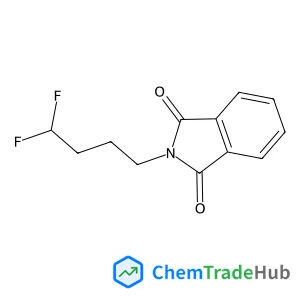
2-(4,4-Difluorobutyl)-1H-isoindole-1,3(2H)-dione
CAS Number:
1265341-14-7
Molecular Formula:
C12H11F2NO2
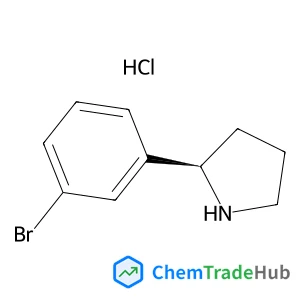
(2R)-2-(3-Bromophenyl)pyrrolidine hydrochloride (1:1)
CAS Number:
1391550-13-2
Molecular Formula:
C10H13BrClN
Recommended Suppliers






Disclaimer
This page provides academic journal information for reference and research purposes only. We are not affiliated with any journal publishers and do not handle publication submissions. For publication-related inquiries, please contact the respective journal publishers directly.
If you notice any inaccuracies in the information displayed, please contact us at support@chemtradehub.com. We will promptly review and address your concerns.