












Back matter
Literature Information
Publication Date
DOI
10.1039/B606935P
Impact Factor
6.222
Authors
View Original
Abstract
The first page of this article is displayed as the abstract.
Related Literature
Fluorescence-quenching CdTe quantum dots applied for identification of cocaine-structure analogues
Jacqueline Q. Alves, Lilian P. Franco, Marcelo F. de Oliveira
2018-11-28
Paper
DOI: 10.1039/C8AY02243G
Exploitation of a simple Schiff base as a ratiometric and colorimetric chemosensor for glutamic acid
Anupam Ghorai, Jahangir Mondal, Rukmani Chandra, Goutam K. Patra
2015-08-07
Paper
DOI: 10.1039/C5AY01465D
Discrimination of papers used in conservation and restoration by the means of the voltammetry of immobilized microparticles technique
Carolina Mai, Andrea Haba-Martínez, Antonio Doménech-Carbó
2019-08-06
Paper
DOI: 10.1039/C9AY00998A
A test method to evaluate chronic particulate generation from durable polymer stent coatings: a case study of CYPHER® sirolimus-eluting coronary stents
Judith H. Cohen, Karin M. Balss, Eugena Akerman-Revis, Mark Inderbitzen, James Lisk, Asha Marathe, Robert O'Brien, Elaine Pottinger-Cooper, William Rudd, Cheryl Wendel, George Papandreou, Cynthia A. Maryanoff
2012-09-21
Paper
DOI: 10.1039/C2AY25030F
Cathodic electrochemical activation of Co3O4 nanoarrays: a smart strategy to significantly boost the hydrogen evolution activity
Li Yang, Huang Zhou, Xin Qin, Xiaodong Guo, Guanwei Cui, Abdullah M. Asiri, Xuping Sun
2018-01-31
Communication
DOI: 10.1039/C7CC09416G
Sensing of citrulline modifications in histone peptides by deep cavitand hosts
Adam D. Gill, Briana L. Hickey, Siwen Wang
2019-10-11
Communication
DOI: 10.1039/C9CC07002H
Stepwise isolation of low-valent, low-coordinate Sn and Pb mono- and dications in the coordination sphere of platinum
Holger Braunschweig, Mehmet Ali Celik, Rian D. Dewhurst, Magdalena Heid, Florian Hupp, Sakya S. Sen
2014-10-15
Edge Article
DOI: 10.1039/C4SC02948H
Exploiting aerosol dilution for the determination of ultra-trace elements in honey by collision/reaction cell inductively coupled plasma mass spectrometry (CRC-ICP-MS) without thermal digestion
Serhat Döker
2017-02-02
Paper
DOI: 10.1039/C6AY03140D
A comparison of inductively coupled plasma torch-sample introduction configurations using simplex optimisation
Paper
DOI: 10.1039/JA9860100265
A CoII complex for 19F MRI-based detection of reactive oxygen species
Meng Yu, Da Xie, Khanh P. Phan, José S. Enriquez, Emily L. Que
2016-11-08
Communication
DOI: 10.1039/C6CC08207F
You might also like
Compound Q&A
What are the main uses of 1H-Indazole-6-carbonitrile (CAS: 141290-59-7)?
1H-Indazole-6-carbonitrile finds applications in pharmaceuticals, where it serve...
141290-59-71H-Indazole-6-carbon...
Compound Q&A
How should waste containing Dioctyl (2E)-2-butenedioate (CAS: 2997-85-5) be handled?
Waste containing Dioctyl (2E)-2-butenedioate (CAS: 2997-85-5) should be collecte...
2997-85-5Dioctyl (2E)-2-buten...
Compound Q&A
What industries use Sodium [(1,2-benzoxazol-3-ylmethyl)sulfonyl]azanide (CAS: 68291-98-5)?
Sodium [(1,2-benzoxazol-3-ylmethyl)sulfonyl]azanide is primarily used in pharmac...
68291-98-5Sodium [(1,2-benzoxa...
Compound Q&A
Are there alternatives to Dimethyl 4-(4,4,5,5-tetramethyl-1,3,2-dioxaborolan-2-yl)-2,6-pyridinedicarboxylate (CAS: 741709-66-0) in synthesis?
Dimethyl 4-(4,4,5,5-tetramethyl-1,3,2-dioxaborolan-2-yl)-2,6-pyridinedicarboxyla...
741709-66-0Dimethyl 4-(4,4,5,5-...
Compound Q&A
How should waste containing 2-Fluoro-6-hydrazinopyridine (CAS: 80714-39-2) be handled?
Waste containing 2-Fluoro-6-hydrazinopyridine (CAS: 80714-39-2) should be manage...
80714-39-22-Fluoro-6-hydrazino...
Compound Q&A
What is 6-Formyl-2-pyridinecarboxylic acid (CAS: 499214-11-8)?
6-Formyl-2-pyridinecarboxylic acid is an organic compound with the molecular for...
499214-11-86-Formyl-2-pyridinec...
Compound Q&A
What is the market or research trend for 3-(3,4-dimethoxyphenyl)-2,5-dimethyl-N-(2-morpholin-4-ylethyl)pyrazolo[1,5-a]pyrimidin-7-amine (CAS: 900874-91-1)?
Research trends for this compound indicate a focus on its potential applications...
900874-91-13-(3,4-dimethoxyphen...
Compound Q&A
How is 9H-Tribenzo[b,d,f]azepine (CAS: 29875-73-8) typically synthesized?
9H-Tribenzo[b,d,f]azepine is typically synthesized via a multi-step process invo...
29875-73-89H-Tribenzo[b,d,f]az...
Compound Q&A
How is 1-Cyclopropyl-7-ethoxy-6-fluoro-8-methoxy-4-oxo-1,4-dihydro-3-quinolinecarboxylic acid (CAS: 1797982-51-4) typically synthesized?
1-Cyclopropyl-7-ethoxy-6-fluoro-8-methoxy-4-oxo-1,4-dihydro-3-quinolinecarboxyli...
1797982-51-41-Cyclopropyl-7-etho...
Compound Q&A
How should waste containing Methyl 3-oxo-1,2,3,4-tetrahydro-6-quinoxalinecarboxylate (CAS: 671820-52-3) be handled?
Waste containing Methyl 3-oxo-1,2,3,4-tetrahydro-6-quinoxalinecarboxylate (CAS: ...
671820-52-3Methyl 3-oxo-1,2,3,4...
Source Journal
Chemical Communications

CiteScore:
8.6
Self-citation Rate:
4.7%
Articles per Year:
2458
ChemComm publishes urgent research which is of outstanding significance and interest to experts in the field, while also appealing to the journal’s broad chemistry readership. Our communication format is ideally suited to short, urgent studies that are of such importance that they require accelerated publication. Our scope covers all topics in chemistry, and research at the interface of chemistry and other disciplines (such as materials science, nanoscience, physics, engineering and biology) where there is a significant novelty in the chemistry aspects. Major topic areas covered include: Analytical Chemistry Catalysis Chemical Biology and medicinal chemistry Computational Chemistry and Machine Learning Energy and sustainable chemistry Environmental Chemistry Green Chemistry Inorganic Chemistry Materials Chemistry Nanoscience Organic Chemistry Physical Chemistry Polymer Chemistry Supramolecular Chemistry
Recommended Compounds
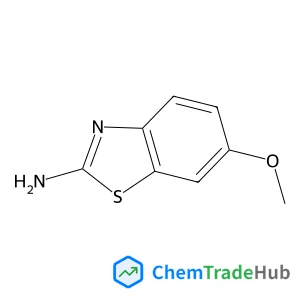
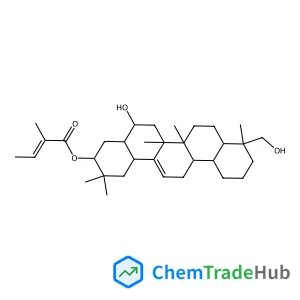
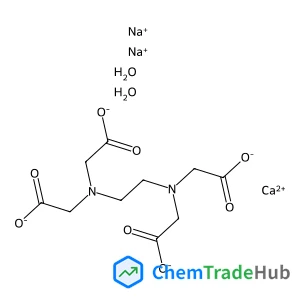
EthylenediaminetetraaceticacidcalciumDisodiumsalthydrate
CAS Number:
23411-34-9
Molecular Formula:
C10H16CaN2Na2O10
Recommended Suppliers





Disclaimer
This page provides academic journal information for reference and research purposes only. We are not affiliated with any journal publishers and do not handle publication submissions. For publication-related inquiries, please contact the respective journal publishers directly.
If you notice any inaccuracies in the information displayed, please contact us at support@chemtradehub.com. We will promptly review and address your concerns.