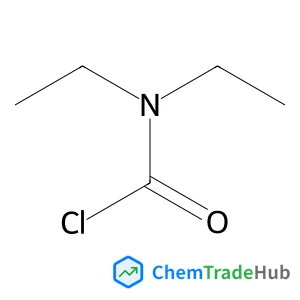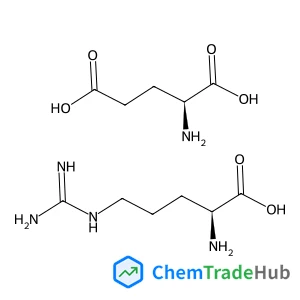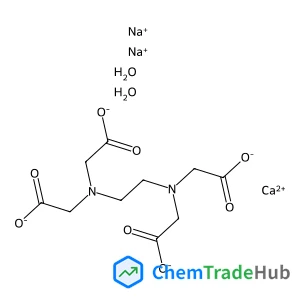
EthylenediaminetetraaceticacidcalciumDisodiumsalthydrate
CAS Number:
23411-34-9
Molecular Formula:
C10H16CaN2Na2O10
Serhat Döker
A rapid dilute-and-shoot procedure was described for the ultra-trace determination of Li, Al, Cr, Mn, Co, Ni, Cu, Zn, As, Cd, Tl, Pb and U in honey by collision/reaction cell inductively coupled plasma mass spectrometry (CRC-ICP-MS). The aerosol dilution technique was found effective in obtaining a better tolerance to the sample matrix, allowing the use of aqueous standards in the analysis. Some instrumental parameters such as the collision gas flow rate, aerosol dilution rate and sampling depth were optimized for reliable determination of elements in the presence of chloride, especially for Cr and As which are severely affected by carbon and chloride-based polyatomic interferents. The limit of detection (0.01–2.9 ng g−1) and precision (<3.3%) values were excellent. The main advantages of the method are the elimination of thermal digestion and aqueous dilution steps in sample preparation, and considerable reduction in reagent consumption and environmental waste. The results showed the applicability of the method in routine single-run multi-element analysis of various honey types (chestnut, multi-floral and sun flower).
Nino Wili, Sabine Richert, Bart Limburg, Simon J. Clarke, Harry L. Anderson, Christiane R. Timmel, Gunnar Jeschke
DOI: 10.1039/C9CP01760G
Leandro D. Mena, D. M. A. Vera, Maria T. Baumgartner, Liliana B. Jimenez
DOI: 10.1039/C9CP02028D
Remo N. Widmer, Giulio I. Lampronti, Nicola Casati, Stefan Farsang, Thomas D. Bennett, Simon A. T. Redfern
DOI: 10.1039/C9CP01463B
Rudramani Pokhrel, Nisha Bhattarai, Prabin Baral, Jae H. Park, Martin Handfield
DOI: 10.1039/C9CP01558B
Benjamin H. Strudwick, Christopher O’Bryen, Hans J. Sanders, Sander Woutersen
DOI: 10.1039/C9CP01906E
Mercè Deumal
DOI: 10.1039/C9CP00467J
Cheng-Xin Wang, Jian-Le Chen, Chen-Hui Shu, Ke-Ji Shi, Pei-Nian Liu
DOI: 10.1039/C9CP01843C
Bodo Zibrowius, Michael Felderhoff
DOI: 10.1039/C9CP01059A
Jesse Lentz, Stephen H. Garofalini
DOI: 10.1039/C9CP01994D
1H-Indazole-6-carbonitrile finds applications in pharmaceuticals, where it serve...
Waste containing Dioctyl (2E)-2-butenedioate (CAS: 2997-85-5) should be collecte...
Sodium [(1,2-benzoxazol-3-ylmethyl)sulfonyl]azanide is primarily used in pharmac...
Dimethyl 4-(4,4,5,5-tetramethyl-1,3,2-dioxaborolan-2-yl)-2,6-pyridinedicarboxyla...
Waste containing 2-Fluoro-6-hydrazinopyridine (CAS: 80714-39-2) should be manage...
6-Formyl-2-pyridinecarboxylic acid is an organic compound with the molecular for...
Research trends for this compound indicate a focus on its potential applications...
9H-Tribenzo[b,d,f]azepine is typically synthesized via a multi-step process invo...
1-Cyclopropyl-7-ethoxy-6-fluoro-8-methoxy-4-oxo-1,4-dihydro-3-quinolinecarboxyli...
Waste containing Methyl 3-oxo-1,2,3,4-tetrahydro-6-quinoxalinecarboxylate (CAS: ...
Analytical Methods welcomes early applications of new analytical and bioanalytical methods and technology demonstrating the potential for societal impact. We require that methods and technology reported in the journal are sufficiently innovative, robust, accurate, and compared to other available methods for the intended application. Developments with interdisciplinary approaches are particularly welcome. Systems should be proven with suitably complex and analytically challenging samples. We encourage developments within, but not limited to, the following technologies and applications: global health, point-of-care and molecular diagnostics biosensors and bioengineering drug development and pharmaceutical analysis applied microfluidics and nanotechnology omics studies, such as proteomics, metabolomics or glycomics environmental, agricultural and food science neuroscience biochemical and clinical analysis forensic analysis industrial process and method development