












Critical fracture properties of puckered and buckled arsenenes by molecular dynamics simulations
Literature Information
Publication Date
2019-05-14
DOI
10.1039/C9CP01605H
Impact Factor
3.676
Authors
Bo Yang, Maodong Li, Jiye Wang, Jingchao Zhang, Dongmei Liao, Yanan Yue
View Original
Abstract
The pioneering prediction and successful synthesis of monolayer arsenene in recent years have promoted intensive studies on this novel two-dimensional (2D) material. Strain-engineered arsenene monolayer can change its geometric structures with tuned charge distribution, which paves the way for achieving novel electronic properties. The practical applications of the strain-driven topological state in arsenene strongly depend on its critical strain value. In this work, mechanical properties such as fracture strain, fracture strength and Young's modulus of two arsenene structures, i.e. buckled arsenene (b-arsenene) and puckered arsenene (p-arsenene), are comprehensively investigated under different modulators such as system dimension, chirality, temperature, strain rate and random surface defect. A maximum fracture strain reduction of 41.7% from 0.24 to 0.14 is observed in armchair b-arsenene when the temperature increases from 100 to 500 K. The most significant impact factor on the mechanical properties of arseneneis found to be surface defects. A maximum fracture strength reduction of 85.7% is predicted in the armchair b-arsenene when the defect ratio increases from 0 to 5%. On the other hand, the strain rate has a negligible effect on the mechanical properties. Our results provide fundamental knowledge on the critical fracture properties of arsenene.
Related Literature
A supramolecular polymer with ultra-stretchable, notch-insensitive, rapid self-healing and adhesive properties
Lun Zhang, Dong Wang, Liqiang Xu, Aimin Zhang
2020-12-14
Paper
DOI: 10.1039/D0PY01536A
Autonomous self-healing polyisoprene elastomers with high modulus and good toughness based on the synergy of dynamic ionic crosslinks and highly disordered crystals
Mayu Yamada, Yu Shinke, Shoichi Kutsumizu
2020-09-07
Paper
DOI: 10.1039/D0PY01034K
pH- and chaotropic anion-induced conformational changes of tertiary amine-containing binary heterografted star molecular bottlebrushes in aqueous solution
Ethan W. Kent, Evan M. Lewoczko, Bin Zhao
2020-11-25
Paper
DOI: 10.1039/D0PY01466D
Pyridyl disulfide-based thiol–disulfide exchange reaction: shaping the design of redox-responsive polymeric materials
Ismail Altinbasak, Mehmet Arslan
2020-11-25
Review Article
DOI: 10.1039/D0PY01215G
Stimuli-responsive non-ionic Gemini amphiphiles for drug delivery applications
Rashmi, Abhishek K. Singh, Katharina Achazi, Christoph Böttcher, Rainer Haag, Sunil K. Sharma
2020-09-29
Paper
DOI: 10.1039/D0PY01040E
High-performance non-volatile resistive switching memory based on a polyimide/graphene oxide nanocomposite
Ju-Young Choi, Jeongjun Lee, Jihyun Jeon, Jaehyuk Im, Junhwan Jang, Seung-Won Jin, Hyeyoung Joung, Hwan-Chul Yu, Kyeong-Nam Nam, Hyeong-Joo Park, Dong-Min Kim, In-Ho Song, Jaesung Yang, Soohaeng Cho, Chan-Moon Chung
2020-11-12
Paper
DOI: 10.1039/D0PY01281E
Thermo- and oxidation-sensitive poly(meth)acrylates based on alkyl sulfoxides: dual-responsive homopolymers from one functional group
Doğuş Işık, Elisa Quaas, Daniel Klinger
2020-11-17
Paper
DOI: 10.1039/D0PY01321H
Chemical recycling of poly(thiourethane) thermosets enabled by dynamic thiourethane bonds
Sijia Huang, Xun Han, Christopher N. Bowman
2020-10-05
Communication
DOI: 10.1039/D0PY01050B
Facile topological transformation of ABA triblock copolymers into multisite, single-chain-folding and branched multiblock copolymers via sequential click coupling and anthracene chemistry
Yanzhe He, Zhigang Wang, Peng Liu, Xiangdong Zhou, Youliang Zhao
2021-01-13
Paper
DOI: 10.1039/D0PY01649G
You might also like
Compound Q&A
What are the main uses of 1H-Indazole-6-carbonitrile (CAS: 141290-59-7)?
1H-Indazole-6-carbonitrile finds applications in pharmaceuticals, where it serve...
141290-59-71H-Indazole-6-carbon...
Compound Q&A
How should waste containing Dioctyl (2E)-2-butenedioate (CAS: 2997-85-5) be handled?
Waste containing Dioctyl (2E)-2-butenedioate (CAS: 2997-85-5) should be collecte...
2997-85-5Dioctyl (2E)-2-buten...
Compound Q&A
What industries use Sodium [(1,2-benzoxazol-3-ylmethyl)sulfonyl]azanide (CAS: 68291-98-5)?
Sodium [(1,2-benzoxazol-3-ylmethyl)sulfonyl]azanide is primarily used in pharmac...
68291-98-5Sodium [(1,2-benzoxa...
Compound Q&A
Are there alternatives to Dimethyl 4-(4,4,5,5-tetramethyl-1,3,2-dioxaborolan-2-yl)-2,6-pyridinedicarboxylate (CAS: 741709-66-0) in synthesis?
Dimethyl 4-(4,4,5,5-tetramethyl-1,3,2-dioxaborolan-2-yl)-2,6-pyridinedicarboxyla...
741709-66-0Dimethyl 4-(4,4,5,5-...
Compound Q&A
How should waste containing 2-Fluoro-6-hydrazinopyridine (CAS: 80714-39-2) be handled?
Waste containing 2-Fluoro-6-hydrazinopyridine (CAS: 80714-39-2) should be manage...
80714-39-22-Fluoro-6-hydrazino...
Compound Q&A
What is 6-Formyl-2-pyridinecarboxylic acid (CAS: 499214-11-8)?
6-Formyl-2-pyridinecarboxylic acid is an organic compound with the molecular for...
499214-11-86-Formyl-2-pyridinec...
Compound Q&A
What is the market or research trend for 3-(3,4-dimethoxyphenyl)-2,5-dimethyl-N-(2-morpholin-4-ylethyl)pyrazolo[1,5-a]pyrimidin-7-amine (CAS: 900874-91-1)?
Research trends for this compound indicate a focus on its potential applications...
900874-91-13-(3,4-dimethoxyphen...
Compound Q&A
How is 9H-Tribenzo[b,d,f]azepine (CAS: 29875-73-8) typically synthesized?
9H-Tribenzo[b,d,f]azepine is typically synthesized via a multi-step process invo...
29875-73-89H-Tribenzo[b,d,f]az...
Compound Q&A
How is 1-Cyclopropyl-7-ethoxy-6-fluoro-8-methoxy-4-oxo-1,4-dihydro-3-quinolinecarboxylic acid (CAS: 1797982-51-4) typically synthesized?
1-Cyclopropyl-7-ethoxy-6-fluoro-8-methoxy-4-oxo-1,4-dihydro-3-quinolinecarboxyli...
1797982-51-41-Cyclopropyl-7-etho...
Compound Q&A
How should waste containing Methyl 3-oxo-1,2,3,4-tetrahydro-6-quinoxalinecarboxylate (CAS: 671820-52-3) be handled?
Waste containing Methyl 3-oxo-1,2,3,4-tetrahydro-6-quinoxalinecarboxylate (CAS: ...
671820-52-3Methyl 3-oxo-1,2,3,4...
Source Journal
Physical Chemistry Chemical Physics

CiteScore:
5.5
Self-citation Rate:
10.3%
Articles per Year:
3036
Physical Chemistry Chemical Physics (PCCP) is an international journal co-owned by 19 physical chemistry and physics societies from around the world. This journal publishes original, cutting-edge research in physical chemistry, chemical physics and biophysical chemistry. To be suitable for publication in PCCP, articles must include significant innovation and/or insight into physical chemistry; this is the most important criterion that reviewers and Editors will judge against when evaluating submissions. The journal has a broad scope and welcomes contributions spanning experiment, theory, computation and data science. Topical coverage includes spectroscopy, dynamics, kinetics, statistical mechanics, thermodynamics, electrochemistry, catalysis, surface science, quantum mechanics, quantum computing and machine learning. Interdisciplinary research areas such as polymers and soft matter, materials, nanoscience, energy, surfaces/interfaces, and biophysical chemistry are welcomed if they demonstrate significant innovation and/or insight into physical chemistry. Joined experimental/theoretical studies are particularly appreciated when complementary and based on up-to-date approaches.
Recommended Compounds


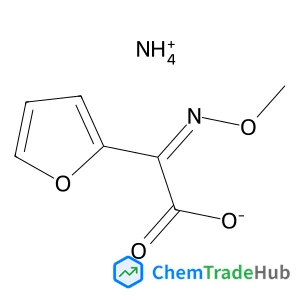
Ammonium (Z)-2-(furan-2-yl)-2-(methoxyimino)acetate
CAS Number:
97148-39-5
Molecular Formula:
C7H10N2O4
Recommended Suppliers







Disclaimer
This page provides academic journal information for reference and research purposes only. We are not affiliated with any journal publishers and do not handle publication submissions. For publication-related inquiries, please contact the respective journal publishers directly.
If you notice any inaccuracies in the information displayed, please contact us at support@chemtradehub.com. We will promptly review and address your concerns.