












On-surface synthesis of 2D COFs on Cu(111) via the formation of thermodynamically stable organometallic networks as the template
Literature Information
Publication Date
2019-05-31
DOI
10.1039/C9CP01843C
Impact Factor
3.676
Authors
Cheng-Xin Wang, Jian-Le Chen, Chen-Hui Shu, Ke-Ji Shi, Pei-Nian Liu
View Original
Abstract
Template-directed polymerization is an effective approach used to afford regular 2D covalent organic frameworks (COFs), thus the regularity of the template is crucial for the quality of the resulting 2D COFs. For the Ullmann reactions on Cu(111), aryl iodides and bromides are activated at low temperature to form organometallic C–Cu–C structures, which lead to kinetic trapping and irregular organometallic networks. Therefore, the subsequent annealing step can only afford irregular 2D COFs. In this manuscript, the molecule 4,4′′-dibromo-5′-(4-chlorophenyl)-1,1′:3′,1′′-terphenyl incorporated two Br terminals and one Cl terminal has been used to demonstrate different reactivities of a C–Cl bond and a C–Br bond via the hierarchical activation of the C–Br bond and the C–Cl bond on Cu(111). At room temperature, zigzag, armchair, and ring-like organometallic chains formed due to the activation of the C–Br bond to generate a C–Cu–C structure while C–Cl remained intact, illustrating that the C–Cl bond is more stable than C–Br. Further annealing at 433 K activated the C–Cl bond to produce regular organometallic networks as the thermodynamic product. Using the simpler molecule 1,3,5-tris(4-chlorophenyl)benzene as the precursor, the self-assembly of the intact molecules was observed on Cu(111) at 300 K without activation of the C–Cl bond. After annealing at 433 K, similar thermodynamically stable organometallic networks formed directly, which were used as a template to generate regular 2D COFs upon further annealing at 510 K.
Related Literature
Hierarchical self-assembly and controlled disassembly of a cavitand-based host–guest supramolecular polymer
Daniele Zuccaccia, Roberta Pinalli, Rita De Zorzi, Monica Semeraro, Alberto Credi, Cristiano Zuccaccia, Alceo Macchioni, Silvano Geremia, Enrico Dalcanale
2020-11-26
Paper
DOI: 10.1039/D0PY01483D
Self-polymerization of Meldrum's acid-amine compounds: an effective route to polyamides
Chien-Ho Huang, Ying-Ling Liu
2020-11-23
Paper
DOI: 10.1039/D0PY01341B
Insight into the synthesis of N-methylated polypeptides
Christian Muhl, Lydia Zengerling, Jonathan Groß, Paul Eckhardt, Till Opatz, Pol Besenius
2020-10-06
Paper
DOI: 10.1039/D0PY01055C
Synthesis, aqueous solution behavior and self-assembly of a dual pH/thermo-responsive fluorinated diblock terpolymer
Panagiotis G. Falireas, Vincent Ladmiral, Bruno Ameduri
2020-11-23
Paper
DOI: 10.1039/D0PY01515F
A covalent organic framework as a photocatalyst for atom transfer radical polymerization under white light irradiation
Xiaoling Fu, Hongjie Yang
2020-12-17
Communication
DOI: 10.1039/D0PY01545H
An in-depth analysis approach enabling precision single chain nanoparticle design
Ralf Schweins, Hartmut Komber
2020-09-21
Paper
DOI: 10.1039/D0PY01045F
3D Printing of a self-healing, high strength, and reprocessable thermoset
Tianyu Yuan, Lisha Zhang, Tony Li, Ruowen Tu
2020-09-01
Paper
DOI: 10.1039/D0PY00819B
Facile topological transformation of ABA triblock copolymers into multisite, single-chain-folding and branched multiblock copolymers via sequential click coupling and anthracene chemistry
Yanzhe He, Zhigang Wang, Peng Liu, Xiangdong Zhou, Youliang Zhao
2021-01-13
Paper
DOI: 10.1039/D0PY01649G
Multimesophase transitions of main-chain liquid crystalline copolymers with strictly alternating fluorocarbon chains
Enjie He, Kai Tu, Jiannan Cheng, Huanjun Lu, Lifen Zhang, Zhenping Cheng, Xiulin Zhu
2021-01-05
Paper
DOI: 10.1039/D0PY01644F
You might also like
Compound Q&A
What are the main uses of 1H-Indazole-6-carbonitrile (CAS: 141290-59-7)?
1H-Indazole-6-carbonitrile finds applications in pharmaceuticals, where it serve...
141290-59-71H-Indazole-6-carbon...
Compound Q&A
How should waste containing Dioctyl (2E)-2-butenedioate (CAS: 2997-85-5) be handled?
Waste containing Dioctyl (2E)-2-butenedioate (CAS: 2997-85-5) should be collecte...
2997-85-5Dioctyl (2E)-2-buten...
Compound Q&A
What industries use Sodium [(1,2-benzoxazol-3-ylmethyl)sulfonyl]azanide (CAS: 68291-98-5)?
Sodium [(1,2-benzoxazol-3-ylmethyl)sulfonyl]azanide is primarily used in pharmac...
68291-98-5Sodium [(1,2-benzoxa...
Compound Q&A
Are there alternatives to Dimethyl 4-(4,4,5,5-tetramethyl-1,3,2-dioxaborolan-2-yl)-2,6-pyridinedicarboxylate (CAS: 741709-66-0) in synthesis?
Dimethyl 4-(4,4,5,5-tetramethyl-1,3,2-dioxaborolan-2-yl)-2,6-pyridinedicarboxyla...
741709-66-0Dimethyl 4-(4,4,5,5-...
Compound Q&A
How should waste containing 2-Fluoro-6-hydrazinopyridine (CAS: 80714-39-2) be handled?
Waste containing 2-Fluoro-6-hydrazinopyridine (CAS: 80714-39-2) should be manage...
80714-39-22-Fluoro-6-hydrazino...
Compound Q&A
What is 6-Formyl-2-pyridinecarboxylic acid (CAS: 499214-11-8)?
6-Formyl-2-pyridinecarboxylic acid is an organic compound with the molecular for...
499214-11-86-Formyl-2-pyridinec...
Compound Q&A
What is the market or research trend for 3-(3,4-dimethoxyphenyl)-2,5-dimethyl-N-(2-morpholin-4-ylethyl)pyrazolo[1,5-a]pyrimidin-7-amine (CAS: 900874-91-1)?
Research trends for this compound indicate a focus on its potential applications...
900874-91-13-(3,4-dimethoxyphen...
Compound Q&A
How is 9H-Tribenzo[b,d,f]azepine (CAS: 29875-73-8) typically synthesized?
9H-Tribenzo[b,d,f]azepine is typically synthesized via a multi-step process invo...
29875-73-89H-Tribenzo[b,d,f]az...
Compound Q&A
How is 1-Cyclopropyl-7-ethoxy-6-fluoro-8-methoxy-4-oxo-1,4-dihydro-3-quinolinecarboxylic acid (CAS: 1797982-51-4) typically synthesized?
1-Cyclopropyl-7-ethoxy-6-fluoro-8-methoxy-4-oxo-1,4-dihydro-3-quinolinecarboxyli...
1797982-51-41-Cyclopropyl-7-etho...
Compound Q&A
How should waste containing Methyl 3-oxo-1,2,3,4-tetrahydro-6-quinoxalinecarboxylate (CAS: 671820-52-3) be handled?
Waste containing Methyl 3-oxo-1,2,3,4-tetrahydro-6-quinoxalinecarboxylate (CAS: ...
671820-52-3Methyl 3-oxo-1,2,3,4...
Source Journal
Physical Chemistry Chemical Physics

CiteScore:
5.5
Self-citation Rate:
10.3%
Articles per Year:
3036
Physical Chemistry Chemical Physics (PCCP) is an international journal co-owned by 19 physical chemistry and physics societies from around the world. This journal publishes original, cutting-edge research in physical chemistry, chemical physics and biophysical chemistry. To be suitable for publication in PCCP, articles must include significant innovation and/or insight into physical chemistry; this is the most important criterion that reviewers and Editors will judge against when evaluating submissions. The journal has a broad scope and welcomes contributions spanning experiment, theory, computation and data science. Topical coverage includes spectroscopy, dynamics, kinetics, statistical mechanics, thermodynamics, electrochemistry, catalysis, surface science, quantum mechanics, quantum computing and machine learning. Interdisciplinary research areas such as polymers and soft matter, materials, nanoscience, energy, surfaces/interfaces, and biophysical chemistry are welcomed if they demonstrate significant innovation and/or insight into physical chemistry. Joined experimental/theoretical studies are particularly appreciated when complementary and based on up-to-date approaches.
Recommended Compounds
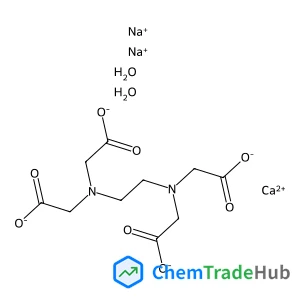
EthylenediaminetetraaceticacidcalciumDisodiumsalthydrate
CAS Number:
23411-34-9
Molecular Formula:
C10H16CaN2Na2O10

Recommended Suppliers






Disclaimer
This page provides academic journal information for reference and research purposes only. We are not affiliated with any journal publishers and do not handle publication submissions. For publication-related inquiries, please contact the respective journal publishers directly.
If you notice any inaccuracies in the information displayed, please contact us at support@chemtradehub.com. We will promptly review and address your concerns.