












Seaurchin-like hierarchical NiCo2O4@NiMoO4 core–shell nanomaterials for high performance supercapacitors
Literature Information
Publication Date
2014-09-12
DOI
10.1039/C4CP02928C
Impact Factor
3.676
Authors
Qiang Zhang, Yanghua Deng, Zhonghua Hu, Yafei Liu, Mingming Yao, Peipei Liu
View Original
Abstract
A novel electrode material of the three-dimensional (3D) multicomponent oxide NiCo2O4@NiMoO4 core–shell was synthesized via a facile two-step hydrothermal method using a post-annealing procedure. The uniform NiMoO4 nanosheets were grown on the seaurchin-like NiCo2O4 backbone to form a NiCo2O4@NiMoO4 core–shell material constructed by interconnected ultrathin nanosheets, so as to produce hierarchical mesopores with a large specific surface area of 100.3 m2 g−1. The porous feature and core–shell structure can facilitate the penetration of electrolytic ions and increases the number of electroactive sites. Hence, the NiCo2O4@NiMoO4 material exhibited a high specific capacitance of 2474 F g−1 and 2080 F g−1 at current densities of 1 A g−1 and 20 A g−1 respectively, suggesting that it has not only a very large specific capacitance, but also a good rate performance. In addition, the capacitance loss was only 5.0% after 1000 cycles of charge and discharge tests at the current density of 10 A g−1, indicating high stability. The excellent electrochemical performance is mainly attributed to its 3D core–shell and hierarchical mesoporous structures which can provide unobstructed pathways for the fast diffusion and transportation of ions and electrons, a large number of active sites and good strain accommodation.
Related Literature
Novel Pt/CeO2/C catalysts for electrooxidation of alcohols in alkaline media
Changwei Xu, Pei Kang Shen
2004-08-25
Communication
DOI: 10.1039/B408589B
A supramolecular approach to the selective detection of dopamine in the presence of ascorbate
Alex Fragoso, Eduardo Almirall, Roberto Cao, Luis Echegoyen, Raúl González-Jonte
2004-08-23
Communication
DOI: 10.1039/B407792J
Room temperature photochromic liquid crystal [3H]-naphtho[2,1-b]pyrans—photochromism in the mesomorphic state
Michel Frigoli, Georg H. Mehl
2004-08-02
Communication
DOI: 10.1039/B407561G
An active ferrocenyl triarylphosphine for palladium-catalyzed Suzuki–Miyaura cross-coupling of aryl halides
Fuk Yee Kwong, Kin Shing Chan, Chi Hung Yeung, Albert S. C. Chan
2004-09-21
Communication
DOI: 10.1039/B407661C
Unexpected oxidative C–C cleavage in the metallation of 2-substituted imidazolium salts to give N-heterocyclic carbene complexes
Anthony R. Chianese, Brian M. Zeglis, Robert H. Crabtree
2004-08-25
Communication
DOI: 10.1039/B409672J
Aminooxazolinate; a chiral amidinate analogue
Ian J. Munslow, Andrew R. Wade, Robert J. Deeth, Peter Scott
2004-09-30
Communication
DOI: 10.1039/B409113B
New reactions in water: metal-free conversion of alcohols and ketones into α-iodoketones
José Barluenga, María Marco-Arias, Francisco González-Bobes, Alfredo Ballesteros, José M. González
2004-10-04
Communication
DOI: 10.1039/B411227J
A new approach to bioconjugates for proteins and peptides (“pegylation”) utilising living radical polymerisation
François Lecolley, Lei Tao, Giuseppe Mantovani, Ian Durkin, Sylvie Lautru, David M. Haddleton
2004-07-28
Communication
DOI: 10.1039/B407712A
Isolation and characterisation of the mixed-metal alkyl amide [(TMEDA)Na(μ-Bu)(μ-TMP)Mg(TMP)], an unexpected chelate-trapped intermediate in the formation of inverse crowns
Eva Hevia, Daniel J. Gallagher, Alan R. Kennedy, Robert E. Mulvey, Charles T. O'Hara, Christine Talmard
2004-09-23
Communication
DOI: 10.1039/B410293B
Self-oriented pseudoisocyanine J-aggregates in solution
Ken Takazawa, Yasutaka Kitahama, Yasuyuki Kimura
2004-09-07
Communication
DOI: 10.1039/B409690H
You might also like
Compound Q&A
How should waste containing 6-Chloro-5-(2'-hydroxy-3'-methoxy-4-biphenylyl)-3-(3-methoxyphenyl)-1H-pyrrolo[3,2-d]pyrimidine-2,4(3H,5H)-dione (CAS: 1346607-05-3) be handled?
Waste containing 6-Chloro-5-(2'-hydroxy-3'-methoxy-4-biphenylyl)-3-(3-methoxyphe...
1346607-05-36-Chloro-5-(2'-hydro...
Compound Q&A
What are the main uses of (3alpha,5alpha)-3-Hydroxypregnane-11,20-dione (CAS: 23930-19-0)?
(3alpha,5alpha)-3-Hydroxypregnane-11,20-dione is primarily used in the pharmaceu...
23930-19-0(3alpha,5alpha)-3-Hy...
Compound Q&A
What is the market or research trend for 4-Amino-6-chloro-2-pyridinecarboxylic acid (CAS: 546141-56-4)?
The market for 4-Amino-6-chloro-2-pyridinecarboxylic acid (CAS: 546141-56-4) is ...
546141-56-44-Amino-6-chloro-2-p...
Compound Q&A
Are there alternatives to (2-Benzoylethyl)trimethylammonium chloride (CAS: 24472-88-6) in synthesis?
Alternatives to (2-Benzoylethyl)trimethylammonium chloride (CAS: 24472-88-6) in ...
24472-88-6(2-Benzoylethyl)trim...
Compound Q&A
Is N-[4-Nitro-3-(trifluoromethyl)phenyl]acetamide (CAS: 393-12-4) safe?
N-[4-Nitro-3-(trifluoromethyl)phenyl]acetamide (CAS: 393-12-4) is generally safe...
393-12-4N-[4-Nitro-3-(triflu...
Compound Q&A
Are there alternatives to [(4R,5R,6S)-5-hydroxy-10-imino-3,7-dioxa-1,9-diazatricyclo[6.4.0.02,6]dodeca-8,11-dien-4-yl]methyl dihydrogen phosphate (CAS: 39679-56-6) in synthesis?
Alternative reagents such as other phosphates or similar functional groups can b...
39679-56-6[(4R,5R,6S)-5-hydrox...
Compound Q&A
Are there alternatives to N,N'-Bis(3-aminopropyl)-1,3-propanediamine (CAS: 4605-14-5) in synthesis?
There are alternatives to N,N'-Bis(3-aminopropyl)-1,3-propanediamine (CAS: 4605-...
4605-14-5N,N'-Bis(3-aminoprop...
Compound Q&A
What precautions should be taken when handling Aluminium trihexadecanoate (CAS: 555-35-1)?
When handling Aluminium trihexadecanoate, it is important to use appropriate per...
555-35-1Aluminium trihexadec...
Compound Q&A
What is (1,1-Dioxido-3-oxo-1,2-benzothiazol-2(3H)-yl)acetic acid (CAS: 52188-11-1)?
(1,1-Dioxido-3-oxo-1,2-benzothiazol-2(3H)-yl)acetic acid is a chemical compound ...
52188-11-1(1,1-Dioxido-3-oxo-1...
Compound Q&A
Are there alternatives to 5,5-dimethyloxolan-2-one (CAS: 3123-97-5) in synthesis?
Several alternatives to 5,5-dimethyloxolan-2-one (CAS: 3123-97-5) can be used in...
3123-97-55,5-dimethyloxolan-2...
Source Journal
Physical Chemistry Chemical Physics

CiteScore:
5.5
Self-citation Rate:
10.3%
Articles per Year:
3036
Physical Chemistry Chemical Physics (PCCP) is an international journal co-owned by 19 physical chemistry and physics societies from around the world. This journal publishes original, cutting-edge research in physical chemistry, chemical physics and biophysical chemistry. To be suitable for publication in PCCP, articles must include significant innovation and/or insight into physical chemistry; this is the most important criterion that reviewers and Editors will judge against when evaluating submissions. The journal has a broad scope and welcomes contributions spanning experiment, theory, computation and data science. Topical coverage includes spectroscopy, dynamics, kinetics, statistical mechanics, thermodynamics, electrochemistry, catalysis, surface science, quantum mechanics, quantum computing and machine learning. Interdisciplinary research areas such as polymers and soft matter, materials, nanoscience, energy, surfaces/interfaces, and biophysical chemistry are welcomed if they demonstrate significant innovation and/or insight into physical chemistry. Joined experimental/theoretical studies are particularly appreciated when complementary and based on up-to-date approaches.
Recommended Compounds
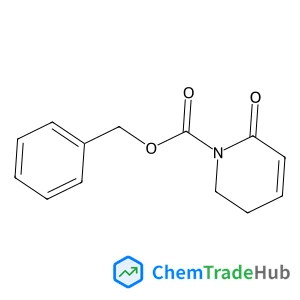
Benzyl 6-oxo-3,6-dihydro-1(2H)-pyridinecarboxylate
CAS Number:
725746-35-0
Molecular Formula:
C13H13NO3
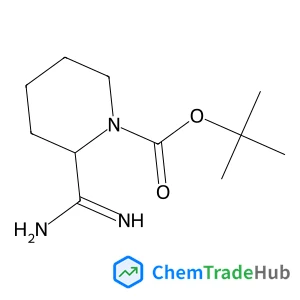
2-Methyl-2-propanyl 2-carbamimidoyl-1-piperidinecarboxylate
CAS Number:
1258640-98-0
Molecular Formula:
C11H21N3O2
![N-{[(2-Methyl-2-propanyl)oxy]carbonyl}-L-methionylglycine structure](https://static.chemtradehub.com/structs/234/23446-03-9-e1e5.webp "N-{[(2-Methyl-2-propanyl)oxy]carbonyl}-L-methionylglycine structure")
N-{[(2-Methyl-2-propanyl)oxy]carbonyl}-L-methionylglycine
CAS Number:
23446-03-9
Molecular Formula:
C12H22N2O5S
Recommended Suppliers





Disclaimer
This page provides academic journal information for reference and research purposes only. We are not affiliated with any journal publishers and do not handle publication submissions. For publication-related inquiries, please contact the respective journal publishers directly.
If you notice any inaccuracies in the information displayed, please contact us at support@chemtradehub.com. We will promptly review and address your concerns.