












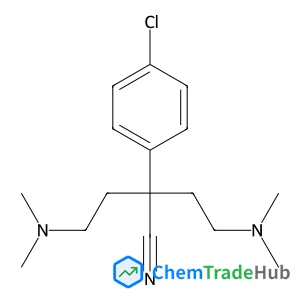
2-(4-Chlorophenyl)-4-(dimethylamino)-2-(2-(dimethylamino)ethyl)butanenitrile
CAS Number:
1246816-57-8
Molecular Formula:
C16H24ClN3
Jiří Kolafa, Stanislav Labík, Anatol Malijevský
New accurate data on the compressibility factor of the hard sphere fluid are obtained by highly optimized molecular dynamics calculations in the range of reduced densities 0.20–1.03. The relative inaccuracy at the 95% confidence level is better than 0.00004 for all densities but the last deeply metastable point. This accuracy requires careful examination of finite size effects and other possible sources of errors and applying corrections. The data are fitted to a power series in y/(1 − y), where y is the packing fraction; the coefficients are determined so that virial coefficients B2 to B6 are reproduced. To do this, values of B5 and B6 are accurately recalculated. Virial coefficients up to B11 are then estimated from the equation of state.
James Neef, Daniel S. Palacios
DOI: 10.1039/D1MD00096A
Sameer Phadke, Lluis Lopez-Barcons, Nathalie Vandecan, Zhifen Wu, Taylor K. Johnson, Eric J. Lachacz, Sofia D. Merajver, Matthew B. Soellner
DOI: 10.1039/D1MD00296A
Meng Liu, Dong Li, Kun Li, Haitao Xu, Jiufu Lu, Xianzhao Shao, Taihong Liu
DOI: 10.1039/D1SD00016K
Ekaterina S. Sazanova, Iuliia A. Gracheva, Diane Allegro, Pascale Barbier, Elena V. Svirshchevskaya, Alexey Yu Fedorov
DOI: 10.1039/D0MD00060D
Daniel P. Brooke, Leah M. C. McGee, Federica Giordani, Jasmine M. Cross, Abedawn I. Khalaf, Craig Irving, Craig D. Shaw, Katharine C. Carter, Michael P. Barrett, Colin J. Suckling, Fraser J. Scott
DOI: 10.1039/D1MD90044G
Bojana R. Vasiljević, Edward T. Petri, Sofija S. Bekić, Andjelka S. Ćelić, Ljubica M. Grbović, Ksenija J. Pavlović
DOI: 10.1039/D0MD00311E
Mabel Catalán, Vicente Castro-Castillo, Javier Gajardo-de la Fuente, Jocelyn Aguilera, Jorge Ferreira, Ricardo Ramires-Fernandez, Ivonne Olmedo, Alfredo Molina-Berríos, Charlotte Palominos, Marcelo Valencia, Marta Domínguez, José A. Souto, José A. Jara
DOI: 10.1039/D0MD00153H
Alexandra Correia, Cláudia Alves, Patrícia Figueiredo
DOI: 10.1039/D0MD00253D
Guilherme Vieira de Castro, Alessio Ciulli
DOI: 10.1039/D1MD00215E
This compound is mainly used as an intermediate in the synthesis of antipsychoti...
Waste containing 1-(D-Ribofuranosyl)-1,4-dihydro-3-pyridinecarboxamide (CAS: 191...
2-Methyl-2-propanyl 3-bromo-3-(hydroxymethyl)-1-azetidinecarboxylate (CAS: 20079...
N-(4-Chloro-2-pyridinyl)acetamide (CAS: 245056-66-0) is a chemical compound with...
5-Chloro-2-hydroxybenzoic acid, also known as 5-chlorosalicylic acid, is an arom...
When handling 1,1-Dichloro-1-fluoroethane (CAS: 1717-00-6), it is important to u...
Fmoc-(2S,3R)-3-phenylpyrrolidine-2-carboxylic acid is a white crystalline solid ...
4-Amino-5-bromo-2-pyridinecarboxylic acid is primarily used as a precursor in th...
Handling this compound should be done with personal protective equipment (PPE) i...
When handling 8-bromo-2,2-dimethyl-3,4-dihydro-2H-1,4-benzoxazin-3-one, use prop...

Physical Chemistry Chemical Physics (PCCP) is an international journal co-owned by 19 physical chemistry and physics societies from around the world. This journal publishes original, cutting-edge research in physical chemistry, chemical physics and biophysical chemistry. To be suitable for publication in PCCP, articles must include significant innovation and/or insight into physical chemistry; this is the most important criterion that reviewers and Editors will judge against when evaluating submissions. The journal has a broad scope and welcomes contributions spanning experiment, theory, computation and data science. Topical coverage includes spectroscopy, dynamics, kinetics, statistical mechanics, thermodynamics, electrochemistry, catalysis, surface science, quantum mechanics, quantum computing and machine learning. Interdisciplinary research areas such as polymers and soft matter, materials, nanoscience, energy, surfaces/interfaces, and biophysical chemistry are welcomed if they demonstrate significant innovation and/or insight into physical chemistry. Joined experimental/theoretical studies are particularly appreciated when complementary and based on up-to-date approaches.

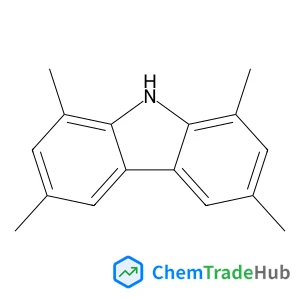
![2,6-Di(thiophen-2-yl)dithieno[3,2-b:2',3'-d]thiophene structure](https://static.chemtradehub.com/structs/910/910788-24-8-5b70.webp "2,6-Di(thiophen-2-yl)dithieno[3,2-b:2',3'-d]thiophene structure")




