












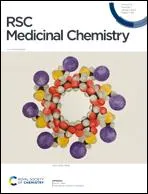
Progress in mechanistically novel treatments for schizophrenia
Literature Information
Publication Date
2021-06-29
DOI
10.1039/D1MD00096A
Impact Factor
0
Authors
James Neef, Daniel S. Palacios
View Original
Abstract
Currently available pharmacological treatments for schizophrenia derive their activity mainly by directly modulating the D2 receptor. This mode of action can alleviate the positive symptoms of schizophrenia but do not address the negative or cognitive symptoms of the disease and carry a heavy side effect burden that leads to high levels of patient non-compliance. Novel mechanisms to treat the positive symptoms of schizophrenia with improved tolerability, as well as medicines to treat negative and cognitive symptoms are urgently required. Recent efforts to identify small molecules for schizophrenia with non-D2 mechanisms will be highlighted, with a focus on those that have reached clinical development. Finally, the potential for disease modifying treatments for schizophrenia will also be discussed.
Related Literature
Two and three dimensional network polymers for electrocatalysis
Alan Filer, Hyun-Jung Choi, Jeong-Min Seo, Jong-Beom Baek
2014-04-30
Perspective
DOI: 10.1039/C4CP01246A
Experimental consideration of the Hansen solubility parameters of as-produced multi-walled carbon nanotubes by inverse gas chromatography
Hyeong Jun Lim, Kunsil Lee, Young Shik Cho, Yern Seung Kim, Taehoon Kim, Chong Rae Park
2014-07-01
Paper
DOI: 10.1039/C4CP02319F
Optical manipulation of single molecules in the living cell
Kamilla Norregaard, Liselotte Jauffred, Kirstine Berg-Sørensen, Lene B. Oddershede
2014-03-10
Review Article
DOI: 10.1039/C4CP00208C
The theoretical account of the ligand field bonding regime and magnetic anisotropy in the DySc2N@C80 single ion magnet endohedral fullerene
Fanica Cimpoesu, Nita Dragoe, Harry Ramanantoanina, Werner Urland, Claude Daul
2014-04-07
Paper
DOI: 10.1039/C4CP00953C
The nuclear electric quadrupole moment of copper
Régis Tadeu Santiago, Tiago Quevedo Teodoro, Roberto Luiz Andrade Haiduke
2014-03-17
Paper
DOI: 10.1039/C4CP00706A
A new assisted molecular cycloaddition on boron doped silicon surfaces: a predictive DFT-D study
Khaoula Boukari, Eric Duverger, Louise Stauffer, Philippe Sonnet
2014-04-28
Paper
DOI: 10.1039/C4CP00839A
Magnetically recoverable Ni/C catalysts with hierarchical structure and high-stability for selective hydrogenation of nitroarenes
Peng Zhang, Chang Yu, Xiaoming Fan, Xiuna Wang, Zheng Ling, Zonghua Wang, Jieshan Qiu
2014-11-10
Paper
DOI: 10.1039/C4CP03978E
Towards chiral distributions of dopants in microporous frameworks: helicoidal supramolecular arrangement of (1R,2S)-ephedrine and transfer of chirality
Luis Gómez-Hortigüela, Teresa Álvaro-Muñoz, Beatriz Bernardo-Maestro, Joaquín Pérez-Pariente
2014-11-03
Paper
DOI: 10.1039/C4CP03957B
You might also like
Compound Q&A
What are the main uses of 1-(3-Aminophenyl)-3-[(3R)-1-(3,3-dimethyl-2-oxobutyl)-2-oxo-5-(2-pyridinyl)-2,3-dihydro-1H-1,4-benzodiazepin-3-yl]urea (CAS: 155412-88-7)?
This compound is mainly used as an intermediate in the synthesis of antipsychoti...
155412-88-71-(3-Aminophenyl)-3-...
Compound Q&A
How should waste containing 1-(D-Ribofuranosyl)-1,4-dihydro-3-pyridinecarboxamide (CAS: 19132-12-8) be handled?
Waste containing 1-(D-Ribofuranosyl)-1,4-dihydro-3-pyridinecarboxamide (CAS: 191...
19132-12-81-(D-Ribofuranosyl)-...
Compound Q&A
What regulatory guidelines apply to 2-Methyl-2-propanyl 3-bromo-3-(hydroxymethyl)-1-azetidinecarboxylate (CAS: 2007919-81-3)?
2-Methyl-2-propanyl 3-bromo-3-(hydroxymethyl)-1-azetidinecarboxylate (CAS: 20079...
2007919-81-32-Methyl-2-propanyl ...
Compound Q&A
What is N-(4-Chloro-2-pyridinyl)acetamide (CAS: 245056-66-0)?
N-(4-Chloro-2-pyridinyl)acetamide (CAS: 245056-66-0) is a chemical compound with...
245056-66-0N-(4-Chloro-2-pyridi...
Compound Q&A
What is 5-Chloro-2-hydroxybenzoic acid (CAS: 321-14-2)?
5-Chloro-2-hydroxybenzoic acid, also known as 5-chlorosalicylic acid, is an arom...
321-14-25-Chloro-2-hydroxybe...
Compound Q&A
What precautions should be taken when handling 1,1-Dichloro-1-fluoroethane (CAS: 1717-00-6)?
When handling 1,1-Dichloro-1-fluoroethane (CAS: 1717-00-6), it is important to u...
1717-00-61,1-Dichloro-1-fluor...
Compound Q&A
What are the physical and chemical properties of Fmoc-(2S,3R)-3-phenylpyrrolidine-2-carboxylic acid (CAS: 281655-32-1)?
Fmoc-(2S,3R)-3-phenylpyrrolidine-2-carboxylic acid is a white crystalline solid ...
281655-32-1Fmoc-(2S,3R)-3-pheny...
Compound Q&A
What are the main uses of 4-Amino-5-bromo-2-pyridinecarboxylic acid (CAS: 1363381-01-4)?
4-Amino-5-bromo-2-pyridinecarboxylic acid is primarily used as a precursor in th...
1363381-01-44-Amino-5-bromo-2-py...
Compound Q&A
What precautions should be taken when handling (S)-tert-butyl 2-((2-(4-bromophenyl)-2-oxoethyl)carbamoyl)pyrrolidine-1-carboxylate (CAS: 1007881-98-2)?
Handling this compound should be done with personal protective equipment (PPE) i...
1007881-98-2(S)-tert-butyl 2-((2...
Compound Q&A
What precautions should be taken when handling 8-bromo-2,2-dimethyl-3,4-dihydro-2H-1,4-benzoxazin-3-one (CAS: 688363-73-7)?
When handling 8-bromo-2,2-dimethyl-3,4-dihydro-2H-1,4-benzoxazin-3-one, use prop...
688363-73-78-bromo-2,2-dimethyl...
Source Journal
Recommended Compounds
![Pyrazolo[1,5-a]pyridine-3-carbothioamide structure](https://static.chemtradehub.com/structs/885/885275-44-5-aae0.webp "Pyrazolo[1,5-a]pyridine-3-carbothioamide structure")
Recommended Suppliers





Disclaimer
This page provides academic journal information for reference and research purposes only. We are not affiliated with any journal publishers and do not handle publication submissions. For publication-related inquiries, please contact the respective journal publishers directly.
If you notice any inaccuracies in the information displayed, please contact us at support@chemtradehub.com. We will promptly review and address your concerns.