












Free electron transfer mirrors rotational conformers of substituted aromatics: Reaction of benzyltrimethylsilanes with n-butyl chloride parent radical cations
Literature Information
Publication Date
2004-04-05
DOI
10.1039/B402052A
Impact Factor
3.676
Authors
Ortwin Brede, Ralf Hermann, Sergej Naumov, Antonios K. Zarkadis, Gerasimos P. Perdikomatis, Michael G. Siskos
View Original
Abstract
The rotation motion of a larger substituent of an aromatic ring is accompanied by the electron density fluctuation of the highest occupied molecular orbitals. For benzyltrimethylsilanes p-R3–C6H4––CR1R2(SiMe3) [R3 = H,PhCO; R1, R2 = H,H; H,Me; Me,Me; H,Ph; Ph,Ph] the silyl containing substituent rotates on the axis between the aromatic moiety and the benzylic carbon as indicated in the formula. In the course of this rotation a diversity of various conformers is passed. For the sake of simplicity, we reduce this diversity to two (extreme) borderline structures, one with the substituent in plane with the aromatic ring (transient), and one where the substituent is twisted by 90° (stable structure). In the very rapid and non-hindered electron transfer from the conformer mixture to n-butyl chloride parent radical cations, the singlet ground state conformers are converted into two kinds of radical cations. The cations tending to the planar type are stable whereas those of the twisted type dissociate immediately into benzyl type radicals (p-R3–C6H4–C˙R1R2) and trimethylsilyl cations. The above mentioned product pattern and quantum-chemical calculations on characteristic parameters of the ground state conformers and the product cations, show that the electron transfer occurs completely unhindered after diffusional encounter, i.e. after each approach of the reactants. Therefore the statistics of the rotation conformers mixture is reflected by the pattern and ratio of the product transients such as metastable radical cations and radicals derived from a dissociative radical cation. Up to now this is the only case where a diffusion-controlled electron transfer reaction proceeding in the nanosecond scale is influenced by intramolecular rotation motions within the electron donor.
Related Literature
A new approach to local hardness
T. Gál, P. Geerlings, F. De Proft, M. Torrent-Sucarrat
2011-07-26
Paper
DOI: 10.1039/C1CP21213C
Thermodynamic and kinetic properties of hydrogen defect pairs in SrTiO3 from density functional theory
Nikolaos Bonanos, Jan Rossmeisl, Tejs Vegge
2011-07-18
Paper
DOI: 10.1039/C1CP20406H
The origin of dips for the graphene-based DNA sequencing device
Yeonchoo Cho, Seung Kyu Min, Woo Youn Kim, Kwang S. Kim
2011-05-26
Communication
DOI: 10.1039/C1CP20760A
Depolarization of water in protic ionic liquids
Stefan Zahn, Katharina Wendler, Luigi Delle Site, Barbara Kirchner
2011-07-18
Paper
DOI: 10.1039/C1CP20288J
The role of disorder on the electronic structure of conjugated polymers. The case of poly-2,5-bis(phenylethynyl)-1,3,4-thiadiazole
J.M. Granadino-Roldán, M. Fernández-Gómez, Lin-Wang Wang
2011-07-08
Paper
DOI: 10.1039/C1CP20329K
Fabrication of Co3O4-reduced graphene oxide scrolls for high-performance supercapacitor electrodes
Weiwei Zhou, Tao Chen, Kim Seng Tan, Xingtao Jia, Zhiqiang Luo, Chunxiao Cong, Huanping Yang, Chang Ming Li
2011-07-07
Communication
DOI: 10.1039/C1CP21917K
X-ray photoelectron spectroscopy of pyrrolidinium-based ionic liquids: cation–anion interactions and a comparison to imidazolium-based analogues
Shuang Men, Kevin R. J. Lovelock, Peter Licence
2011-07-22
Paper
DOI: 10.1039/C1CP21053J
Ce-doped ZnO (CexZn1−xO) becomes an efficient visible-light-sensitive photocatalyst by co-catalyst (Cu2+) grafting
Srinivasan Anandan, Masahiro Miyauchi
2011-07-14
Paper
DOI: 10.1039/C1CP21514K
Intramolecular charge transfer and dual fluorescence of 4-(dimethylamino)benzonitrile: ultrafast branching followed by a two-fold decay mechanism‡
Pedro B. Coto, Luis Serrano-Andrés, Thomas Gustavsson, Takashige Fujiwara, Edward C. Lim
2011-07-18
Paper
DOI: 10.1039/C1CP21089K
You might also like
Compound Q&A
What are the main uses of 1-(3-Aminophenyl)-3-[(3R)-1-(3,3-dimethyl-2-oxobutyl)-2-oxo-5-(2-pyridinyl)-2,3-dihydro-1H-1,4-benzodiazepin-3-yl]urea (CAS: 155412-88-7)?
This compound is mainly used as an intermediate in the synthesis of antipsychoti...
155412-88-71-(3-Aminophenyl)-3-...
Compound Q&A
How should waste containing 1-(D-Ribofuranosyl)-1,4-dihydro-3-pyridinecarboxamide (CAS: 19132-12-8) be handled?
Waste containing 1-(D-Ribofuranosyl)-1,4-dihydro-3-pyridinecarboxamide (CAS: 191...
19132-12-81-(D-Ribofuranosyl)-...
Compound Q&A
What regulatory guidelines apply to 2-Methyl-2-propanyl 3-bromo-3-(hydroxymethyl)-1-azetidinecarboxylate (CAS: 2007919-81-3)?
2-Methyl-2-propanyl 3-bromo-3-(hydroxymethyl)-1-azetidinecarboxylate (CAS: 20079...
2007919-81-32-Methyl-2-propanyl ...
Compound Q&A
What is N-(4-Chloro-2-pyridinyl)acetamide (CAS: 245056-66-0)?
N-(4-Chloro-2-pyridinyl)acetamide (CAS: 245056-66-0) is a chemical compound with...
245056-66-0N-(4-Chloro-2-pyridi...
Compound Q&A
What is 5-Chloro-2-hydroxybenzoic acid (CAS: 321-14-2)?
5-Chloro-2-hydroxybenzoic acid, also known as 5-chlorosalicylic acid, is an arom...
321-14-25-Chloro-2-hydroxybe...
Compound Q&A
What precautions should be taken when handling 1,1-Dichloro-1-fluoroethane (CAS: 1717-00-6)?
When handling 1,1-Dichloro-1-fluoroethane (CAS: 1717-00-6), it is important to u...
1717-00-61,1-Dichloro-1-fluor...
Compound Q&A
What are the physical and chemical properties of Fmoc-(2S,3R)-3-phenylpyrrolidine-2-carboxylic acid (CAS: 281655-32-1)?
Fmoc-(2S,3R)-3-phenylpyrrolidine-2-carboxylic acid is a white crystalline solid ...
281655-32-1Fmoc-(2S,3R)-3-pheny...
Compound Q&A
What are the main uses of 4-Amino-5-bromo-2-pyridinecarboxylic acid (CAS: 1363381-01-4)?
4-Amino-5-bromo-2-pyridinecarboxylic acid is primarily used as a precursor in th...
1363381-01-44-Amino-5-bromo-2-py...
Compound Q&A
What precautions should be taken when handling (S)-tert-butyl 2-((2-(4-bromophenyl)-2-oxoethyl)carbamoyl)pyrrolidine-1-carboxylate (CAS: 1007881-98-2)?
Handling this compound should be done with personal protective equipment (PPE) i...
1007881-98-2(S)-tert-butyl 2-((2...
Compound Q&A
What precautions should be taken when handling 8-bromo-2,2-dimethyl-3,4-dihydro-2H-1,4-benzoxazin-3-one (CAS: 688363-73-7)?
When handling 8-bromo-2,2-dimethyl-3,4-dihydro-2H-1,4-benzoxazin-3-one, use prop...
688363-73-78-bromo-2,2-dimethyl...
Source Journal
Physical Chemistry Chemical Physics

CiteScore:
5.5
Self-citation Rate:
10.3%
Articles per Year:
3036
Physical Chemistry Chemical Physics (PCCP) is an international journal co-owned by 19 physical chemistry and physics societies from around the world. This journal publishes original, cutting-edge research in physical chemistry, chemical physics and biophysical chemistry. To be suitable for publication in PCCP, articles must include significant innovation and/or insight into physical chemistry; this is the most important criterion that reviewers and Editors will judge against when evaluating submissions. The journal has a broad scope and welcomes contributions spanning experiment, theory, computation and data science. Topical coverage includes spectroscopy, dynamics, kinetics, statistical mechanics, thermodynamics, electrochemistry, catalysis, surface science, quantum mechanics, quantum computing and machine learning. Interdisciplinary research areas such as polymers and soft matter, materials, nanoscience, energy, surfaces/interfaces, and biophysical chemistry are welcomed if they demonstrate significant innovation and/or insight into physical chemistry. Joined experimental/theoretical studies are particularly appreciated when complementary and based on up-to-date approaches.
Recommended Compounds
![1-[3-(4-Morpholinylsulfonyl)phenyl]methanamine structure](https://static.chemtradehub.com/structs/933/933989-32-3-51af.webp "1-[3-(4-Morpholinylsulfonyl)phenyl]methanamine structure")
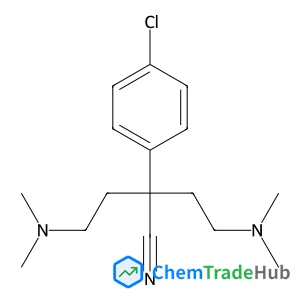
2-(4-Chlorophenyl)-4-(dimethylamino)-2-(2-(dimethylamino)ethyl)butanenitrile
CAS Number:
1246816-57-8
Molecular Formula:
C16H24ClN3
Recommended Suppliers






Disclaimer
This page provides academic journal information for reference and research purposes only. We are not affiliated with any journal publishers and do not handle publication submissions. For publication-related inquiries, please contact the respective journal publishers directly.
If you notice any inaccuracies in the information displayed, please contact us at support@chemtradehub.com. We will promptly review and address your concerns.