













Thermodynamic and kinetic properties of hydrogen defect pairs in SrTiO3 from density functional theory
Literature Information
Publication Date
2011-07-18
DOI
10.1039/C1CP20406H
Impact Factor
3.676
Authors
Nikolaos Bonanos, Jan Rossmeisl, Tejs Vegge
View Original
Abstract
A density functional theory investigation of the thermodynamic and kinetic properties of hydrogen–hydrogen defect interactions in the cubic SrTiO3 perovskite is presented. We find a net attraction between two hydrogen atoms with an optimal separation of ∼2.3 Å. The energy gain is ca. 0.33 eV compared to two non-interacting H defects. The main cause of the net attractive potential is elastic defect interactions through lattice deformation. Two possible diffusion paths for the hydrogen defect pair are investigated and are both determined to be faster than the corresponding diffusion path for single hydrogen atoms. Finally, we set up a simple model to determine the contribution from the double hydrogen defect to the total hydrogen flux, and find the double defect to be the main diffusing species at temperatures below ca. 400 °C. Post submission infrared absorption experiments show excellent agreement with the proposed properties of the double hydrogen defect.
Related Literature
Effect of the supramolecular interactions on the nanostructure of halloysite/biopolymer hybrids: a comprehensive study by SANS, fluorescence correlation spectroscopy and electric birefringence
Michael Gradzielski
2020-03-16
Paper
DOI: 10.1039/D0CP01076F
Phase separation in pore-spanning membranes induced by differences in surface adhesion
Jeremias Sibold, Vera E. Tewaag, Thomas Vagedes, Ingo Mey
2020-04-08
Paper
DOI: 10.1039/D0CP00335B
The effect of N-heterocyclic carbene units on the absorption spectra of Fe(ii) complexes: a challenge for theory
Omar Baig, Oliver Kühn, Leticia González
2020-11-20
Paper
DOI: 10.1039/D0CP04781C
Effects of fixed charge group physicochemistry on anion exchange membrane permselectivity and ion transport
Yuanyuan Ji, Hongxi Luo, Geoffrey M. Geise
2020-03-16
Paper
DOI: 10.1039/D0CP00018C
Organometallic polymers synthesized from prochiral molecules by a surface-assisted synthesis on Ag(111)
Zhibo Ma
2020-03-09
Paper
DOI: 10.1039/C9CP06893G
Ion migration in Br-doped MAPbI3 and its inhibition mechanisms investigated via quantum dynamics simulations
Yinjie Liao, Lei Tong, Yieqin Yang, Xiaogang Wang
2020-03-10
Paper
DOI: 10.1039/D0CP00866D
Interplay between aggregation number, micelle charge and hydration of catanionic surfactants
Žiga Medoš, Sergej Friesen, Richard Buchner, Marija Bešter-Rogač
2020-04-17
Paper
DOI: 10.1039/D0CP00877J
Atmospheric chemistry of thiourea: nucleation with urea and roles in NO2 hydrolysis
Shuang Ni, Feng-Yang Bai, Xiu-Mei Pan
2020-03-19
Paper
DOI: 10.1039/C9CP04300D
Study of the surface species during thermal and plasma-enhanced atomic layer deposition of titanium oxide films using in situ IR-spectroscopy and in vacuo X-ray photoelectron spectroscopy
Elisabeth Levrau, Matthias M. Minjauw, Michiel Van Daele, Rita Vos, Jolien Dendooven, Christophe Detavernier
2020-04-08
Paper
DOI: 10.1039/D0CP00395F
Deciphering the pH-dependence of ground- and excited-state equilibria of thienoguanine
Pascal Didier, Jagannath Kuchlyan, Lara Martinez-Fernandez, Pauline Gosset, Jérémie Léonard, Yitzhak Tor, Roberto Improta, Yves Mély
2020-03-25
Paper
DOI: 10.1039/C9CP06931C
You might also like
Compound Q&A
What are the main uses of 1-(3-Aminophenyl)-3-[(3R)-1-(3,3-dimethyl-2-oxobutyl)-2-oxo-5-(2-pyridinyl)-2,3-dihydro-1H-1,4-benzodiazepin-3-yl]urea (CAS: 155412-88-7)?
This compound is mainly used as an intermediate in the synthesis of antipsychoti...
155412-88-71-(3-Aminophenyl)-3-...
Compound Q&A
How should waste containing 1-(D-Ribofuranosyl)-1,4-dihydro-3-pyridinecarboxamide (CAS: 19132-12-8) be handled?
Waste containing 1-(D-Ribofuranosyl)-1,4-dihydro-3-pyridinecarboxamide (CAS: 191...
19132-12-81-(D-Ribofuranosyl)-...
Compound Q&A
What regulatory guidelines apply to 2-Methyl-2-propanyl 3-bromo-3-(hydroxymethyl)-1-azetidinecarboxylate (CAS: 2007919-81-3)?
2-Methyl-2-propanyl 3-bromo-3-(hydroxymethyl)-1-azetidinecarboxylate (CAS: 20079...
2007919-81-32-Methyl-2-propanyl ...
Compound Q&A
What is N-(4-Chloro-2-pyridinyl)acetamide (CAS: 245056-66-0)?
N-(4-Chloro-2-pyridinyl)acetamide (CAS: 245056-66-0) is a chemical compound with...
245056-66-0N-(4-Chloro-2-pyridi...
Compound Q&A
What is 5-Chloro-2-hydroxybenzoic acid (CAS: 321-14-2)?
5-Chloro-2-hydroxybenzoic acid, also known as 5-chlorosalicylic acid, is an arom...
321-14-25-Chloro-2-hydroxybe...
Compound Q&A
What precautions should be taken when handling 1,1-Dichloro-1-fluoroethane (CAS: 1717-00-6)?
When handling 1,1-Dichloro-1-fluoroethane (CAS: 1717-00-6), it is important to u...
1717-00-61,1-Dichloro-1-fluor...
Compound Q&A
What are the physical and chemical properties of Fmoc-(2S,3R)-3-phenylpyrrolidine-2-carboxylic acid (CAS: 281655-32-1)?
Fmoc-(2S,3R)-3-phenylpyrrolidine-2-carboxylic acid is a white crystalline solid ...
281655-32-1Fmoc-(2S,3R)-3-pheny...
Compound Q&A
What are the main uses of 4-Amino-5-bromo-2-pyridinecarboxylic acid (CAS: 1363381-01-4)?
4-Amino-5-bromo-2-pyridinecarboxylic acid is primarily used as a precursor in th...
1363381-01-44-Amino-5-bromo-2-py...
Compound Q&A
What precautions should be taken when handling (S)-tert-butyl 2-((2-(4-bromophenyl)-2-oxoethyl)carbamoyl)pyrrolidine-1-carboxylate (CAS: 1007881-98-2)?
Handling this compound should be done with personal protective equipment (PPE) i...
1007881-98-2(S)-tert-butyl 2-((2...
Compound Q&A
What precautions should be taken when handling 8-bromo-2,2-dimethyl-3,4-dihydro-2H-1,4-benzoxazin-3-one (CAS: 688363-73-7)?
When handling 8-bromo-2,2-dimethyl-3,4-dihydro-2H-1,4-benzoxazin-3-one, use prop...
688363-73-78-bromo-2,2-dimethyl...
Source Journal
Physical Chemistry Chemical Physics

CiteScore:
5.5
Self-citation Rate:
10.3%
Articles per Year:
3036
Physical Chemistry Chemical Physics (PCCP) is an international journal co-owned by 19 physical chemistry and physics societies from around the world. This journal publishes original, cutting-edge research in physical chemistry, chemical physics and biophysical chemistry. To be suitable for publication in PCCP, articles must include significant innovation and/or insight into physical chemistry; this is the most important criterion that reviewers and Editors will judge against when evaluating submissions. The journal has a broad scope and welcomes contributions spanning experiment, theory, computation and data science. Topical coverage includes spectroscopy, dynamics, kinetics, statistical mechanics, thermodynamics, electrochemistry, catalysis, surface science, quantum mechanics, quantum computing and machine learning. Interdisciplinary research areas such as polymers and soft matter, materials, nanoscience, energy, surfaces/interfaces, and biophysical chemistry are welcomed if they demonstrate significant innovation and/or insight into physical chemistry. Joined experimental/theoretical studies are particularly appreciated when complementary and based on up-to-date approaches.
Recommended Compounds
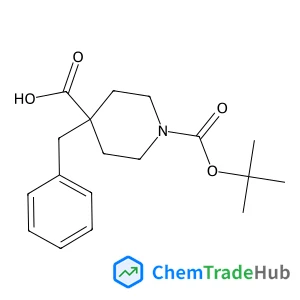
4-Benzyl-1-(tert-butoxycarbonyl)piperidine-4-carboxylic acid
CAS Number:
170838-87-6
Molecular Formula:
C18H25NO4

![4-Chloro-3-(trifluoromethyl)-1H-pyrrolo[2,3-b]pyridine structure](https://static.chemtradehub.com/structs/869/869335-75-1-a9d0.webp "4-Chloro-3-(trifluoromethyl)-1H-pyrrolo[2,3-b]pyridine structure")
4-Chloro-3-(trifluoromethyl)-1H-pyrrolo[2,3-b]pyridine
CAS Number:
869335-75-1
Molecular Formula:
C8H4ClF3N2
Recommended Suppliers






Disclaimer
This page provides academic journal information for reference and research purposes only. We are not affiliated with any journal publishers and do not handle publication submissions. For publication-related inquiries, please contact the respective journal publishers directly.
If you notice any inaccuracies in the information displayed, please contact us at support@chemtradehub.com. We will promptly review and address your concerns.