












Fabrication of Co3O4-reduced graphene oxide scrolls for high-performance supercapacitor electrodes
Literature Information
Publication Date
2011-07-07
DOI
10.1039/C1CP21917K
Impact Factor
3.676
Authors
Weiwei Zhou, Tao Chen, Kim Seng Tan, Xingtao Jia, Zhiqiang Luo, Chunxiao Cong, Huanping Yang, Chang Ming Li
View Original
Abstract
A new type of scrolled structure of Co3O4/reduced graphene oxide (r-GO) is facilely prepared through a two-step surfactant-assisted method. This assembly enables almost every single Co3O4 scroll to connect with the r-GO platelets, thus leading to remarkable electrochemical performances in terms of high specific capacitance and good rate capability.
Related Literature
Binary aromatic self-assembled monolayers: electrostatic properties and charge tunneling rates across the molecular framework
Andika Asyuda, Xianglong Wan, Michael Zharnikov
2020-04-27
Paper
DOI: 10.1039/D0CP01740J
Ligand binding to G-quadruplex DNA: new insights from ultraviolet resonance Raman spectroscopy
Silvia Di Fonzo, Jussara Amato, Federica D’Aria, Marco Caterino, Francesco D’Amico, Alessandro Gessini, John W. Brady, Bruno Pagano, Concetta Giancola
2020-03-25
Paper
DOI: 10.1039/D0CP01022G
Heteronuclear DNP of 1H and 19F nuclei using BDPA as a polarizing agent
Antonio Gennaro, Alexander Karabanov, Alexey Potapov, Walter Köckenberger
2020-03-31
Paper
DOI: 10.1039/D0CP00892C
Phosphorus-based metal-free Z-scheme 2D van der Waals heterostructures for visible-light photocatalytic water splitting: a first-principles study
Junyu Lang
2020-03-30
Paper
DOI: 10.1039/D0CP00637H
Composition conserving defects and their influence on the electronic properties of thermoelectric TiNiSn
K. Kirievsky, D. Fuks, Y. Gelbstein
2020-03-12
Paper
DOI: 10.1039/D0CP00956C
Penning spectroscopy and structure of acetylene oligomers in He nanodroplets
S. Mandal, R. Gopal, M. Shcherbinin, A. D’Elia, H. Srinivas, R. Richter, B. Bapat, S. R. Krishnan, V. Sharma
2020-04-21
Paper
DOI: 10.1039/D0CP00689K
Prediction of aqueous free energies of solvation using coupled QM and MM explicit solvent simulations
J. Samuel Arey
2020-03-30
Paper
DOI: 10.1039/D0CP00582G
Unusual intrinsic thermoluminescence in LiMgPO4:Er
D. G. Kellerman, M. O. Kalinkin, N. I. Medvedeva, A. P. Tyutyunnik
2020-11-10
Paper
DOI: 10.1039/D0CP05185C
Outstanding Reviewers for Physical Chemistry Chemical Physics in 2019
2020-04-29
Editorial
DOI: 10.1039/D0CP90085K
Thermodynamics of the formation of surface PtO2 stripes on Pt(111) in the absence of subsurface oxygen
Selwyn Hanselman, Ian T. McCrum, Marcel J. Rost, Marc T. M. Koper
2019-10-30
Paper
DOI: 10.1039/C9CP05107D
You might also like
Compound Q&A
What are the main uses of 1-(3-Aminophenyl)-3-[(3R)-1-(3,3-dimethyl-2-oxobutyl)-2-oxo-5-(2-pyridinyl)-2,3-dihydro-1H-1,4-benzodiazepin-3-yl]urea (CAS: 155412-88-7)?
This compound is mainly used as an intermediate in the synthesis of antipsychoti...
155412-88-71-(3-Aminophenyl)-3-...
Compound Q&A
How should waste containing 1-(D-Ribofuranosyl)-1,4-dihydro-3-pyridinecarboxamide (CAS: 19132-12-8) be handled?
Waste containing 1-(D-Ribofuranosyl)-1,4-dihydro-3-pyridinecarboxamide (CAS: 191...
19132-12-81-(D-Ribofuranosyl)-...
Compound Q&A
What regulatory guidelines apply to 2-Methyl-2-propanyl 3-bromo-3-(hydroxymethyl)-1-azetidinecarboxylate (CAS: 2007919-81-3)?
2-Methyl-2-propanyl 3-bromo-3-(hydroxymethyl)-1-azetidinecarboxylate (CAS: 20079...
2007919-81-32-Methyl-2-propanyl ...
Compound Q&A
What is N-(4-Chloro-2-pyridinyl)acetamide (CAS: 245056-66-0)?
N-(4-Chloro-2-pyridinyl)acetamide (CAS: 245056-66-0) is a chemical compound with...
245056-66-0N-(4-Chloro-2-pyridi...
Compound Q&A
What is 5-Chloro-2-hydroxybenzoic acid (CAS: 321-14-2)?
5-Chloro-2-hydroxybenzoic acid, also known as 5-chlorosalicylic acid, is an arom...
321-14-25-Chloro-2-hydroxybe...
Compound Q&A
What precautions should be taken when handling 1,1-Dichloro-1-fluoroethane (CAS: 1717-00-6)?
When handling 1,1-Dichloro-1-fluoroethane (CAS: 1717-00-6), it is important to u...
1717-00-61,1-Dichloro-1-fluor...
Compound Q&A
What are the physical and chemical properties of Fmoc-(2S,3R)-3-phenylpyrrolidine-2-carboxylic acid (CAS: 281655-32-1)?
Fmoc-(2S,3R)-3-phenylpyrrolidine-2-carboxylic acid is a white crystalline solid ...
281655-32-1Fmoc-(2S,3R)-3-pheny...
Compound Q&A
What are the main uses of 4-Amino-5-bromo-2-pyridinecarboxylic acid (CAS: 1363381-01-4)?
4-Amino-5-bromo-2-pyridinecarboxylic acid is primarily used as a precursor in th...
1363381-01-44-Amino-5-bromo-2-py...
Compound Q&A
What precautions should be taken when handling (S)-tert-butyl 2-((2-(4-bromophenyl)-2-oxoethyl)carbamoyl)pyrrolidine-1-carboxylate (CAS: 1007881-98-2)?
Handling this compound should be done with personal protective equipment (PPE) i...
1007881-98-2(S)-tert-butyl 2-((2...
Compound Q&A
What precautions should be taken when handling 8-bromo-2,2-dimethyl-3,4-dihydro-2H-1,4-benzoxazin-3-one (CAS: 688363-73-7)?
When handling 8-bromo-2,2-dimethyl-3,4-dihydro-2H-1,4-benzoxazin-3-one, use prop...
688363-73-78-bromo-2,2-dimethyl...
Source Journal
Physical Chemistry Chemical Physics

CiteScore:
5.5
Self-citation Rate:
10.3%
Articles per Year:
3036
Physical Chemistry Chemical Physics (PCCP) is an international journal co-owned by 19 physical chemistry and physics societies from around the world. This journal publishes original, cutting-edge research in physical chemistry, chemical physics and biophysical chemistry. To be suitable for publication in PCCP, articles must include significant innovation and/or insight into physical chemistry; this is the most important criterion that reviewers and Editors will judge against when evaluating submissions. The journal has a broad scope and welcomes contributions spanning experiment, theory, computation and data science. Topical coverage includes spectroscopy, dynamics, kinetics, statistical mechanics, thermodynamics, electrochemistry, catalysis, surface science, quantum mechanics, quantum computing and machine learning. Interdisciplinary research areas such as polymers and soft matter, materials, nanoscience, energy, surfaces/interfaces, and biophysical chemistry are welcomed if they demonstrate significant innovation and/or insight into physical chemistry. Joined experimental/theoretical studies are particularly appreciated when complementary and based on up-to-date approaches.
Recommended Compounds
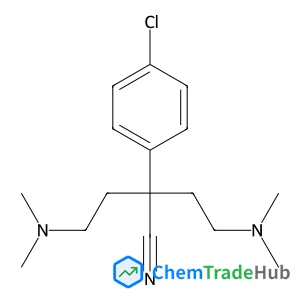
2-(4-Chlorophenyl)-4-(dimethylamino)-2-(2-(dimethylamino)ethyl)butanenitrile
CAS Number:
1246816-57-8
Molecular Formula:
C16H24ClN3
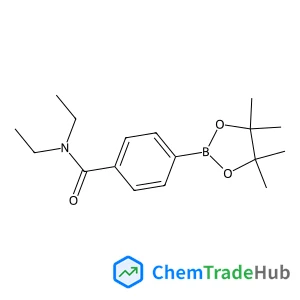
N,N-Diethyl-4-(4,4,5,5-tetramethyl-1,3,2-dioxaborolan-2-yl)benzamide
CAS Number:
325142-99-2
Molecular Formula:
C17H26BNO3
![Methyl 4-({[(2-methyl-2-propanyl)oxy]carbonyl}amino)bicyclo[2.2.2]octane-1-carboxylate structure](https://static.chemtradehub.com/structs/943/943845-74-7-b7e5.webp "Methyl 4-({[(2-methyl-2-propanyl)oxy]carbonyl}amino)bicyclo[2.2.2]octane-1-carboxylate structure")
Methyl 4-({[(2-methyl-2-propanyl)oxy]carbonyl}amino)bicyclo[2.2.2]octane-1-carboxylate
CAS Number:
943845-74-7
Molecular Formula:
C15H25NO4
Recommended Suppliers





Disclaimer
This page provides academic journal information for reference and research purposes only. We are not affiliated with any journal publishers and do not handle publication submissions. For publication-related inquiries, please contact the respective journal publishers directly.
If you notice any inaccuracies in the information displayed, please contact us at support@chemtradehub.com. We will promptly review and address your concerns.