













Ce-doped ZnO (CexZn1−xO) becomes an efficient visible-light-sensitive photocatalyst by co-catalyst (Cu2+) grafting
Literature Information
Publication Date
2011-07-14
DOI
10.1039/C1CP21514K
Impact Factor
3.676
Authors
Srinivasan Anandan, Masahiro Miyauchi
View Original
Abstract
We have fabricated an efficient visible-light-sensitive Cu2+-grafted Ce-doped ZnO photocatalyst (Cu2+–CexZn1−xO) by adopting a metal ion doping and co-catalyst modification. Impurity states were formed below the conduction band (CB) edge in CexZn1−xO, and these impurity states induce the visible-light absorption. CexZn1−xO without a Cu2+-co-catalyst showed negligible visible-light activity due to the low reduction power of electrons in impurity levels. Surprisingly, Cu2+-modification over CexZn1−xO drastically increased its visible-light activity. Excited electrons in impurity states can transfer to the Cu2+-ions on the surface and form Cu2+/Cu+ redox couples, which cause the efficient oxygen reduction through a multi-electron reduction process. One of the striking features of the present study is that the metal doped semiconductors which were inactive due to their impurity states become efficient visible-light photocatalysts upon co-catalyst modification. The successful strategy used here for designing a highly active visible-light photocatalyst would provide numerous opportunities to develop an efficient metal-ion based visible-light photocatalyst.
Recommended Journals
Related Literature
Solar-driven plasmonic heterostructure Ti/TiO2−x with gradient doping for sustainable plasmon-enhanced catalysis
Chaoqun Cheng, Muhammad Nadeem Akram, Ola Nilsen, Nini Pryds, Kaiying Wang
2020-03-16
Paper
DOI: 10.1039/D0CP00672F
Ab initio investigation of the formation mechanism of nano-interfaces between 3d-late transition-metals and ZrO2 nanoclusters
Larissa Zibordi-Besse, Lucas G. Verga, Vivianne K. Ocampo-Restrepo, Juarez L. F. Da Silva
2020-03-25
Paper
DOI: 10.1039/D0CP00584C
The interaction of defects in a mayenite structure
Sergey N. Shkerin, Ekaterina S. Ulyanova, Sergey V. Naumov
2020-11-27
Paper
DOI: 10.1039/D0CP05107A
Including dispersion in density functional theory for adsorption on flat oxide surfaces, in metal–organic frameworks and in acidic zeolites
Florian R. Rehak, GiovanniMaria Piccini, Maristella Alessio, Joachim Sauer
2020-03-30
Paper
DOI: 10.1039/D0CP00394H
The role of an unintentional carbon dopant in resolving the controversial conductivity aspects in BiFeO3
Shaan Ameer, Kajal Jindal, Monika Tomar, Pradip K. Jha, Vinay Gupta
2020-04-27
Paper
DOI: 10.1039/C9CP06614D
Hybrid density functional studies of native defects and H impurities in wurtzite CdSe
Bo Kong, Xin-You An, Ti-Xian Zeng, Jihua Zhang
2020-03-11
Paper
DOI: 10.1039/C9CP06094D
Chemical ionization of glyoxal and formaldehyde with H3O+ ions using SIFT-MS under variable system humidity
Andreas Mauracher, Patrik Španěl
2020-04-29
Paper
DOI: 10.1039/D0CP00297F
High-performance III–VI monolayer transistors for flexible devices
Jianhui Chen, Shuchang Cai, Rui Xiong, Baisheng Sa, Cuilian Wen, Bo Wu, Zhimei Sun
2020-03-03
Paper
DOI: 10.1039/D0CP00578A
Aqueous solvation of the chloride ion revisited with density functional theory: impact of correlation and exchange approximations
Mark DelloStritto, Jianhang Xu, Xifan Wu, Michael L. Klein
2020-02-04
Paper
DOI: 10.1039/C9CP06821J
You might also like
Compound Q&A
What are the main uses of 1-(3-Aminophenyl)-3-[(3R)-1-(3,3-dimethyl-2-oxobutyl)-2-oxo-5-(2-pyridinyl)-2,3-dihydro-1H-1,4-benzodiazepin-3-yl]urea (CAS: 155412-88-7)?
This compound is mainly used as an intermediate in the synthesis of antipsychoti...
155412-88-71-(3-Aminophenyl)-3-...
Compound Q&A
How should waste containing 1-(D-Ribofuranosyl)-1,4-dihydro-3-pyridinecarboxamide (CAS: 19132-12-8) be handled?
Waste containing 1-(D-Ribofuranosyl)-1,4-dihydro-3-pyridinecarboxamide (CAS: 191...
19132-12-81-(D-Ribofuranosyl)-...
Compound Q&A
What regulatory guidelines apply to 2-Methyl-2-propanyl 3-bromo-3-(hydroxymethyl)-1-azetidinecarboxylate (CAS: 2007919-81-3)?
2-Methyl-2-propanyl 3-bromo-3-(hydroxymethyl)-1-azetidinecarboxylate (CAS: 20079...
2007919-81-32-Methyl-2-propanyl ...
Compound Q&A
What is N-(4-Chloro-2-pyridinyl)acetamide (CAS: 245056-66-0)?
N-(4-Chloro-2-pyridinyl)acetamide (CAS: 245056-66-0) is a chemical compound with...
245056-66-0N-(4-Chloro-2-pyridi...
Compound Q&A
What is 5-Chloro-2-hydroxybenzoic acid (CAS: 321-14-2)?
5-Chloro-2-hydroxybenzoic acid, also known as 5-chlorosalicylic acid, is an arom...
321-14-25-Chloro-2-hydroxybe...
Compound Q&A
What precautions should be taken when handling 1,1-Dichloro-1-fluoroethane (CAS: 1717-00-6)?
When handling 1,1-Dichloro-1-fluoroethane (CAS: 1717-00-6), it is important to u...
1717-00-61,1-Dichloro-1-fluor...
Compound Q&A
What are the physical and chemical properties of Fmoc-(2S,3R)-3-phenylpyrrolidine-2-carboxylic acid (CAS: 281655-32-1)?
Fmoc-(2S,3R)-3-phenylpyrrolidine-2-carboxylic acid is a white crystalline solid ...
281655-32-1Fmoc-(2S,3R)-3-pheny...
Compound Q&A
What are the main uses of 4-Amino-5-bromo-2-pyridinecarboxylic acid (CAS: 1363381-01-4)?
4-Amino-5-bromo-2-pyridinecarboxylic acid is primarily used as a precursor in th...
1363381-01-44-Amino-5-bromo-2-py...
Compound Q&A
What precautions should be taken when handling (S)-tert-butyl 2-((2-(4-bromophenyl)-2-oxoethyl)carbamoyl)pyrrolidine-1-carboxylate (CAS: 1007881-98-2)?
Handling this compound should be done with personal protective equipment (PPE) i...
1007881-98-2(S)-tert-butyl 2-((2...
Compound Q&A
What precautions should be taken when handling 8-bromo-2,2-dimethyl-3,4-dihydro-2H-1,4-benzoxazin-3-one (CAS: 688363-73-7)?
When handling 8-bromo-2,2-dimethyl-3,4-dihydro-2H-1,4-benzoxazin-3-one, use prop...
688363-73-78-bromo-2,2-dimethyl...
Source Journal
Physical Chemistry Chemical Physics

CiteScore:
5.5
Self-citation Rate:
10.3%
Articles per Year:
3036
Physical Chemistry Chemical Physics (PCCP) is an international journal co-owned by 19 physical chemistry and physics societies from around the world. This journal publishes original, cutting-edge research in physical chemistry, chemical physics and biophysical chemistry. To be suitable for publication in PCCP, articles must include significant innovation and/or insight into physical chemistry; this is the most important criterion that reviewers and Editors will judge against when evaluating submissions. The journal has a broad scope and welcomes contributions spanning experiment, theory, computation and data science. Topical coverage includes spectroscopy, dynamics, kinetics, statistical mechanics, thermodynamics, electrochemistry, catalysis, surface science, quantum mechanics, quantum computing and machine learning. Interdisciplinary research areas such as polymers and soft matter, materials, nanoscience, energy, surfaces/interfaces, and biophysical chemistry are welcomed if they demonstrate significant innovation and/or insight into physical chemistry. Joined experimental/theoretical studies are particularly appreciated when complementary and based on up-to-date approaches.
Recommended Compounds
![5-Methyl-4,5,6,7-tetrahydropyrazolo[1,5-a]pyrazin-2-amine structure](https://static.chemtradehub.com/structs/122/1227210-33-4-8d64.webp "5-Methyl-4,5,6,7-tetrahydropyrazolo[1,5-a]pyrazin-2-amine structure")
5-Methyl-4,5,6,7-tetrahydropyrazolo[1,5-a]pyrazin-2-amine
CAS Number:
1227210-33-4
Molecular Formula:
C7H12N4
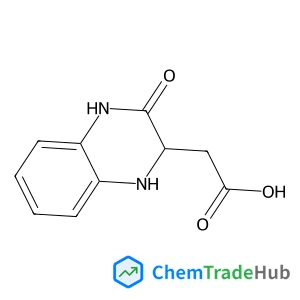
(3-Oxo-1,2,3,4-tetrahydro-2-quinoxalinyl)acetic acid
CAS Number:
136584-14-0
Molecular Formula:
C10H10N2O3

Recommended Suppliers






Disclaimer
This page provides academic journal information for reference and research purposes only. We are not affiliated with any journal publishers and do not handle publication submissions. For publication-related inquiries, please contact the respective journal publishers directly.
If you notice any inaccuracies in the information displayed, please contact us at support@chemtradehub.com. We will promptly review and address your concerns.