












The role of disorder on the electronic structure of conjugated polymers. The case of poly-2,5-bis(phenylethynyl)-1,3,4-thiadiazole
Literature Information
Publication Date
2011-07-08
DOI
10.1039/C1CP20329K
Impact Factor
3.676
Authors
J.M. Granadino-Roldán, M. Fernández-Gómez, Lin-Wang Wang
View Original
Abstract
Insight into the electronic structure of disordered poly-2,5-bis(phenylethynyl)-1,3,4-thiadiazole in an amorphous region, in comparison to an ideal two-planar cofacial oligomer system, is pursued. The atomic structure of the amorphous polymer was obtained from classical molecular dynamics. It was subsequently used to calculate the electronic states and inter- and intrachain electronic coupling integrals using the density functional theory based charge patching method. The interchain electronic coupling integrals in the amorphous system were found to be an order of magnitude smaller than in the ordered system with similar distances between the chains. The results also suggest that the electronic structure of the whole system cannot be understood as a collection of the electronic structures of individual chains. The band gap of the whole system is significantly smaller than the band gaps of individual chains. This decrease originates from the disordered long range electrostatic potential created by the dipole moments of polymer repeat units, which should be minimized if one seeks good transport properties.
Recommended Journals
Related Literature
Collaborative virtual screening to elaborate an imidazo[1,2-a]pyridine hit series for visceral leishmaniasis
Yuichiro Akao, Stacie Canan, Yafeng Cao, Kevin Condroski, Ola Engkvist, Sachiko Itono, Rina Kaki, Chiaki Kimura, Thierry Kogej, Kazuya Nagaoka, Akira Naito, Hiromi Nakai, Garry Pairaudeau, Constantin Radu, Ieuan Roberts, Mitsuyuki Shimada, David Shum, Nao-aki Watanabe, Huanxu Xie, Shuji Yonezawa, Osamu Yoshida, Ryu Yoshida, Charles Mowbray, Benjamin Perry
2021-01-21
Research Article
DOI: 10.1039/D0MD00353K
A niclosamide–tobramycin hybrid adjuvant potentiates cefiderocol against P. aeruginosa
Liam Berry, Marc Brizuela, Gregory Jackson
2021-07-27
Research Article
DOI: 10.1039/D1MD00206F
Correction: Truncated S-MGBs: towards a parasite-specific and low aggregation chemotype
Daniel P. Brooke, Leah M. C. McGee, Federica Giordani, Jasmine M. Cross, Abedawn I. Khalaf, Craig Irving, Craig D. Shaw, Katharine C. Carter, Michael P. Barrett, Colin J. Suckling, Fraser J. Scott
2021-11-26
Correction
DOI: 10.1039/D1MD90044G
Dual acting oximes designed for therapeutic decontamination of reactive organophosphates via catalytic inactivation and acetylcholinesterase reactivation
Kelly Yang, Racquel Harrison
2021-08-04
Research Article
DOI: 10.1039/D1MD00194A
Small molecule-mediated induction of endoplasmic reticulum stress in cancer cells
Virender Kumar Sharma, Ankur Biswas, Mayurika Lahiri, Sudipta Basu
2021-07-15
Research Article
DOI: 10.1039/D1MD00095K
4-Amino-1,8-naphthalimide–ferrocene conjugates as potential multi-targeted anticancer and fluorescent cellular imaging agents
Alex D. Johnson, Joseph A. Buhagiar, David C. Magri
2021-10-21
Research Article
DOI: 10.1039/D1MD00246E
Recent developments towards portable point-of-care diagnostic devices for pathogen detection
Shimaa Eissa, Mohammadali Safavieh, Sanaa G. Alattas, Minhaz Uddin Ahmed
2021-10-29
Critical Review
DOI: 10.1039/D1SD00017A
Hormone-like conopeptides – new tools for pharmaceutical design
Ashlin Turner, Quentin Kaas, David J. Craik
2020-09-24
Review Article
DOI: 10.1039/D0MD00173B
You might also like
Compound Q&A
What are the main uses of 1-(3-Aminophenyl)-3-[(3R)-1-(3,3-dimethyl-2-oxobutyl)-2-oxo-5-(2-pyridinyl)-2,3-dihydro-1H-1,4-benzodiazepin-3-yl]urea (CAS: 155412-88-7)?
This compound is mainly used as an intermediate in the synthesis of antipsychoti...
155412-88-71-(3-Aminophenyl)-3-...
Compound Q&A
How should waste containing 1-(D-Ribofuranosyl)-1,4-dihydro-3-pyridinecarboxamide (CAS: 19132-12-8) be handled?
Waste containing 1-(D-Ribofuranosyl)-1,4-dihydro-3-pyridinecarboxamide (CAS: 191...
19132-12-81-(D-Ribofuranosyl)-...
Compound Q&A
What regulatory guidelines apply to 2-Methyl-2-propanyl 3-bromo-3-(hydroxymethyl)-1-azetidinecarboxylate (CAS: 2007919-81-3)?
2-Methyl-2-propanyl 3-bromo-3-(hydroxymethyl)-1-azetidinecarboxylate (CAS: 20079...
2007919-81-32-Methyl-2-propanyl ...
Compound Q&A
What is N-(4-Chloro-2-pyridinyl)acetamide (CAS: 245056-66-0)?
N-(4-Chloro-2-pyridinyl)acetamide (CAS: 245056-66-0) is a chemical compound with...
245056-66-0N-(4-Chloro-2-pyridi...
Compound Q&A
What is 5-Chloro-2-hydroxybenzoic acid (CAS: 321-14-2)?
5-Chloro-2-hydroxybenzoic acid, also known as 5-chlorosalicylic acid, is an arom...
321-14-25-Chloro-2-hydroxybe...
Compound Q&A
What precautions should be taken when handling 1,1-Dichloro-1-fluoroethane (CAS: 1717-00-6)?
When handling 1,1-Dichloro-1-fluoroethane (CAS: 1717-00-6), it is important to u...
1717-00-61,1-Dichloro-1-fluor...
Compound Q&A
What are the physical and chemical properties of Fmoc-(2S,3R)-3-phenylpyrrolidine-2-carboxylic acid (CAS: 281655-32-1)?
Fmoc-(2S,3R)-3-phenylpyrrolidine-2-carboxylic acid is a white crystalline solid ...
281655-32-1Fmoc-(2S,3R)-3-pheny...
Compound Q&A
What are the main uses of 4-Amino-5-bromo-2-pyridinecarboxylic acid (CAS: 1363381-01-4)?
4-Amino-5-bromo-2-pyridinecarboxylic acid is primarily used as a precursor in th...
1363381-01-44-Amino-5-bromo-2-py...
Compound Q&A
What precautions should be taken when handling (S)-tert-butyl 2-((2-(4-bromophenyl)-2-oxoethyl)carbamoyl)pyrrolidine-1-carboxylate (CAS: 1007881-98-2)?
Handling this compound should be done with personal protective equipment (PPE) i...
1007881-98-2(S)-tert-butyl 2-((2...
Compound Q&A
What precautions should be taken when handling 8-bromo-2,2-dimethyl-3,4-dihydro-2H-1,4-benzoxazin-3-one (CAS: 688363-73-7)?
When handling 8-bromo-2,2-dimethyl-3,4-dihydro-2H-1,4-benzoxazin-3-one, use prop...
688363-73-78-bromo-2,2-dimethyl...
Source Journal
Physical Chemistry Chemical Physics

CiteScore:
5.5
Self-citation Rate:
10.3%
Articles per Year:
3036
Physical Chemistry Chemical Physics (PCCP) is an international journal co-owned by 19 physical chemistry and physics societies from around the world. This journal publishes original, cutting-edge research in physical chemistry, chemical physics and biophysical chemistry. To be suitable for publication in PCCP, articles must include significant innovation and/or insight into physical chemistry; this is the most important criterion that reviewers and Editors will judge against when evaluating submissions. The journal has a broad scope and welcomes contributions spanning experiment, theory, computation and data science. Topical coverage includes spectroscopy, dynamics, kinetics, statistical mechanics, thermodynamics, electrochemistry, catalysis, surface science, quantum mechanics, quantum computing and machine learning. Interdisciplinary research areas such as polymers and soft matter, materials, nanoscience, energy, surfaces/interfaces, and biophysical chemistry are welcomed if they demonstrate significant innovation and/or insight into physical chemistry. Joined experimental/theoretical studies are particularly appreciated when complementary and based on up-to-date approaches.
Recommended Compounds
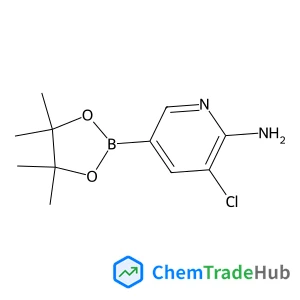
3-Chloro-5-(4,4,5,5-tetramethyl-1,3,2-dioxaborolan-2-yl)-2-pyridinamine
CAS Number:
1032758-99-8
Molecular Formula:
C11H16BClN2O2
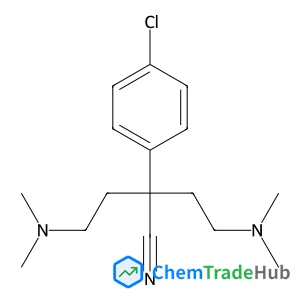
2-(4-Chlorophenyl)-4-(dimethylamino)-2-(2-(dimethylamino)ethyl)butanenitrile
CAS Number:
1246816-57-8
Molecular Formula:
C16H24ClN3

Recommended Suppliers





Disclaimer
This page provides academic journal information for reference and research purposes only. We are not affiliated with any journal publishers and do not handle publication submissions. For publication-related inquiries, please contact the respective journal publishers directly.
If you notice any inaccuracies in the information displayed, please contact us at support@chemtradehub.com. We will promptly review and address your concerns.