


Epitope mapping of imidazolium cations in ionic liquid–protein interactions unveils the balance between hydrophobicity and electrostatics towards protein destabilisation
Literature Information
Publication Date
2014-09-23
DOI
10.1039/C4CP03534H
Impact Factor
3.676
Authors
Micael Silva, Angelo Miguel Figueiredo, Eurico J. Cabrita
View Original
Abstract
We investigated imidazolium-based ionic liquid (IL) interactions with human serum albumin (HSA) to discern the level of cation interactions towards protein stability. STD-NMR spectroscopy was used to observe the imidazolium IL protons involved in direct binding and to identify the interactions responsible for changes in Tm as accessed by differential scanning calorimetry (DSC). Cations influence protein stability less than anions but still significantly. It was found that longer alkyl side chains of imidazolium-based ILs (more hydrophobic) are associated with a higher destabilisation effect on HSA than short-alkyl groups (less hydrophobic). The reason for such destabilisation lies on the increased surface contact area of the cation with the protein, particularly on the hydrophobic contacts promoted by the terminus of the alkyl chain. The relevance of the hydrophobic contacts is clearly demonstrated by the introduction of a polar moiety in the alkyl chain: a methoxy or alcohol group. Such structural modification reduces the degree of hydrophobic contacts with HSA explaining the lesser extent of protein destabilisation when compared to longer alkyl side chain groups: above [C2mim]+. Competition STD-NMR experiments using [C2mim]+, [C4mim]+ and [C2OHmim]+ also validate the importance of the hydrophobic interactions. The combined effect of cation and anion interactions was explored using 35Cl NMR. Such experiments show that the nature of the cation has no influence on the anion–protein contacts, still the nature of the anion modulates the cation–protein interaction. Herein we propose that more destabilising anions are likely to be a result of a partial contribution from the cation as a direct consequence of the different levels of interaction (cation–anion pair and cation–protein).
Recommended Journals

Journal of Heterocyclic Chemistry

Journal of Physics and Chemistry of Solids

Russian Chemical Reviews

Journal of Medicinal Chemistry

Molecular Pharmacology

Journal of Organometallic Chemistry

Planta Medica

Proceedings of the National Academy of Sciences of the United States of America

Nature

Pharmacological Reviews
Related Literature
An unprecedented intramolecular coupling of o-carboranyl and cyclopentadienyl. Synthesis and structural characterization of a ruthenium complex containing a novel doubly-bridged cyclopentadienyl-carboranyl ligand
Yi Sun, Hoi-Shan Chan, Pierre H. Dixneuf, Zuowei Xie
2004-09-30
Communication
DOI: 10.1039/B409772F
Hierarchical self-assembly in polymeric complexes: Towards functional materials
Olli Ikkala, Gerrit ten Brinke
2004-09-16
Feature Article
DOI: 10.1039/B403983A
Supramolecular isomerism in spin crossover networks with aurophilic interactions
Ana Galet, M. Carmen Muñoz, Víctor Martínez, José Antonio Real
2004-09-07
Communication
DOI: 10.1039/B409974E
The surprisingly beneficial effect of soft donors on the performance of early transition metal olefin polymerisation catalysts
Daniel C. H. Oakes, Brian S. Kimberley, Vernon C. Gibson, David J. Jones, Andrew J. P. White, David J. Williams
2004-08-23
Communication
DOI: 10.1039/B409870F
Electronic and vibrational properties of a MOF-5 metal–organic framework: ZnO quantum dot behaviour
S. Bordiga, C. Lamberti, G. Ricchiardi, L. Regli, F. Bonino, A. Damin, K.-P. Lillerud, M. Bjorgen, A. Zecchina
2004-09-01
Communication
DOI: 10.1039/B407246D
Cyclopeptide alkaloids: chemistry and biology
Madeleine M. Joullié, David J. Richard
2004-08-31
Feature Article
DOI: 10.1039/B400334A
Photo-reversible Pb2+-complexation of thermosensitive poly(N-isopropyl acrylamide-co-spiropyran acrylate) in water
Takayuki Suzuki, Tatsuya Kato, Hiraku Shinozaki
2004-08-13
Communication
DOI: 10.1039/B407342H
Synthesis and reactivity of triethylborane adduct of N-heterocyclic carbene: versatile synthons for synthesis of N-heterocyclic carbene complexes
Yoshitaka Yamaguchi, Taigo Kashiwabara, Kenichi Ogata, Yumiko Miura, Yoshiyuki Nakamura, Kimiko Kobayashi, Takashi Ito
2004-08-20
Communication
DOI: 10.1039/B405459H
Design of a robust Ru(salen) complex: aziridination with improved turnover number using N-arylsulfonyl azides as precursors
Kazufumi Omura, Tatsuya Uchida, Ryo Irie, Tsutomu Katsuki
2004-08-13
Communication
DOI: 10.1039/B407693A
Optical sensing of amine vapors with a series of tin compounds
Evonne A. Baldauff
2004-07-30
Communication
DOI: 10.1039/B406230B
You might also like
Compound Q&A
What is the market or research trend for N-(4-Methoxybenzyl)-2-pyridinamine (CAS: 52818-63-0)?
N-(4-Methoxybenzyl)-2-pyridinamine (CAS: 52818-63-0) is increasingly being used ...
52818-63-0N-(4-Methoxybenzyl)-...
Compound Q&A
What precautions should be taken when handling Ethyl 4-(2-chlorophenyl)-1,3-thiazole-2-carboxylate (CAS: 1050507-06-6)?
When handling Ethyl 4-(2-chlorophenyl)-1,3-thiazole-2-carboxylate, appropriate p...
1050507-06-6Ethyl 4-(2-chlorophe...
Compound Q&A
What regulatory guidelines apply to diethyldiselane (CAS: 628-39-7)?
Diethyldiselane (CAS: 628-39-7) is classified under the Globally Harmonized Syst...
628-39-7Diethyldiselane
Compound Q&A
What is the market or research trend for oxocopper (CAS: 12053-18-8)?
The market for oxocopper (CAS: 12053-18-8) is primarily driven by its use in cat...
12053-18-8oxocopper; oxo-(oxoc...
Compound Q&A
What is the market or research trend for 5-{[(2-Methyl-2-propanyl)oxy]carbonyl}-5-azaspiro[2.4]heptane-7-carboxylic acid?
The market for 5-{[(2-Methyl-2-propanyl)oxy]carbonyl}-5-azaspiro[2.4]heptane-7-c...
1268519-54-55-{[(2-Methyl-2-prop...
Compound Q&A
What is 2-(1-Pyrrolidinyl)-4-pyridinamine (CAS: 35981-63-6)?
2-(1-Pyrrolidinyl)-4-pyridinamine is a chemical compound with the CAS number 359...
35981-63-62-(1-Pyrrolidinyl)-4...
Compound Q&A
What are the physical and chemical properties of 2-(3-Pyridinyl)-1-azabicyclo[2.2.2]octane (CAS: 91556-75-1)?
2-(3-Pyridinyl)-1-azabicyclo[2.2.2]octane (CAS: 91556-75-1) is a crystalline sol...
91556-75-12-(3-Pyridinyl)-1-az...
Compound Q&A
How is (S)-Alpha-allyl-proline hydrochloride (CAS: 129704-91-2) typically synthesized?
(S)-Alpha-allyl-proline hydrochloride is usually synthesized via a Wittig reacti...
129704-91-2(S)-Alpha-allyl-prol...
Compound Q&A
What is 3-Methyl-1,2-oxazole-5-carboxylic acid (CAS: 4857-42-5)?
3-Methyl-1,2-oxazole-5-carboxylic acid (CAS: 4857-42-5) is an organic compound w...
4857-42-53-Methyl-1,2-oxazole...
Compound Q&A
How is Lys-SMCC-DM1 (CAS: 1281816-04-3) typically synthesized?
Lys-SMCC-DM1 is synthesized via a multi-step process involving the coupling of S...
1281816-04-3Lys-SMCC-DM1
Source Journal
Physical Chemistry Chemical Physics

CiteScore:
5.5
Self-citation Rate:
10.3%
Articles per Year:
3036
Physical Chemistry Chemical Physics (PCCP) is an international journal co-owned by 19 physical chemistry and physics societies from around the world. This journal publishes original, cutting-edge research in physical chemistry, chemical physics and biophysical chemistry. To be suitable for publication in PCCP, articles must include significant innovation and/or insight into physical chemistry; this is the most important criterion that reviewers and Editors will judge against when evaluating submissions. The journal has a broad scope and welcomes contributions spanning experiment, theory, computation and data science. Topical coverage includes spectroscopy, dynamics, kinetics, statistical mechanics, thermodynamics, electrochemistry, catalysis, surface science, quantum mechanics, quantum computing and machine learning. Interdisciplinary research areas such as polymers and soft matter, materials, nanoscience, energy, surfaces/interfaces, and biophysical chemistry are welcomed if they demonstrate significant innovation and/or insight into physical chemistry. Joined experimental/theoretical studies are particularly appreciated when complementary and based on up-to-date approaches.
Recommended Compounds
![N-{15-[(2,5-Dioxo-1-pyrrolidinyl)oxy]-15-oxo-3,6,9,12-tetraoxapentadec-1-yl}-2-(2-propyn-1-yloxy)acetamide structure](https://static.chemtradehub.com/structs/210/2101206-92-0-2eb5.webp "N-{15-[(2,5-Dioxo-1-pyrrolidinyl)oxy]-15-oxo-3,6,9,12-tetraoxapentadec-1-yl}-2-(2-propyn-1-yloxy)acetamide structure")
N-{15-[(2,5-Dioxo-1-pyrrolidinyl)oxy]-15-oxo-3,6,9,12-tetraoxapentadec-1-yl}-2-(2-propyn-1-yloxy)acetamide
CAS Number:
2101206-92-0
Molecular Formula:
C20H30N2O10
![N-{[(2-Methyl-2-propanyl)oxy]carbonyl}-L-methionylglycine structure](https://static.chemtradehub.com/structs/234/23446-03-9-e1e5.webp "N-{[(2-Methyl-2-propanyl)oxy]carbonyl}-L-methionylglycine structure")
N-{[(2-Methyl-2-propanyl)oxy]carbonyl}-L-methionylglycine
CAS Number:
23446-03-9
Molecular Formula:
C12H22N2O5S
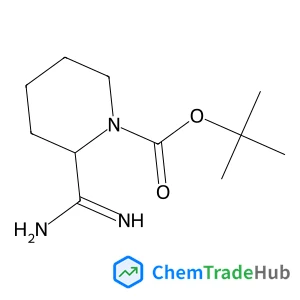
2-Methyl-2-propanyl 2-carbamimidoyl-1-piperidinecarboxylate
CAS Number:
1258640-98-0
Molecular Formula:
C11H21N3O2
Recommended Suppliers




Disclaimer
This page provides academic journal information for reference and research purposes only. We are not affiliated with any journal publishers and do not handle publication submissions. For publication-related inquiries, please contact the respective journal publishers directly.
If you notice any inaccuracies in the information displayed, please contact us at support@chemtradehub.com. We will promptly review and address your concerns.