












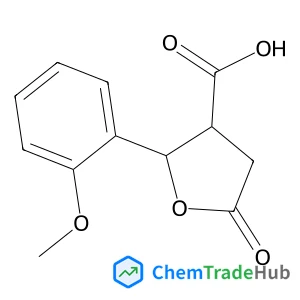
trans-2-(2-Methoxyphenyl)-5-oxotetrahydrofuran-3-carboxylic acid
CAS Number:
99226-02-5
Molecular Formula:
C12H12O5
Verónica de Zea Bermudez, Denis Ostrovskii, Sergei Lavoryk, M. Cristina Gonçalves, Luís D. Carlos
Fourier transform mid-IR and Raman spectroscopies were employed to investigate the anionic local surrounding in sol–gel derived organic/inorganic materials–monourethanesils–incorporating europium triflate, Eu(CF3SO3)3. The hybrid framework of these xerogels contains short methyl end capped polyether segments grafted to a siliceous network through urethane cross-links. Samples with compositions ∞ > n ≥ 10 (where n indicates the ratio of (OCH2CH2) moieties per lanthanide ion) were examined. The spectral data obtained provide conclusive evidence of the presence of “free” and weakly coordinated CF3SO3− ions located in two distinct sites in the whole range of salt concentration analyzed. At n = 30 and 10, along with these species, two new anionic configurations, assigned to contact ion pairs and “cross-link separated” ions pairs, emerge. Two-dimensional correlation spectroscopic analysis allowed to clarify the number of components present in two critical bands containing strongly overlapped spectral profiles. The number of anionic environments found in the m-Ut(750)nEu(CF3SO3)3 family confirms the rich coordinating possibilities offered by polymer systems incorporating trivalent triflate salts.
Xianwei Li, Tianzhang Wang, Yu-Jing Lu, Shaomin Ji, Yanping Huo, Bifu Liu
DOI: 10.1039/C8OB01532E
Feng Liu, Guoqing Zhao, Weiqi Cai, Dongfang Xu, Baoguo Zhao
DOI: 10.1039/C8OB02000K
Tao Li, Yu Chen, Chunbao Li
DOI: 10.1039/C8OB01505H
Gaia Scalabrino, Xiao-Wen Sun, John Mann, Anne Baron
DOI: 10.1039/B207800G
Hien The Ho, Alexandre Bénard, Gwenaël Forcher, Maël Le Bohec, Véronique Montembault, Sagrario Pascual, Laurent Fontaine
DOI: 10.1039/C8OB01807C
Ming Yang, Xue-Cen Xu, Yue Gong, Yu-Long Zhao
DOI: 10.1039/D1QO01506K
Bernd Neumann, Hendrik Zipse
DOI: 10.1039/B209981K
Biao Wang, Yifeng Wang, Yidong Jiang, Mingming Chu, Suosuo Qi, Wanzhen Ju, Danqian Xu
DOI: 10.1039/C8OB01943F
Eugenius Butkus, Julė Malinauskienė, Sigitas Stončius
DOI: 10.1039/B208422H
6-(3-Fluorophenyl)picolinic acid is generally considered safe for laboratory use...
(3R)-3-Pyrrolidinol is used in the pharmaceutical industry as a precursor for dr...
When handling (4R,5R)-4,5-Diethoxycarbonyl-2,2-dimethyldioxolane (CAS: 59779-75-...
1-(6-Chloroimidazo[1,2-b]pyridazin-3-yl)ethanone is often synthesized via a mult...
The market for N-Ethyl-3,4-dimethylbenzylamine (CAS: 39180-83-1) remains steady,...
Tert-butyl 3-(pyrrolidin-1-yl)azetidine-1-carboxylate is a chemical compound wit...
1-Bromo-3-chloro-2,4-dimethoxybenzene (CAS: 1228956-93-1) falls under the classi...
The safety of 8-Bromo-2-methyl-3,4-dihydroisoquinolin-1(2H)-one (CAS: 1368622-07...
Benzyl [(3S)-2,6-dioxo-3-piperidinyl]carbamate is generally safe when handled wi...
1-{[4-(4,4,5,5-Tetramethyl-1,3,2-dioxaborolan-2-yl)phenyl]sulfonyl}pyrrolidine s...

Physical Chemistry Chemical Physics (PCCP) is an international journal co-owned by 19 physical chemistry and physics societies from around the world. This journal publishes original, cutting-edge research in physical chemistry, chemical physics and biophysical chemistry. To be suitable for publication in PCCP, articles must include significant innovation and/or insight into physical chemistry; this is the most important criterion that reviewers and Editors will judge against when evaluating submissions. The journal has a broad scope and welcomes contributions spanning experiment, theory, computation and data science. Topical coverage includes spectroscopy, dynamics, kinetics, statistical mechanics, thermodynamics, electrochemistry, catalysis, surface science, quantum mechanics, quantum computing and machine learning. Interdisciplinary research areas such as polymers and soft matter, materials, nanoscience, energy, surfaces/interfaces, and biophysical chemistry are welcomed if they demonstrate significant innovation and/or insight into physical chemistry. Joined experimental/theoretical studies are particularly appreciated when complementary and based on up-to-date approaches.
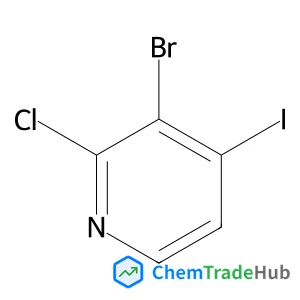
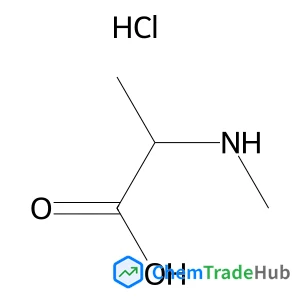
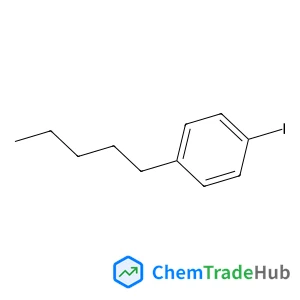
![Benzyl spiro[indole-3,4'-piperidine]-1(2H)-carboxylate hydrochloride (1:1) structure](https://static.chemtradehub.com/structs/159/159635-46-8-8de0.webp "Benzyl spiro[indole-3,4'-piperidine]-1(2H)-carboxylate hydrochloride (1:1) structure")





