












The complexity of catalysis: origins of enantio- and diastereocontrol in sulfur ylide mediated epoxidation reactions
Literature Information
Publication Date
2003-08-28
DOI
10.1039/B304625G
Impact Factor
6.222
Authors
Varinder K. Aggarwal, Jeffery Richardson
View Original
Abstract
The reaction of chiral sulfur ylides with aldehydes and ketones has emerged as a useful asymmetric process for the synthesis of epoxides. Processes employing either catalytic or stoichiometric amounts of sulfides have been developed. Although a large number of chiral sulfur ylides have been tested in the epoxidation process, only a few have delivered high diastereo- and enantio- selectivity. This review examines the factors that influence stereocontrol (steric hindrance of the sulfide, ylide conformation, ylide face selectivity, reversibility of betaine formation, solvent, and metal salts). This analysis leads to the conclusion that high reversibility in betaine formation leads to high diastereoselectivity but low enantioselectivity, and non-reversible betaine formation leads to low diastereoselectivity and high enantioselectivity (provided that other criteria are met). To achieve both high diastereoselectivity and high enantioselectivity simultaneously, requires non-reversible formation of the anti-betaine and reversible formation of the syn-betaine. Thus, factors that influence the degree of reversibility in betaine formation are critically important since with subtle changes in reaction conditions (solvent, temperature, metal ions) both high enantio- and diastereoselectivity can often be achieved.
Related Literature
Decomposition of nitrous oxide on Fe-doped boron nitride nanotubes: the ligand effect
Natcha Injan, Jakkapan Sirijaraensre
2014-09-16
Paper
DOI: 10.1039/C4CP02728K
M(BH3NH2BH2NH2BH3) – the missing link in the mechanism of the thermal decomposition of light alkali metal amidoboranes
K. J. Fijalkowski, T. Jaroń, P. J. Leszczyński, E. Magos-Palasyuk, T. Palasyuk, M. K. Cyrański, W. Grochala
2014-09-26
Paper
DOI: 10.1039/C4CP03296A
Hydrogen bonding, halogen bonding and lithium bonding: an atoms in molecules and natural bond orbital perspective towards conservation of total bond order, inter- and intra-molecular bonding
Abhishek Shahi, Elangannan Arunan
2014-08-05
Perspective
DOI: 10.1039/C4CP02585G
Probing the dynamics of plasmon-excited hexanethiol-capped gold nanoparticles by picosecond X-ray absorption spectroscopy
Thomas J. Penfold, Maarten Nachtegaal, Chris J. Milne, Majed Chergui
2014-09-18
Paper
DOI: 10.1039/C4CP03301A
Physicochemical properties of pentaglyme–sodium bis(trifluoromethanesulfonyl)amide solvate ionic liquid
Shoshi Terada, Toshihiko Mandai, Risa Nozawa, Kazuki Yoshida, Kazuhide Ueno, Seiji Tsuzuki, Masayoshi Watanabe
2014-04-25
Paper
DOI: 10.1039/C4CP00746H
Noble-metal-free BODIPY–cobaloxime photocatalysts for visible-light-driven hydrogen production
Geng-Geng Luo, Kai Fang, Ji-Huai Wu, Jing-Cao Dai, Qing-Hua Zhao
2014-09-22
Paper
DOI: 10.1039/C4CP03343D
Doping indium in β-Bi2O3 to tune the electronic structure and improve the photocatalytic activities: first-principles calculations and experimental investigation
Junying Zhang, Wenqiang Dang, Xingchen Yan, Hong Gao, Zhimin Ao
2014-09-30
Paper
DOI: 10.1039/C4CP02656J
Effects of kinetic and transport phenomena on thermal explosion and oscillatory behaviour in a spherical reactor with mixed convection
Filipa Gonçalves de Azevedo, John F. Griffiths, Silvana S. S. Cardoso
2014-09-19
Paper
DOI: 10.1039/C4CP02990A
External electric field induced hydrogen storage/release on calcium-decorated single-layer and bilayer silicene
Er Hong Song, Sung Ho Yoo, Jae Joon Kim, Shiau Wu Lai, Qing Jiang, Sung Oh Cho
2014-09-30
Paper
DOI: 10.1039/C4CP02638A
You might also like
Compound Q&A
What is the market or research trend for N-(4-Methoxybenzyl)-2-pyridinamine (CAS: 52818-63-0)?
N-(4-Methoxybenzyl)-2-pyridinamine (CAS: 52818-63-0) is increasingly being used ...
52818-63-0N-(4-Methoxybenzyl)-...
Compound Q&A
What precautions should be taken when handling Ethyl 4-(2-chlorophenyl)-1,3-thiazole-2-carboxylate (CAS: 1050507-06-6)?
When handling Ethyl 4-(2-chlorophenyl)-1,3-thiazole-2-carboxylate, appropriate p...
1050507-06-6Ethyl 4-(2-chlorophe...
Compound Q&A
What regulatory guidelines apply to diethyldiselane (CAS: 628-39-7)?
Diethyldiselane (CAS: 628-39-7) is classified under the Globally Harmonized Syst...
628-39-7Diethyldiselane
Compound Q&A
What is the market or research trend for oxocopper (CAS: 12053-18-8)?
The market for oxocopper (CAS: 12053-18-8) is primarily driven by its use in cat...
12053-18-8oxocopper; oxo-(oxoc...
Compound Q&A
What is the market or research trend for 5-{[(2-Methyl-2-propanyl)oxy]carbonyl}-5-azaspiro[2.4]heptane-7-carboxylic acid?
The market for 5-{[(2-Methyl-2-propanyl)oxy]carbonyl}-5-azaspiro[2.4]heptane-7-c...
1268519-54-55-{[(2-Methyl-2-prop...
Compound Q&A
What is 2-(1-Pyrrolidinyl)-4-pyridinamine (CAS: 35981-63-6)?
2-(1-Pyrrolidinyl)-4-pyridinamine is a chemical compound with the CAS number 359...
35981-63-62-(1-Pyrrolidinyl)-4...
Compound Q&A
What are the physical and chemical properties of 2-(3-Pyridinyl)-1-azabicyclo[2.2.2]octane (CAS: 91556-75-1)?
2-(3-Pyridinyl)-1-azabicyclo[2.2.2]octane (CAS: 91556-75-1) is a crystalline sol...
91556-75-12-(3-Pyridinyl)-1-az...
Compound Q&A
How is (S)-Alpha-allyl-proline hydrochloride (CAS: 129704-91-2) typically synthesized?
(S)-Alpha-allyl-proline hydrochloride is usually synthesized via a Wittig reacti...
129704-91-2(S)-Alpha-allyl-prol...
Compound Q&A
What is 3-Methyl-1,2-oxazole-5-carboxylic acid (CAS: 4857-42-5)?
3-Methyl-1,2-oxazole-5-carboxylic acid (CAS: 4857-42-5) is an organic compound w...
4857-42-53-Methyl-1,2-oxazole...
Compound Q&A
How is Lys-SMCC-DM1 (CAS: 1281816-04-3) typically synthesized?
Lys-SMCC-DM1 is synthesized via a multi-step process involving the coupling of S...
1281816-04-3Lys-SMCC-DM1
Source Journal
Chemical Communications

CiteScore:
8.6
Self-citation Rate:
4.7%
Articles per Year:
2458
ChemComm publishes urgent research which is of outstanding significance and interest to experts in the field, while also appealing to the journal’s broad chemistry readership. Our communication format is ideally suited to short, urgent studies that are of such importance that they require accelerated publication. Our scope covers all topics in chemistry, and research at the interface of chemistry and other disciplines (such as materials science, nanoscience, physics, engineering and biology) where there is a significant novelty in the chemistry aspects. Major topic areas covered include: Analytical Chemistry Catalysis Chemical Biology and medicinal chemistry Computational Chemistry and Machine Learning Energy and sustainable chemistry Environmental Chemistry Green Chemistry Inorganic Chemistry Materials Chemistry Nanoscience Organic Chemistry Physical Chemistry Polymer Chemistry Supramolecular Chemistry
Recommended Compounds
![1,10-bis(3,5-dimethylphenyl)-12-hydroxy-4,5,6,7-tetrahydroiindeno[7,1-de:1',7'-fg][1,3,2]dioxaphosphocine 12-oxide structure](https://static.chemtradehub.com/structs/141/1412439-82-7-b9a9.webp "1,10-bis(3,5-dimethylphenyl)-12-hydroxy-4,5,6,7-tetrahydroiindeno[7,1-de:1',7'-fg][1,3,2]dioxaphosphocine 12-oxide structure")
1,10-bis(3,5-dimethylphenyl)-12-hydroxy-4,5,6,7-tetrahydroiindeno[7,1-de:1',7'-fg][1,3,2]dioxaphosphocine 12-oxide
CAS Number:
1412439-82-7
Molecular Formula:
C33H31O4P
![1-[6-(1H-Imidazol-1-yl)-3-pyridinyl]methanamine structure](https://static.chemtradehub.com/structs/914/914637-08-4-8825.webp "1-[6-(1H-Imidazol-1-yl)-3-pyridinyl]methanamine structure")
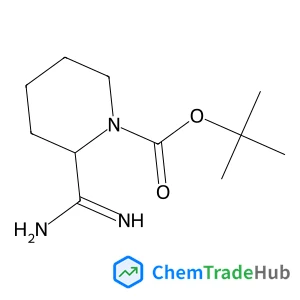
2-Methyl-2-propanyl 2-carbamimidoyl-1-piperidinecarboxylate
CAS Number:
1258640-98-0
Molecular Formula:
C11H21N3O2
Recommended Suppliers






Disclaimer
This page provides academic journal information for reference and research purposes only. We are not affiliated with any journal publishers and do not handle publication submissions. For publication-related inquiries, please contact the respective journal publishers directly.
If you notice any inaccuracies in the information displayed, please contact us at support@chemtradehub.com. We will promptly review and address your concerns.