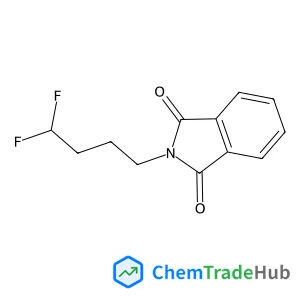
2-(4,4-Difluorobutyl)-1H-isoindole-1,3(2H)-dione
CAS Number:
1265341-14-7
Molecular Formula:
C12H11F2NO2
K. J. Fijalkowski, T. Jaroń, P. J. Leszczyński, E. Magos-Palasyuk, T. Palasyuk, M. K. Cyrański, W. Grochala
We report a novel family of hydrogen-rich materials – alkali metal di(amidoborane)borohydrides, M(BH3NH2BH2NH2BH3). The title compounds are related to metal amidoboranes (amidotrihydroborates) but have higher gravimetric H content. Li salt contains 15.1 wt% H and discharges very pure H2 gas. Differences in thermal stability between amidoboranes and respective oligoamidoboranes explain the release of the ammonia impurity (along with H2) during the thermal decomposition of light alkali amidoboranes, LiNH2BH3, NaNH2BH3 and NaLi(NH2BH3)2, and confirm the mechanism of the side decomposition reaction.

Journal of Organometallic Chemistry

Organic Preparations and Procedures International

Pharmacological Reviews

Helvetica Chimica Acta

Fibre Chemistry

Journal of Medicinal Chemistry

Science Progress

Pure and Applied Chemistry

Kinetics and Catalysis

Proceedings of the National Academy of Sciences of the United States of America
Yu-Sheng Chen, Tim Graber
DOI: 10.1039/B409463H
Alex Fragoso, Eduardo Almirall, Roberto Cao, Luis Echegoyen, Raúl González-Jonte
DOI: 10.1039/B407792J
Xiao-Ti Zhou, Rich G. Carter
DOI: 10.1039/B410092A
Narottam Gharah, Santu Chakraborty, Alok K. Mukherjee, Ramgopal Bhattacharyya
DOI: 10.1039/B408946D
Eiji Shirakawa, Keijiro Ishii, Teruhisa Tsuchimoto
DOI: 10.1039/B411125G
Sergey A. Piletsky, Elena V. Piletska, Kal Karim, Frank Davis, Seamus P. J. Higson, Anthony P. F. Turner
DOI: 10.1039/B408387C
Chi-Chung Kwok, Sze-Chit Yu, Iona H. T. Sham, Chi-Ming Che
DOI: 10.1039/B412762E
Satoshi Horike, Ryotaro Matsuda, Ryo Kitaura, Susumu Kitagawa, Takahiro Iijima, Kazunaka Endo, Yoshiki Kubota, Masaki Takata
DOI: 10.1039/B406883A
Wai-Yeung Wong, Suk-Yue Poon, Albert W.-M. Lee, Jian-Xin Shi, Kok-Wai Cheah
DOI: 10.1039/B409580D
Dominik Wechsler, Robert McDonald, Michael J. Ferguson, Mark Stradiotto
DOI: 10.1039/B410328A
Waste containing 6-Chloro-5-(2'-hydroxy-3'-methoxy-4-biphenylyl)-3-(3-methoxyphe...
(3alpha,5alpha)-3-Hydroxypregnane-11,20-dione is primarily used in the pharmaceu...
The market for 4-Amino-6-chloro-2-pyridinecarboxylic acid (CAS: 546141-56-4) is ...
Alternatives to (2-Benzoylethyl)trimethylammonium chloride (CAS: 24472-88-6) in ...
N-[4-Nitro-3-(trifluoromethyl)phenyl]acetamide (CAS: 393-12-4) is generally safe...
Alternative reagents such as other phosphates or similar functional groups can b...
There are alternatives to N,N'-Bis(3-aminopropyl)-1,3-propanediamine (CAS: 4605-...
When handling Aluminium trihexadecanoate, it is important to use appropriate per...
(1,1-Dioxido-3-oxo-1,2-benzothiazol-2(3H)-yl)acetic acid is a chemical compound ...
Several alternatives to 5,5-dimethyloxolan-2-one (CAS: 3123-97-5) can be used in...

Physical Chemistry Chemical Physics (PCCP) is an international journal co-owned by 19 physical chemistry and physics societies from around the world. This journal publishes original, cutting-edge research in physical chemistry, chemical physics and biophysical chemistry. To be suitable for publication in PCCP, articles must include significant innovation and/or insight into physical chemistry; this is the most important criterion that reviewers and Editors will judge against when evaluating submissions. The journal has a broad scope and welcomes contributions spanning experiment, theory, computation and data science. Topical coverage includes spectroscopy, dynamics, kinetics, statistical mechanics, thermodynamics, electrochemistry, catalysis, surface science, quantum mechanics, quantum computing and machine learning. Interdisciplinary research areas such as polymers and soft matter, materials, nanoscience, energy, surfaces/interfaces, and biophysical chemistry are welcomed if they demonstrate significant innovation and/or insight into physical chemistry. Joined experimental/theoretical studies are particularly appreciated when complementary and based on up-to-date approaches.
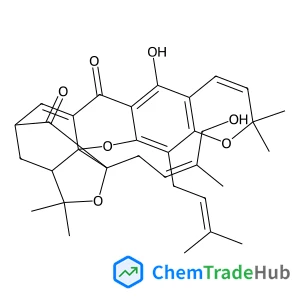
![(2R,6S)-6-[(Benzyloxy)methyl]-4-{[(2-methyl-2-propanyl)oxy]carbonyl}-2-morpholinecarboxylic acid structure](https://static.chemtradehub.com/structs/109/1093085-91-6-3382.webp "(2R,6S)-6-[(Benzyloxy)methyl]-4-{[(2-methyl-2-propanyl)oxy]carbonyl}-2-morpholinecarboxylic acid structure")