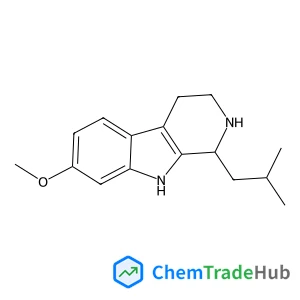
1-Isobutyl-7-methoxy-2,3,4,9-tetrahydro-1H-beta-carboline
CAS Number:
175975-76-5
Molecular Formula:
C16H22N2O
Er Hong Song, Sung Ho Yoo, Jae Joon Kim, Shiau Wu Lai, Qing Jiang, Sung Oh Cho
Hydrogen storage and release are two essential parameters that define the efficiency of a hydrogen storage medium. Herein, we investigate the effects of the external electric field F on the adsorption–desorption of H2 on a Ca-decorated silicene system (Ca–silicene) based on density functional theory calculations. Our study demonstrates that nine H2 molecules per Ca atom can be adsorbed and 6.4 wt% H2 can be adsorbed on Ca–silicene with an average binding energy of 0.19 eV per H2, while the appropriate F can be used to effectively enhance the hydrogen storage–release on the Ca–silicene system. The high synergetic effect may be attributed to the observation that F induces an enhancement of the charge transfer between H2 molecules and the Ca–silicene system. Thus, the Ca–silicene system together with the synergy of F can efficiently facilitate H2 adsorption–desorption, completing the whole hydrogen storage–release cycle.
Yuting Li, Ravin Narain, Yinghua Ma, Andrew L. Lewis, Steven P. Armes
DOI: 10.1039/B410150B
Mangesh T. Bore, Hien N. Pham, Timothy L. Ward, Abhaya K. Datye
DOI: 10.1039/B407575G
Teruaki Hasegawa, Tomohisa Fujisawa, Munenori Numata, Mariko Umeda, Takahiro Matsumoto, Taro Kimura, Shiro Okumura, Kazuo Sakurai, Seiji Shinkai
DOI: 10.1039/B407409B
Sergey A. Piletsky, Elena V. Piletska, Kal Karim, Frank Davis, Seamus P. J. Higson, Anthony P. F. Turner
DOI: 10.1039/B408387C
Tryg R. Jensen, Laurie E. Breyfogle, Marc A. Hillmyer, William B. Tolman
DOI: 10.1039/B405362A
Gertrudis Rodríguez-López, M. Dolores Marcos, Ramón Martínez-Máñez, Félix Sancenón, Juan Soto, Luis A. Villaescusa, Danile Beltrán, Pedro Amorós
DOI: 10.1039/B406611A
David R. Kelly, Stanley M. Roberts
DOI: 10.1039/B404390C
Heinz-Bernhard Kraatz, Jeremy S. Lee
DOI: 10.1039/B406689H
Achim Müller, Yunshan Zhou, Lijuan Zhang, Hartmut Bögge, Marc Schmidtmann, Martin Dressel, Joris van Slageren
DOI: 10.1039/B407753A
Chi-Chung Kwok, Sze-Chit Yu, Iona H. T. Sham, Chi-Ming Che
DOI: 10.1039/B412762E
N-(4-Methoxybenzyl)-2-pyridinamine (CAS: 52818-63-0) is increasingly being used ...
When handling Ethyl 4-(2-chlorophenyl)-1,3-thiazole-2-carboxylate, appropriate p...
Diethyldiselane (CAS: 628-39-7) is classified under the Globally Harmonized Syst...
The market for oxocopper (CAS: 12053-18-8) is primarily driven by its use in cat...
The market for 5-{[(2-Methyl-2-propanyl)oxy]carbonyl}-5-azaspiro[2.4]heptane-7-c...
2-(1-Pyrrolidinyl)-4-pyridinamine is a chemical compound with the CAS number 359...
2-(3-Pyridinyl)-1-azabicyclo[2.2.2]octane (CAS: 91556-75-1) is a crystalline sol...
(S)-Alpha-allyl-proline hydrochloride is usually synthesized via a Wittig reacti...
3-Methyl-1,2-oxazole-5-carboxylic acid (CAS: 4857-42-5) is an organic compound w...
Lys-SMCC-DM1 is synthesized via a multi-step process involving the coupling of S...

Physical Chemistry Chemical Physics (PCCP) is an international journal co-owned by 19 physical chemistry and physics societies from around the world. This journal publishes original, cutting-edge research in physical chemistry, chemical physics and biophysical chemistry. To be suitable for publication in PCCP, articles must include significant innovation and/or insight into physical chemistry; this is the most important criterion that reviewers and Editors will judge against when evaluating submissions. The journal has a broad scope and welcomes contributions spanning experiment, theory, computation and data science. Topical coverage includes spectroscopy, dynamics, kinetics, statistical mechanics, thermodynamics, electrochemistry, catalysis, surface science, quantum mechanics, quantum computing and machine learning. Interdisciplinary research areas such as polymers and soft matter, materials, nanoscience, energy, surfaces/interfaces, and biophysical chemistry are welcomed if they demonstrate significant innovation and/or insight into physical chemistry. Joined experimental/theoretical studies are particularly appreciated when complementary and based on up-to-date approaches.