












Passivated clusters: a theoretical investigation of the effect of surface ligation on cluster geometry
Literature Information
Publication Date
2002-07-25
DOI
10.1039/B204460A
Impact Factor
3.676
Authors
Nicholas T. Wilson, Roy L. Johnston
View Original
Abstract
A simple cluster–ligand interaction model is introduced to describe the surface passivation of gold clusters by thiol ligands. It is shown that surface passivation effects can be considerable and can result in changes in the order of stability between different structural isomers. The fact that many empirical potentials favour icosahedral-based structures for bare metal clusters, while experimental studies show a preponderance of fcc-like cluster cores for passivated gold clusters, can be explained by a ligand-induced stabilisation of more open (100)-type surfaces in such clusters. These results are shown to be in agreement with more detailed calculations on specific cluster geometries.
Related Literature
Prediction of formation constants of metal–ammonia complexes in aqueous solution using density functional theory calculations
Robert D. Hancock, Libero J. Bartolotti
2004-01-27
Communication
DOI: 10.1039/B312518C
Generation of strong, homochiral bases by electrochemical reduction of phenazine derivatives
A. Mateo Alonso, Roberto Horcajada, Helen J. Groombridge, Reshma Mandalia, Majid Motevalli, James H. P. Utley, Peter B. Wyatt
2004-01-20
Communication
DOI: 10.1039/B313995F
Carbon nanotube conducting arrays by consecutive amidation reactions
Dae-Hwan Jung, Young Koan Ko, Seung Joo Seo, Hee-Tae Jung
2004-02-05
Communication
DOI: 10.1039/B315348G
Preparation of chiral triarylphosphines by Pd-catalysed asymmetric P–C cross-coupling
Christian Korff, Günter Helmchen
2004-02-03
Communication
DOI: 10.1039/B315009G
Hydrogen adsorption in the nanoporous metal-benzenedicarboxylate M(OH)(O2C–C6H4–CO2) (M = Al3+, Cr3+), MIL-53
Gérard Férey, Michel Latroche, Christian Serre, Franck Millange, Thierry Loiseau, Annick Percheron-Guégan
2003-11-04
Communication
DOI: 10.1039/B308903G
Pore size effects in the pyrolysis of 1,3-diphenylpropane confined in mesoporous silicas
Michelle K. Kidder, Phillip F. Britt, Zongtao Zhang, Sheng Dai, A. C. Buchanan, III
2003-10-15
Communication
DOI: 10.1039/B310405B
Facile fabrication of composites of platinum nanoparticles and amorphous carbon films by catalyzed carbonization of cellulose fibers
Junhui He, Toyoki Kunitake, Aiko Nakao
2004-01-20
Communication
DOI: 10.1039/B314407K
Electrospray mass spectrometry of undiluted ionic liquids
Glen P. Jackson, Douglas C. Duckworth
2004-01-27
Communication
DOI: 10.1039/B314754A
Preparation and electrochemical behaviour of hydrophobic vitamin B12 covalently immobilized onto platinum electrode
Hisashi Shimakoshi, Mami Tokunaga, Keita Kuroiwa, Nobuo Kimizuka, Yoshio Hisaeda
2003-12-02
Communication
DOI: 10.1039/B309457J
The first general method for α-trifluoromethylation of carboxylic acids using BrF3
Aviv Hagooly, Shlomo Rozen
2004-02-09
Communication
DOI: 10.1039/B315705A
You might also like
Compound Q&A
How should waste containing 2-Ethyl-4-Methyl-1H-Imidazole-5-Carbaldehyde (CAS: 88634-80-4) be handled?
Waste containing 2-Ethyl-4-Methyl-1H-Imidazole-5-Carbaldehyde (CAS: 88634-80-4) ...
88634-80-42-Ethyl-4-Methyl-1H-...
Compound Q&A
What industries use Triethoxy(octyl)silane (CAS: 1385031-14-0)?
Triethoxy(octyl)silane (CAS: 1385031-14-0) is widely used in the pharmaceuticals...
1385031-14-0Triethoxy(octyl)sila...
Compound Q&A
Are there alternatives to 3-iodo-7-nitro-1H-indazole (CAS: 864724-64-1) in synthesis?
Several alternatives to 3-iodo-7-nitro-1H-indazole (CAS: 864724-64-1) exist in t...
864724-64-13-iodo-7-nitro-1H-in...
Compound Q&A
Are there alternatives to Benzene, bis[(trimethoxysilyl)ethyl] (CAS: 266317-71-9) in synthesis?
Yes, there are alternatives to Benzene, bis[(trimethoxysilyl)ethyl] (CAS: 266317...
266317-71-9Benzene, bis[(trimet...
Compound Q&A
Is Isothiazole-3-carbonitrile (CAS: 1452-17-1) safe?
Isothiazole-3-carbonitrile (CAS: 1452-17-1) is generally considered safe when us...
1452-17-1Isothiazole-3-carbon...
Compound Q&A
Is (3-Chlorophenyl)methanol (CAS: 873-63-2) safe?
(3-Chlorophenyl)methanol (CAS: 873-63-2) is considered low to moderately toxic. ...
873-63-2(3-Chlorophenyl)meth...
Compound Q&A
How is (2S,3S)-2-Hydroxy-3-({[(2-methyl-2-propanyl)oxy]carbonyl}amino)-3-(2-naphthyl)propanoic acid (CAS: 959583-98-3) typically synthesized?
(2S,3S)-2-Hydroxy-3-({[(2-methyl-2-propanyl)oxy]carbonyl}amino)-3-(2-naphthyl)pr...
959583-98-3(2S,3S)-2-Hydroxy-3-...
Compound Q&A
What precautions should be taken when handling Methyl 2-(bromomethyl)-5-methoxybenzoate (CAS: 788081-99-2)?
Proper handling of methyl 2-(bromomethyl)-5-methoxybenzoate requires the use of ...
788081-99-2Methyl 2-(bromomethy...
Compound Q&A
What is 6,8-Dibromoimidazo[1,2-a]pyridine-2-carboxylic acid (CAS: 904805-36-3)?
6,8-Dibromoimidazo[1,2-a]pyridine-2-carboxylic acid (CAS: 904805-36-3) is an aro...
904805-36-36,8-Dibromoimidazo[1...
Compound Q&A
Is 3-Amino-5-bromo-2-pyridinecarbonitrile (CAS: 573675-27-1) safe?
3-Amino-5-bromo-2-pyridinecarbonitrile is considered safe when handled under pro...
573675-27-13-Amino-5-bromo-2-py...
Source Journal
Physical Chemistry Chemical Physics

CiteScore:
5.5
Self-citation Rate:
10.3%
Articles per Year:
3036
Physical Chemistry Chemical Physics (PCCP) is an international journal co-owned by 19 physical chemistry and physics societies from around the world. This journal publishes original, cutting-edge research in physical chemistry, chemical physics and biophysical chemistry. To be suitable for publication in PCCP, articles must include significant innovation and/or insight into physical chemistry; this is the most important criterion that reviewers and Editors will judge against when evaluating submissions. The journal has a broad scope and welcomes contributions spanning experiment, theory, computation and data science. Topical coverage includes spectroscopy, dynamics, kinetics, statistical mechanics, thermodynamics, electrochemistry, catalysis, surface science, quantum mechanics, quantum computing and machine learning. Interdisciplinary research areas such as polymers and soft matter, materials, nanoscience, energy, surfaces/interfaces, and biophysical chemistry are welcomed if they demonstrate significant innovation and/or insight into physical chemistry. Joined experimental/theoretical studies are particularly appreciated when complementary and based on up-to-date approaches.
Recommended Compounds
![Methyl 8-azabicyclo[3.2.1]octane-3-carboxylate hydrochloride structure](https://static.chemtradehub.com/structs/179/179022-43-6-77f5.webp "Methyl 8-azabicyclo[3.2.1]octane-3-carboxylate hydrochloride structure")
Methyl 8-azabicyclo[3.2.1]octane-3-carboxylate hydrochloride
CAS Number:
179022-43-6
Molecular Formula:
C9H16ClNO2
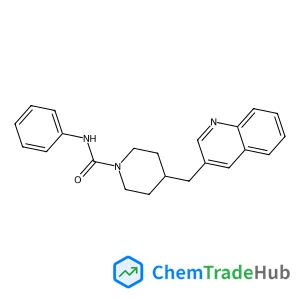
N-phenyl-4-(quinolin-3-ylmethyl)piperidine-1-carboxamide
CAS Number:
959151-50-9
Molecular Formula:
C22H23N3O
Recommended Suppliers





Disclaimer
This page provides academic journal information for reference and research purposes only. We are not affiliated with any journal publishers and do not handle publication submissions. For publication-related inquiries, please contact the respective journal publishers directly.
If you notice any inaccuracies in the information displayed, please contact us at support@chemtradehub.com. We will promptly review and address your concerns.