













Carbon nanotube conducting arrays by consecutive amidation reactions
Literature Information
Publication Date
2004-02-05
DOI
10.1039/B315348G
Impact Factor
6.222
Authors
Dae-Hwan Jung, Young Koan Ko, Seung Joo Seo, Hee-Tae Jung
View Original
Abstract
Carbon nanotube conducting arrays were constructed via consecutive amidation reactions with the aid of a linker molecule and a condensation agent on a patterned amine-terminated glass substrate. The electrical resistivity of the nanotube films was sensitive to the degree of coverage for the substrate, making it possible to tailor nanotube multilayers suitable for use in micro- or nanoscale electronic devices and circuits.
Related Literature
Synthesis of high molar mass poly(n-butyl acrylate) and poly(2-ethylhexyl acrylate) by SET-LRP in mixtures of fluorinated alcohols with DMSO
Shampa R. Samanta, Virgil Percec
2013-08-09
Paper
DOI: 10.1039/C3PY01008B
Microporous organic polymers with acetal linkages: synthesis, characterization, and gas sorption properties
Li-Min Zhang, Tao Wang, Bao-Hang Han
2013-08-22
Paper
DOI: 10.1039/C3PY00854A
Growing polymers from peptides and proteins: a biomedical perspective
Yizhi Qi
2013-10-11
Review Article
DOI: 10.1039/C3PY01089A
Photo-induced cobalt-mediated radical polymerization of vinyl acetate
Xuelang Miao, Wei Zhu, Zhengbiao Zhang, Wei Zhang, Xiulin Zhu, Jian Zhu
2013-08-28
Paper
DOI: 10.1039/C3PY00913K
Facile synthesis of chain end functionalized polyethylenes via epoxide ring-opening and thiol–ene addition click chemistry
Huayi Li, Jin-Yong Dong, Youliang Hu
2013-07-19
Paper
DOI: 10.1039/C3PY00727H
Polymerization-Induced Self-Assembly (PISA) – control over the morphology of nanoparticles for drug delivery applications
Bunyamin Karagoz, Hien T. Duong, Johan S. Basuki, Cyrille Boyer
2013-10-22
Communication
DOI: 10.1039/C3PY01306E
Fluoro-benzoselenadiazole-based low band gap polymers for high efficiency organic solar cells
Yongxi Li, Zhe Pan, Lei Miao, Ying Xing, Chao Li, Yu Chen
2013-08-22
Communication
DOI: 10.1039/C3PY01018J
You might also like
Compound Q&A
What are the main uses of 1H-Indazole-6-carbonitrile (CAS: 141290-59-7)?
1H-Indazole-6-carbonitrile finds applications in pharmaceuticals, where it serve...
141290-59-71H-Indazole-6-carbon...
Compound Q&A
How should waste containing Dioctyl (2E)-2-butenedioate (CAS: 2997-85-5) be handled?
Waste containing Dioctyl (2E)-2-butenedioate (CAS: 2997-85-5) should be collecte...
2997-85-5Dioctyl (2E)-2-buten...
Compound Q&A
What industries use Sodium [(1,2-benzoxazol-3-ylmethyl)sulfonyl]azanide (CAS: 68291-98-5)?
Sodium [(1,2-benzoxazol-3-ylmethyl)sulfonyl]azanide is primarily used in pharmac...
68291-98-5Sodium [(1,2-benzoxa...
Compound Q&A
Are there alternatives to Dimethyl 4-(4,4,5,5-tetramethyl-1,3,2-dioxaborolan-2-yl)-2,6-pyridinedicarboxylate (CAS: 741709-66-0) in synthesis?
Dimethyl 4-(4,4,5,5-tetramethyl-1,3,2-dioxaborolan-2-yl)-2,6-pyridinedicarboxyla...
741709-66-0Dimethyl 4-(4,4,5,5-...
Compound Q&A
How should waste containing 2-Fluoro-6-hydrazinopyridine (CAS: 80714-39-2) be handled?
Waste containing 2-Fluoro-6-hydrazinopyridine (CAS: 80714-39-2) should be manage...
80714-39-22-Fluoro-6-hydrazino...
Compound Q&A
What is 6-Formyl-2-pyridinecarboxylic acid (CAS: 499214-11-8)?
6-Formyl-2-pyridinecarboxylic acid is an organic compound with the molecular for...
499214-11-86-Formyl-2-pyridinec...
Compound Q&A
What is the market or research trend for 3-(3,4-dimethoxyphenyl)-2,5-dimethyl-N-(2-morpholin-4-ylethyl)pyrazolo[1,5-a]pyrimidin-7-amine (CAS: 900874-91-1)?
Research trends for this compound indicate a focus on its potential applications...
900874-91-13-(3,4-dimethoxyphen...
Compound Q&A
How is 9H-Tribenzo[b,d,f]azepine (CAS: 29875-73-8) typically synthesized?
9H-Tribenzo[b,d,f]azepine is typically synthesized via a multi-step process invo...
29875-73-89H-Tribenzo[b,d,f]az...
Compound Q&A
How is 1-Cyclopropyl-7-ethoxy-6-fluoro-8-methoxy-4-oxo-1,4-dihydro-3-quinolinecarboxylic acid (CAS: 1797982-51-4) typically synthesized?
1-Cyclopropyl-7-ethoxy-6-fluoro-8-methoxy-4-oxo-1,4-dihydro-3-quinolinecarboxyli...
1797982-51-41-Cyclopropyl-7-etho...
Compound Q&A
How should waste containing Methyl 3-oxo-1,2,3,4-tetrahydro-6-quinoxalinecarboxylate (CAS: 671820-52-3) be handled?
Waste containing Methyl 3-oxo-1,2,3,4-tetrahydro-6-quinoxalinecarboxylate (CAS: ...
671820-52-3Methyl 3-oxo-1,2,3,4...
Source Journal
Chemical Communications

CiteScore:
8.6
Self-citation Rate:
4.7%
Articles per Year:
2458
ChemComm publishes urgent research which is of outstanding significance and interest to experts in the field, while also appealing to the journal’s broad chemistry readership. Our communication format is ideally suited to short, urgent studies that are of such importance that they require accelerated publication. Our scope covers all topics in chemistry, and research at the interface of chemistry and other disciplines (such as materials science, nanoscience, physics, engineering and biology) where there is a significant novelty in the chemistry aspects. Major topic areas covered include: Analytical Chemistry Catalysis Chemical Biology and medicinal chemistry Computational Chemistry and Machine Learning Energy and sustainable chemistry Environmental Chemistry Green Chemistry Inorganic Chemistry Materials Chemistry Nanoscience Organic Chemistry Physical Chemistry Polymer Chemistry Supramolecular Chemistry
Recommended Compounds
![4-Penten-1-yl 2-[(2-furylmethyl)(1H-imidazol-1-ylcarbonyl)amino]butanoate structure](https://static.chemtradehub.com/structs/101/101903-30-4-ac34.webp "4-Penten-1-yl 2-[(2-furylmethyl)(1H-imidazol-1-ylcarbonyl)amino]butanoate structure")
4-Penten-1-yl 2-[(2-furylmethyl)(1H-imidazol-1-ylcarbonyl)amino]butanoate
CAS Number:
101903-30-4
Molecular Formula:
C18H23N3O4
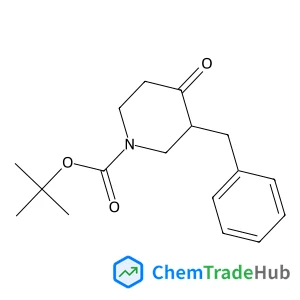
2-Methyl-2-propanyl 3-benzyl-4-oxo-1-piperidinecarboxylate
CAS Number:
193274-82-7
Molecular Formula:
C17H23NO3

Recommended Suppliers




Disclaimer
This page provides academic journal information for reference and research purposes only. We are not affiliated with any journal publishers and do not handle publication submissions. For publication-related inquiries, please contact the respective journal publishers directly.
If you notice any inaccuracies in the information displayed, please contact us at support@chemtradehub.com. We will promptly review and address your concerns.