












On the response of simple reactors to regular trains of pulses
Literature Information
Publication Date
2002-03-12
DOI
10.1039/B109522F
Impact Factor
3.676
Authors
View Original
Abstract
Propagating pulses of concentration in an excitable system may carry information because regions of high concentration of a selected reagent may be associated with one logical state, and regions of low concentration with another. Spatially distributed reactors constructed of active (excitable) and passive areas in which reagents diffuse can be applied to transform such information. In this paper we consider a few examples of such reactors (a chemical diode, a cross junction switch) and study their response to a chemical input of high frequency. We demonstrate that the response of a signal processing device may depend on the input frequency.
Related Literature
Study of through-space substituent–π interactions using N-phenylimide molecular balances
Jungwun Hwang, Ping Li, Erik C. Vik, Ishwor Karki, Ken D. Shimizu
2019-03-25
Research Article
DOI: 10.1039/C9QO00195F
Nickel-promoted C(2)–H amidation of quinoline N-oxides with N-fluorobenzenesulfonimide
Shuaijun Han, Xianying Gao, Qingsong Wu, Jingya Li, Dapeng Zou, Yangjie Wu
2019-02-05
Research Article
DOI: 10.1039/C8QO01281D
Synthesis of chiral seven-membered cyclic sulfonamides through palladium-catalyzed arylation of cyclic imines
Lei Shi, Fan-Jie Meng, Yaming Li
2019-03-22
Research Article
DOI: 10.1039/C8QO01323C
Synthesis of a sumanenyl hafnocene complex‡
Toru Amaya, Shun Katoh, Toshiyuki Moriuchi, Toshikazu Hirao
2019-03-13
Research Article
DOI: 10.1039/C9QO00140A
Oxidant-directed chemoselective sulfonylation and sulfonyloximation of alkenes via cleaving the C–S bond in TosMIC
Xue-Qiang Chu, Danhua Ge, Zhi-Liang Shen
2019-02-04
Research Article
DOI: 10.1039/C8QO01346B
Selective carbonylation of benzene to benzaldehyde using a phosphorus–nitrogen PN3P–rhodium(i) complex
Chunhui Zhou, Jinsong Hu, Yuan Wang, Changguang Yao, Priyanka Chakraborty, Huaifeng Li, Chao Guan, Mei-Hui Huang, Kuo-Wei Huang
2018-11-07
Research Article
DOI: 10.1039/C8QO00892B
Symmetric and nonsymmetric bis-hemithioindigos – precise visible light controlled shape-shifters
Kerstin Hoffmann, Manuel Guentner, Peter Mayer, Henry Dube
2019-03-13
Research Article
DOI: 10.1039/C9QO00202B
A new method for α-specific glucosylation and its application to the one-pot synthesis of a branched α-glucan
Yanxin Zhang, Shihao Zhou, Xiaohan Wang, Han Zhang, Jian Gao
2019-01-30
Research Article
DOI: 10.1039/C8QO01177J
One-pot sequential synthesis of 3-carbonyl-4-arylbenzo[f]indole and 3-carbonyl-4-arylnaphthofuran fluorophores
N. Supantanapong, P. Chuangsoongnern
2018-12-10
Research Article
DOI: 10.1039/C8QO01182F
You might also like
Compound Q&A
How should waste containing (6-Bromo-2-naphthyl)oxy](dimethyl)(2-methyl-2-propanyl)silane be handled?
Waste containing (6-Bromo-2-naphthyl)oxy](dimethyl)(2-methyl-2-propanyl)silane (...
100751-65-3[(6-Bromo-2-naphthyl...
Compound Q&A
How is 7-Fluoro-4-isoquinolinecarboxylic acid (CAS: 1841081-40-0) typically synthesized?
7-Fluoro-4-isoquinolinecarboxylic acid can be synthesized via a multi-step proce...
1841081-40-07-Fluoro-4-isoquinol...
Compound Q&A
What are the physical and chemical properties of 2,3,5,6-Tetrabromothieno[3,2-b]thiophene (CAS: 124638-53-5)?
2,3,5,6-Tetrabromothieno[3,2-b]thiophene is a crystalline compound with a high m...
124638-53-52,3,5,6-Tetrabromoth...
Compound Q&A
Is 1-[4-(Benzylamino)-7,8-dihydro-5H-pyrano[4,3-d]pyrimidin-2-yl]-2-methyl-1H-indole-4-carboxamide (CAS: 1542705-92-9) safe?
1-[4-(Benzylamino)-7,8-dihydro-5H-pyrano[4,3-d]pyrimidin-2-yl]-2-methyl-1H-indol...
1542705-92-91-[4-(Benzylamino)-7...
Compound Q&A
What is the market or research trend for imidazo[5,1-d]-1,2,3,5-tetrazine-8-carboxylic acid, 3,4-dihydro-3-methyl-4-oxo- (CAS: 113942-30-6)?
The market for imidazo[5,1-d]-1,2,3,5-tetrazine-8-carboxylic acid, 3,4-dihydro-3...
113942-30-6Imidazo[5,1-d]-1,2,3...
Compound Q&A
What is 3-(Triisopropylsilyl)propiolaldehyde (CAS: 163271-80-5)?
3-(Triisopropylsilyl)propiolaldehyde is a synthetic organic compound with the CA...
163271-80-53-(Triisopropylsilyl...
Compound Q&A
What regulatory guidelines apply to 6-Nitro-2H-1,4-benzoxazin-3(4H)-one (CAS: 81721-87-1)?
6-Nitro-2H-1,4-benzoxazin-3(4H)-one (CAS: 81721-87-1) is subject to various regu...
81721-87-16-Nitro-2H-1,4-benzo...
Compound Q&A
How should waste containing (3-Fluorophenyl)(4-{[(2-methyl-2-propanyl)oxy]carbonyl}-1-piperazinyl)acetic acid (CAS: 885272-91-3) be handled?
Waste containing (3-Fluorophenyl)(4-{[(2-methyl-2-propanyl)oxy]carbonyl}-1-piper...
885272-91-3(3-Fluorophenyl)(4-{...
Compound Q&A
What are the physical and chemical properties of N,N'-4,4'-Biphenyldiyldiisonicotinamide (CAS: 55119-40-9)?
N,N'-4,4'-Biphenyldiyldiisonicotinamide is a white crystalline solid with a mole...
55119-40-9N,N'-4,4'-Biphenyldi...
Compound Q&A
What industries use 6-Bromo-8-fluoro-2-quinazolinol (CAS: 1036756-15-6)?
6-Bromo-8-fluoro-2-quinazolinol is primarily used in the pharmaceutical industry...
1036756-15-66-Bromo-8-fluoro-2-q...
Source Journal
Physical Chemistry Chemical Physics

CiteScore:
5.5
Self-citation Rate:
10.3%
Articles per Year:
3036
Physical Chemistry Chemical Physics (PCCP) is an international journal co-owned by 19 physical chemistry and physics societies from around the world. This journal publishes original, cutting-edge research in physical chemistry, chemical physics and biophysical chemistry. To be suitable for publication in PCCP, articles must include significant innovation and/or insight into physical chemistry; this is the most important criterion that reviewers and Editors will judge against when evaluating submissions. The journal has a broad scope and welcomes contributions spanning experiment, theory, computation and data science. Topical coverage includes spectroscopy, dynamics, kinetics, statistical mechanics, thermodynamics, electrochemistry, catalysis, surface science, quantum mechanics, quantum computing and machine learning. Interdisciplinary research areas such as polymers and soft matter, materials, nanoscience, energy, surfaces/interfaces, and biophysical chemistry are welcomed if they demonstrate significant innovation and/or insight into physical chemistry. Joined experimental/theoretical studies are particularly appreciated when complementary and based on up-to-date approaches.
Recommended Compounds

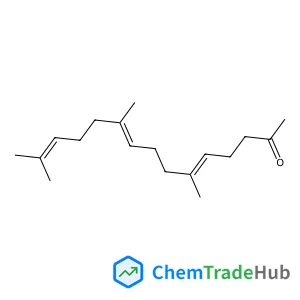
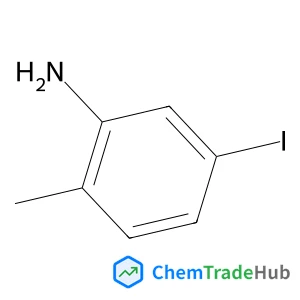
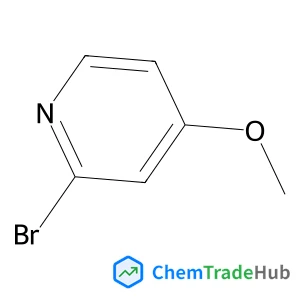
Recommended Suppliers






Disclaimer
This page provides academic journal information for reference and research purposes only. We are not affiliated with any journal publishers and do not handle publication submissions. For publication-related inquiries, please contact the respective journal publishers directly.
If you notice any inaccuracies in the information displayed, please contact us at support@chemtradehub.com. We will promptly review and address your concerns.