












Fluorescence excitation spectrum of the 2-butoxyl radical and kinetics of its reactions with NO and NO2
Literature Information
Publication Date
2001-06-11
DOI
10.1039/B101628H
Impact Factor
3.676
Authors
View Original
Abstract
The (Ã←) fluorescence excitation spectrum of the 2-C4H9O() (2-butoxyl) radical in the wavelength range 345–390 nm was obtained using a combined laser photolysis/laser-induced fluorescence (LIF) technique following the generation of the radicals by excimer laser photolysis of 2-butylnitrite at λ = 351 nm. The fluorescence excitation spectrum shows 5 vibronic bands, where the dominant progression corresponds to the CO-stretching vibration in the first electronically excited state with CO′ = (560 ± 10) cm−1. The transition origin was assigned at 00 = (26768 ± 10) cm−1 (λ00 = (373.58 ± 0.15) nm). The kinetics of the reactions of the 2-butoxyl radical with NO and NO2 at temperatures between T = 223–305 K and pressures between p = 6.5–104 mbar have been determined. The rate coefficients for both reactions were found to be independent of total pressure with kNO = (3.9 ± 0.3) × 10−11 cm3 s−1 and kNO2 = (3.6 ± 0.3) × 10−11 cm3 s−1 at T = 295 K. The Arrhenius expressions have been determined to be kNO = (9.1 ± 2.7) × 10−12 exp((3.4 ± 0.6) kJ mol−1/RT) cm3 s−1 and kNO2 = (8.6 ± 3.3) × 10−12 exp((3.3 ± 0.8) kJ mol−1/RT) cm3 s−1. In addition, the radiative lifetime of the 2-C4H9O(Ã) radical after excitation at λ = 365.938 nm in the (0,1) band has been determined to be τrad(2-C4H9O(Ã)) = (440 ± 80) ns. Quenching rate constants of the 2-C4H9O(Ã) radical were measured to be kq = (4.7 ± 0.3) × 10−10 cm3 s−1 and kq = (5.0 ± 0.4) × 10−12 cm3 s−1 for 2-butylnitrite and nitrogen, respectively.
Related Literature
C60fullerene aggregation in aqueous solution
Yuriy I. Prylutskyy, Anatoly S. Buchelnikov, Dmitry P. Voronin, Viktor V. Kostjukov, Uwe Ritter, John A. Parkinson, Maxim P. Evstigneev
2013-04-16
Paper
DOI: 10.1039/C3CP50187F
A XAS study of the luminescent Eu centers in thiosilicate phosphors
Katleen Korthout, Anthony B. Parmentier, Philippe F. Smet, Dirk Poelman
2013-03-22
Paper
DOI: 10.1039/C3CP44334E
The fast Z-scan method for studying working catalytic reactors with high energy X-ray diffraction: ZSM-5 in the methanol to gasoline process
David S. Wragg, Francesca L. Bleken, Matthew G. O'Brien, Marco Di Michiel, Helmer Fjellvåg, Unni Olsbye
2013-03-18
Paper
DOI: 10.1039/C3CP44343D
Structural changes in supercooled Al2O3–Y2O3 liquids
Mark Wilson, Chris J. Benmore, J. K. R. Weber, Paul F. McMillan
2013-04-17
Paper
DOI: 10.1039/C3CP51209F
The behavior and origin of the excess wing in DEET (N,N-diethyl-3-methylbenzamide)
S. Hensel-Bielowka, J. R. Sangoro, Z. Wojnarowska, M. Paluch
2013-04-15
Paper
DOI: 10.1039/C3CP50975C
K-edge XANES investigation of octakis(DMSO)lanthanoid(iii) complexes in DMSO solution and solid iodides
Paola D'Angelo, Valentina Migliorati, Riccardo Spezia, Simone De Panfilis, Ingmar Persson, Andrea Zitolo
2013-04-17
Paper
DOI: 10.1039/C3CP50842K
Chronoamperometric study of membrane electrode assembly operation in continuous flow photoelectrochemical water splitting
Jan Rongé, Dorien Nijs, Stef Kerkhofs, Kasper Masschaele, Johan A. Martens
2013-04-11
Paper
DOI: 10.1039/C3CP50890K
Electronic structure analysis of multistate reactivity in transition metal catalyzed reactions: the case of C–H bond activation by non-heme iron(iv)–oxo cores
Shengfa Ye, Cai-Yun Geng, Sason Shaik, Frank Neese
2013-05-01
Perspective
DOI: 10.1039/C3CP00080J
Tandem cathode for proton exchange membrane fuel cells
Samira Siahrostami, Mårten E. Björketun, Peter Strasser, Jeff Greeley, Jan Rossmeisl
2013-04-22
Paper
DOI: 10.1039/C3CP51479J
From solvated ions to ion-pairing: a THz study of lanthanum(iii) hydration
Vinay Sharma, Fabian Böhm, Michael Seitz, Gerhard Schwaab, Martina Havenith
2013-04-10
Paper
DOI: 10.1039/C3CP50865J
You might also like
Compound Q&A
How should waste containing (6-Bromo-2-naphthyl)oxy](dimethyl)(2-methyl-2-propanyl)silane be handled?
Waste containing (6-Bromo-2-naphthyl)oxy](dimethyl)(2-methyl-2-propanyl)silane (...
100751-65-3[(6-Bromo-2-naphthyl...
Compound Q&A
How is 7-Fluoro-4-isoquinolinecarboxylic acid (CAS: 1841081-40-0) typically synthesized?
7-Fluoro-4-isoquinolinecarboxylic acid can be synthesized via a multi-step proce...
1841081-40-07-Fluoro-4-isoquinol...
Compound Q&A
What are the physical and chemical properties of 2,3,5,6-Tetrabromothieno[3,2-b]thiophene (CAS: 124638-53-5)?
2,3,5,6-Tetrabromothieno[3,2-b]thiophene is a crystalline compound with a high m...
124638-53-52,3,5,6-Tetrabromoth...
Compound Q&A
Is 1-[4-(Benzylamino)-7,8-dihydro-5H-pyrano[4,3-d]pyrimidin-2-yl]-2-methyl-1H-indole-4-carboxamide (CAS: 1542705-92-9) safe?
1-[4-(Benzylamino)-7,8-dihydro-5H-pyrano[4,3-d]pyrimidin-2-yl]-2-methyl-1H-indol...
1542705-92-91-[4-(Benzylamino)-7...
Compound Q&A
What is the market or research trend for imidazo[5,1-d]-1,2,3,5-tetrazine-8-carboxylic acid, 3,4-dihydro-3-methyl-4-oxo- (CAS: 113942-30-6)?
The market for imidazo[5,1-d]-1,2,3,5-tetrazine-8-carboxylic acid, 3,4-dihydro-3...
113942-30-6Imidazo[5,1-d]-1,2,3...
Compound Q&A
What is 3-(Triisopropylsilyl)propiolaldehyde (CAS: 163271-80-5)?
3-(Triisopropylsilyl)propiolaldehyde is a synthetic organic compound with the CA...
163271-80-53-(Triisopropylsilyl...
Compound Q&A
What regulatory guidelines apply to 6-Nitro-2H-1,4-benzoxazin-3(4H)-one (CAS: 81721-87-1)?
6-Nitro-2H-1,4-benzoxazin-3(4H)-one (CAS: 81721-87-1) is subject to various regu...
81721-87-16-Nitro-2H-1,4-benzo...
Compound Q&A
How should waste containing (3-Fluorophenyl)(4-{[(2-methyl-2-propanyl)oxy]carbonyl}-1-piperazinyl)acetic acid (CAS: 885272-91-3) be handled?
Waste containing (3-Fluorophenyl)(4-{[(2-methyl-2-propanyl)oxy]carbonyl}-1-piper...
885272-91-3(3-Fluorophenyl)(4-{...
Compound Q&A
What are the physical and chemical properties of N,N'-4,4'-Biphenyldiyldiisonicotinamide (CAS: 55119-40-9)?
N,N'-4,4'-Biphenyldiyldiisonicotinamide is a white crystalline solid with a mole...
55119-40-9N,N'-4,4'-Biphenyldi...
Compound Q&A
What industries use 6-Bromo-8-fluoro-2-quinazolinol (CAS: 1036756-15-6)?
6-Bromo-8-fluoro-2-quinazolinol is primarily used in the pharmaceutical industry...
1036756-15-66-Bromo-8-fluoro-2-q...
Source Journal
Physical Chemistry Chemical Physics

CiteScore:
5.5
Self-citation Rate:
10.3%
Articles per Year:
3036
Physical Chemistry Chemical Physics (PCCP) is an international journal co-owned by 19 physical chemistry and physics societies from around the world. This journal publishes original, cutting-edge research in physical chemistry, chemical physics and biophysical chemistry. To be suitable for publication in PCCP, articles must include significant innovation and/or insight into physical chemistry; this is the most important criterion that reviewers and Editors will judge against when evaluating submissions. The journal has a broad scope and welcomes contributions spanning experiment, theory, computation and data science. Topical coverage includes spectroscopy, dynamics, kinetics, statistical mechanics, thermodynamics, electrochemistry, catalysis, surface science, quantum mechanics, quantum computing and machine learning. Interdisciplinary research areas such as polymers and soft matter, materials, nanoscience, energy, surfaces/interfaces, and biophysical chemistry are welcomed if they demonstrate significant innovation and/or insight into physical chemistry. Joined experimental/theoretical studies are particularly appreciated when complementary and based on up-to-date approaches.
Recommended Compounds
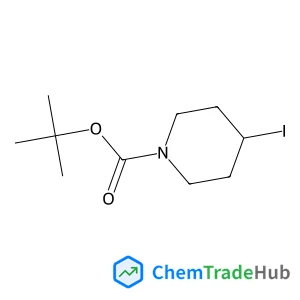
2-Methyl-2-propanyl 4-iodo-1-piperidinecarboxylate
CAS Number:
301673-14-3
Molecular Formula:
C10H18INO2
![2-{[4-(2-Methoxyethyl)phenoxy]methyl}oxirane structure](https://static.chemtradehub.com/structs/567/56718-70-8-f037.webp "2-{[4-(2-Methoxyethyl)phenoxy]methyl}oxirane structure")
![5-Bromoimidazo[1,2-a]pyridine structure](https://static.chemtradehub.com/structs/692/69214-09-1-d8e2.webp "5-Bromoimidazo[1,2-a]pyridine structure")
Recommended Suppliers





Disclaimer
This page provides academic journal information for reference and research purposes only. We are not affiliated with any journal publishers and do not handle publication submissions. For publication-related inquiries, please contact the respective journal publishers directly.
If you notice any inaccuracies in the information displayed, please contact us at support@chemtradehub.com. We will promptly review and address your concerns.