



Pd and Ag dimers and tetramers adsorbed at the MgO(001) surface: a density functional study
Literature Information
Publication Date
DOI
10.1039/A904813H
Impact Factor
3.676
Authors
View Original
Abstract
We have studied computationally the adsorption properties of small Ag and Pd clusters deposited on the MgO(001) surface. The calculations were carried out employing a gradient-corrected density functional approach; the oxide surface was represented by model clusters embedded in a large array of point charges. Supported Ag and Pd dimers and tetramers were investigated in order to identify the preferred adsorption sites and the modifications induced in the cluster by the interaction with the substrate. All metal clusters adsorb in proximity of oxygen centers. An adsorption mode with the molecular axis parallel to the surface is the most stable one for Pd2 while Ag2 prefers an upright adsorption mode. Various isomer structures of the supported metal tetramers have been considered. In general, the most stable gas phase structure is also the preferred one upon adsorption. This suggests that the metal–metal bonding prevails over the metal–MgO interaction.
Recommended Journals

Electroanalysis

Herald of the Russian Academy of Sciences

Bioorganic & Medicinal Chemistry Letters

Journal of Asian Natural Products Research

Bioorganic & Medicinal Chemistry

Atomization and Sprays

Biocatalysis and Biotransformation

Polycyclic Aromatic Compounds

Main Group Chemistry

Critical Reviews in Solid State and Materials Sciences
Related Literature
The nature of selenium hydrogen bonding: gas phase spectroscopy and quantum chemistry calculations
Kamal K. Mishra, Santosh K. Singh, Aloke Das
2017-08-15
Paper
DOI: 10.1039/C7CP05265K
Characterization of secondary phosphine oxide ligands on the surface of iridium nanoparticles
Israel Cano, Luis M. Martínez-Prieto, Pier F. Fazzini, Bruno Chaudret, Piet W. N. M. van Leeuwen
2017-07-28
Paper
DOI: 10.1039/C7CP03439C
Radiolysis of N2-rich astrophysical ice by swift oxygen ions: implication for space weathering of outer solar system bodies
W. R. M. Rocha, H. Rothard, P. Boduch
2017-08-10
Paper
DOI: 10.1039/C7CP04408A
The electronic properties of three popular high spin complexes [TM(acac)3, TM = Cr, Mn, and Fe] revisited: an experimental and theoretical study
S. Carlotto, L. Floreano, A. Cossaro, M. Rancan, M. Sambi
2017-08-24
Paper
DOI: 10.1039/C7CP04461E
How do ligands influence the quantum yields of cyclometalated platinum(ii) complexes, a theoretical research study
Baozhu Yang, Shuang Huang, Jianhao Wang
2017-08-08
Paper
DOI: 10.1039/C7CP02710A
Recognition of chiral zwitterionic interactions at nanoscale interfaces by chiroplasmonic nanosensors
Wenjing Zhao, Rong-Yao Wang, Hong Wei, Jingliang Li, Yinglu Ji, Xinxin Jiang, Xiaochun Wu, Xiangdong Zhang
2017-06-01
Paper
DOI: 10.1039/C7CP03004E
Synthesis of N-doped graphene quantum dots by pulsed laser ablation with diethylenetriamine (DETA) and their photoluminescence
S. R. M. Santiago, T. N. Lin, C. H. Chang, Y. A. Wong, C. A. J. Lin, C. T. Yuan, J. L. Shen
2017-08-07
Paper
DOI: 10.1039/C7CP03993J
Graphitic carbon coupled poly(anthraquinone) for proton shuttle flow-in-a-cell application
Selvam Mathi, Rudra Kumar, Rajaram K. Nagarale, Ashutosh Sharma
2017-02-22
Paper
DOI: 10.1039/C6CP08419B
Modulation of in:out and out:out conformations in [X.X′.X′′] phosphatranes by Lewis acids
Goar Sánchez-Sanz, Cristina Trujillo, Ibon Alkorta, José Elguero
2017-07-07
Paper
DOI: 10.1039/C7CP03661B
Ferrocene and ferrocenium inclusion compounds with cucurbiturils: a study of metal atom dynamics probed by Mössbauer spectroscopy
Clara I. R. Magalhães, Ana C. Gomes, André D. Lopes, Isabel S. Gonçalves, Martyn Pillinger, Eunyoung Jin, Ikjin Kim, Young Ho Ko, Israel Nowik, Rolfe H. Herber
2017-08-02
Paper
DOI: 10.1039/C7CP04416J
You might also like
Compound Q&A
What are the main uses of 4-Nitrophenyl phosphate disodium salt hexahydrate (CAS: 333338-18-4)?
4-Nitrophenyl phosphate disodium salt hexahydrate is primarily used as a substra...
333338-18-44-Nitrophenyl phosph...
Compound Q&A
What are the main uses of 2-(Trifluoromethyl)-1,3-oxazole-4-carboxylic Acid (CAS: 1060816-01-4)?
2-(Trifluoromethyl)-1,3-oxazole-4-carboxylic Acid (CAS: 1060816-01-4) is widely ...
1060816-01-42-(Trifluoromethyl)-...
Compound Q&A
How should 2-Fluoro-4-biphenylcarboxylic acid (CAS: 137045-30-8) be stored?
2-Fluoro-4-biphenylcarboxylic acid should be stored in a cool, dry place at room...
137045-30-82-Fluoro-4-biphenylc...
Compound Q&A
What industries use Prednisolone-21-Carboxylic Acid (CAS: 61549-70-0)?
Prednisolone-21-Carboxylic Acid is primarily used in the pharmaceutical industry...
61549-70-0Prednisolone-21-Carb...
Compound Q&A
How should 4-(Hydrazinomethyl)-1,2,3-benzenetriol (CAS: 3614-72-0) be stored?
4-(Hydrazinomethyl)-1,2,3-benzenetriol (CAS: 3614-72-0) should be stored in a co...
3614-72-04-(Hydrazinomethyl)-...
Compound Q&A
What industries use 4-Amino-1-methyl-1H-pyrazole-5-carboxylic acid hydrochloride (CAS: 92534-70-8)?
4-Amino-1-methyl-1H-pyrazole-5-carboxylic acid hydrochloride (CAS: 92534-70-8) i...
92534-70-84-Amino-1-methyl-1H-...
Compound Q&A
What regulatory guidelines apply to dehydropachymic acid (CAS: 77012-31-8)?
Dehydropachymic acid (CAS: 77012-31-8) is regulated by various agencies. It fall...
77012-31-8Dehydropachymic acid
Compound Q&A
What is the market or research trend for 6-[(2,2-Dimethylpropanoyl)amino]nicotinic acid (CAS: 898561-66-5)?
The market and research trends for 6-[(2,2-Dimethylpropanoyl)amino]nicotinic aci...
898561-66-56-[(2,2-Dimethylprop...
Compound Q&A
How should 1,10-Phenanthroline-2,9-dicarbaldehyde (CAS: 57709-62-3) be stored?
1,10-Phenanthroline-2,9-dicarbaldehyde should be stored in a cool, dry place awa...
57709-62-31,10-Phenanthroline-...
Compound Q&A
How is 5-Carbamoyl-11-oxo-10,11-dihydro-5H-dibenzo[b,f]azepin-10-yl acetate (CAS: 113952-21-9) typically synthesized?
5-Carbamoyl-11-oxo-10,11-dihydro-5H-dibenzo[b,f]azepin-10-yl acetate can be synt...
113952-21-95-Carbamoyl-11-oxo-1...
Source Journal
Physical Chemistry Chemical Physics

CiteScore:
5.5
Self-citation Rate:
10.3%
Articles per Year:
3036
Physical Chemistry Chemical Physics (PCCP) is an international journal co-owned by 19 physical chemistry and physics societies from around the world. This journal publishes original, cutting-edge research in physical chemistry, chemical physics and biophysical chemistry. To be suitable for publication in PCCP, articles must include significant innovation and/or insight into physical chemistry; this is the most important criterion that reviewers and Editors will judge against when evaluating submissions. The journal has a broad scope and welcomes contributions spanning experiment, theory, computation and data science. Topical coverage includes spectroscopy, dynamics, kinetics, statistical mechanics, thermodynamics, electrochemistry, catalysis, surface science, quantum mechanics, quantum computing and machine learning. Interdisciplinary research areas such as polymers and soft matter, materials, nanoscience, energy, surfaces/interfaces, and biophysical chemistry are welcomed if they demonstrate significant innovation and/or insight into physical chemistry. Joined experimental/theoretical studies are particularly appreciated when complementary and based on up-to-date approaches.
Recommended Compounds


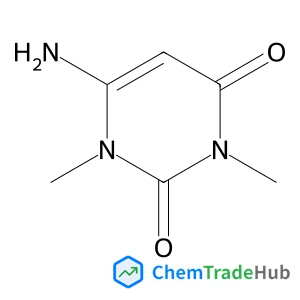
6-amino-1,3-dimethyl-1,2,3,4-tetrahydropyrimidine-2,4-dione
CAS Number:
6642-31-5
Molecular Formula:
C6H9N3O2

Recommended Suppliers






Disclaimer
This page provides academic journal information for reference and research purposes only. We are not affiliated with any journal publishers and do not handle publication submissions. For publication-related inquiries, please contact the respective journal publishers directly.
If you notice any inaccuracies in the information displayed, please contact us at support@chemtradehub.com. We will promptly review and address your concerns.