













Graphitic carbon coupled poly(anthraquinone) for proton shuttle flow-in-a-cell application
Literature Information
Publication Date
2017-02-22
DOI
10.1039/C6CP08419B
Impact Factor
3.676
Authors
Selvam Mathi, Rudra Kumar, Rajaram K. Nagarale, Ashutosh Sharma
View Original
Abstract
Coupled electron and proton transport are an integral part of non-gassing electro-osmotic pumps (EOP). The kinetics of the electrode limits the kinetics of the electron transfer and hence the flow. This is observed in the present study with newly synthesized graphitic carbon covalently coupled to poly(anthraquinone) (PAQ). When EOP with identical electrodes were assembled, proton shuttle maintained the reversible flow, which was linearly dependent on the ks values. A Laviron plot was used to calculate the electron-transfer rate constant ks and transfer coefficient α, and their linear dependency on content of graphitic carbon was observed. The best ks value obtained was 0.67 s−1 for 15PAQ. The sandwich-type flow-in-a-cell showed the best result of ∼40 μL min−1 cm−1 V−1 electro-osmotic flux for 15PAQ. It reveals that a balanced combination of graphitic carbon and PAQ is the prime requirement for high-performance electrode materials to be used in microfluidic devices and energy applications.
Related Literature
A three-dimensional porphyrin-based porous organic polymer with excellent biomimetic catalytic performance
Wei Zhu, Zheng-Dong Ding, Xuan Wang, Tao Li, Rui Shen, Yunxing Li, Zaijun Li, Xuehong Ren, Zhi-Guo Gu
2017-07-05
Communication
DOI: 10.1039/C7PY00876G
Poly(o-aminophenol) prepared by Cu(ii) catalyzed air oxidation and its use as a bio-sensing architecture
Tugrul Cem Bicak, Saniye Soylemez, Ece Buber
2017-06-06
Paper
DOI: 10.1039/C7PY00807D
Surface-initiated polymerization-induced self-assembly of bimodal polymer-grafted silica nanoparticles towards hybrid assemblies in one step
Yang Zheng, Yucheng Huang, Zaid M. Abbas, Brian C. Benicewicz
2016-08-15
Communication
DOI: 10.1039/C6PY01319H
Selective solvent-induced reconstruction in confined space: one-dimensional mesoporous block copolymer structures in cylindrical nanopores
Chun-Wei Chang, Mu-Huan Chi, Hao-Wen Ko, Chien-Wei Chu, Zhi-Xuan Fang, Yi-Hsuan Tu, Jiun-Tai Chen
2017-05-10
Communication
DOI: 10.1039/C7PY00579B
New catalysts for the synthesis of highly reactive polyisobutylene: chloroaluminate imidazole-based ionic liquids in the presence of diisopropyl ether
Irina V. Vasilenko, Ivan A. Berezianko, Dmitriy I. Shiman, Sergei V. Kostjuk
2016-08-18
Communication
DOI: 10.1039/C6PY01325B
Opportunities for dual RDRP agents in synthesizing novel polymeric materials
Samuel Pearson, Claude St Thomas, Ramiro Guerrero-Santos, Franck D'Agosto
2017-04-24
Review Article
DOI: 10.1039/C7PY00344G
Synthesis of well-defined epoxy-functional spherical nanoparticles by RAFT aqueous emulsion polymerization
Fiona L. Hatton, Joseph R. Lovett, Steven P. Armes
2017-07-27
Paper
DOI: 10.1039/C7PY01107E
The hydrolytic behavior of N,N′-(dimethylamino)ethyl acrylate-functionalized polymeric stars
Marianne S. Rolph, Anaïs Pitto-Barry, Rachel K. O'Reilly
2017-03-17
Paper
DOI: 10.1039/C7PY00219J
Oxygen tolerant photopolymerization for ultralow volumes
Robert Chapman
2017-02-16
Paper
DOI: 10.1039/C7PY00007C
Formation of polyoxazoline-silica nanoparticles via the surface-initiated cationic polymerization of 2-methyl-2-oxazoline
G. Bissadi, R. Weberskirch
2016-07-22
Paper
DOI: 10.1039/C6PY01034B
You might also like
Compound Q&A
What are the main uses of 4-Nitrophenyl phosphate disodium salt hexahydrate (CAS: 333338-18-4)?
4-Nitrophenyl phosphate disodium salt hexahydrate is primarily used as a substra...
333338-18-44-Nitrophenyl phosph...
Compound Q&A
What are the main uses of 2-(Trifluoromethyl)-1,3-oxazole-4-carboxylic Acid (CAS: 1060816-01-4)?
2-(Trifluoromethyl)-1,3-oxazole-4-carboxylic Acid (CAS: 1060816-01-4) is widely ...
1060816-01-42-(Trifluoromethyl)-...
Compound Q&A
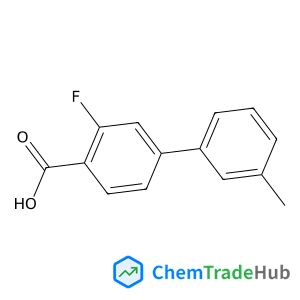
How should 2-Fluoro-4-biphenylcarboxylic acid (CAS: 137045-30-8) be stored?
2-Fluoro-4-biphenylcarboxylic acid should be stored in a cool, dry place at room...
137045-30-82-Fluoro-4-biphenylc...
Compound Q&A
What industries use Prednisolone-21-Carboxylic Acid (CAS: 61549-70-0)?
Prednisolone-21-Carboxylic Acid is primarily used in the pharmaceutical industry...
61549-70-0Prednisolone-21-Carb...
Compound Q&A
How should 4-(Hydrazinomethyl)-1,2,3-benzenetriol (CAS: 3614-72-0) be stored?
4-(Hydrazinomethyl)-1,2,3-benzenetriol (CAS: 3614-72-0) should be stored in a co...
3614-72-04-(Hydrazinomethyl)-...
Compound Q&A
What industries use 4-Amino-1-methyl-1H-pyrazole-5-carboxylic acid hydrochloride (CAS: 92534-70-8)?
4-Amino-1-methyl-1H-pyrazole-5-carboxylic acid hydrochloride (CAS: 92534-70-8) i...
92534-70-84-Amino-1-methyl-1H-...
Compound Q&A
What regulatory guidelines apply to dehydropachymic acid (CAS: 77012-31-8)?
Dehydropachymic acid (CAS: 77012-31-8) is regulated by various agencies. It fall...
77012-31-8Dehydropachymic acid
Compound Q&A
What is the market or research trend for 6-[(2,2-Dimethylpropanoyl)amino]nicotinic acid (CAS: 898561-66-5)?
The market and research trends for 6-[(2,2-Dimethylpropanoyl)amino]nicotinic aci...
898561-66-56-[(2,2-Dimethylprop...
Compound Q&A
How should 1,10-Phenanthroline-2,9-dicarbaldehyde (CAS: 57709-62-3) be stored?
1,10-Phenanthroline-2,9-dicarbaldehyde should be stored in a cool, dry place awa...
57709-62-31,10-Phenanthroline-...
Compound Q&A
How is 5-Carbamoyl-11-oxo-10,11-dihydro-5H-dibenzo[b,f]azepin-10-yl acetate (CAS: 113952-21-9) typically synthesized?
5-Carbamoyl-11-oxo-10,11-dihydro-5H-dibenzo[b,f]azepin-10-yl acetate can be synt...
113952-21-95-Carbamoyl-11-oxo-1...
Source Journal
Physical Chemistry Chemical Physics

CiteScore:
5.5
Self-citation Rate:
10.3%
Articles per Year:
3036
Physical Chemistry Chemical Physics (PCCP) is an international journal co-owned by 19 physical chemistry and physics societies from around the world. This journal publishes original, cutting-edge research in physical chemistry, chemical physics and biophysical chemistry. To be suitable for publication in PCCP, articles must include significant innovation and/or insight into physical chemistry; this is the most important criterion that reviewers and Editors will judge against when evaluating submissions. The journal has a broad scope and welcomes contributions spanning experiment, theory, computation and data science. Topical coverage includes spectroscopy, dynamics, kinetics, statistical mechanics, thermodynamics, electrochemistry, catalysis, surface science, quantum mechanics, quantum computing and machine learning. Interdisciplinary research areas such as polymers and soft matter, materials, nanoscience, energy, surfaces/interfaces, and biophysical chemistry are welcomed if they demonstrate significant innovation and/or insight into physical chemistry. Joined experimental/theoretical studies are particularly appreciated when complementary and based on up-to-date approaches.
Recommended Compounds
![S-[2,3-Bis(palmitoyloxy)propyl]-N-[(9H-fluoren-9-ylmethoxy)(hydroxy)methylene]cysteine structure](https://static.chemtradehub.com/structs/210/210532-98-2-f6a7.webp "S-[2,3-Bis(palmitoyloxy)propyl]-N-[(9H-fluoren-9-ylmethoxy)(hydroxy)methylene]cysteine structure")
S-[2,3-Bis(palmitoyloxy)propyl]-N-[(9H-fluoren-9-ylmethoxy)(hydroxy)methylene]cysteine
CAS Number:
210532-98-2
Molecular Formula:
C53H83NO8S
Recommended Suppliers




Disclaimer
This page provides academic journal information for reference and research purposes only. We are not affiliated with any journal publishers and do not handle publication submissions. For publication-related inquiries, please contact the respective journal publishers directly.
If you notice any inaccuracies in the information displayed, please contact us at support@chemtradehub.com. We will promptly review and address your concerns.