












Recognition of chiral zwitterionic interactions at nanoscale interfaces by chiroplasmonic nanosensors
Literature Information
Publication Date
2017-06-01
DOI
10.1039/C7CP03004E
Impact Factor
3.676
Authors
Wenjing Zhao, Rong-Yao Wang, Hong Wei, Jingliang Li, Yinglu Ji, Xinxin Jiang, Xiaochun Wu, Xiangdong Zhang
View Original
Abstract
The ability to detect chiral molecules renders plasmonic nanosensors as promising tools for the study of chirality phenomena in living systems. Using gold nanorod based plasmonic nanosensors, we investigated here typically chiral zwitterionic electrostatic (Zw-Es) and hydrogen-bonding (Hb) interactions occurring via amine and carboxylic groups at nanoscale interfaces in aqueous solutions. Our results reveal that the plasmonic circular dichroism responses of the nanosensors can have both conformational sensitivity and chiral selectivity to the interfacial molecular interactions. Such a dual function of the plasmonic nanosensors enables a new chiroptical way to differentiate between chiral Zw-Es and Hb interactions, to monitor the transformation between these two interaction forces, and particularly to recognize homochiral Zw-Es interactions in solution. Together with the surface enhanced Raman scattering (SERS) technique, this plasmonic CD based biosensing could have important values for the insightful understanding of chirality-dependent molecular recognition in biological and pharmaceutical systems.
Related Literature
Injectable cationic hydrogels with high antibacterial activity and low toxicity
Hong Du, Xuxia Yao, Xiaodong Li, Zhiquan Shen
2016-08-17
Communication
DOI: 10.1039/C6PY01346E
Transition from smectic nanofibers to smectic vesicles in the self-assemblies of PEG-b-liquid crystal polycarbonates
Lu Zhou, Dapeng Zhang, Sabrina Hocine, Alessia Pilone, Sylvain Trépout, Sergio Marco, Christophe Thomas, Jia Guo
2017-07-26
Communication
DOI: 10.1039/C7PY01131H
Development of a polymer theranostic for prostate cancer
Barbara E. Rolfe, Pamela J. Russell, Brian W.-C. Tse
2014-09-04
Paper
DOI: 10.1039/C4PY00999A
Photoresponsive liquid crystalline polymer single-chain nanoparticles
Weizheng Fan, Xia Tong, Guo Li, Yue Zhao
2017-05-09
Paper
DOI: 10.1039/C7PY00668C
The origin of bisignate circularly polarized luminescence (CPL) spectra from chiral polymer aggregates and molecular camphor: anti-Kasha's rule revealed by CPL excitation (CPLE) spectra
Sang Thi Duong, Michiya Fujiki
2017-07-17
Paper
DOI: 10.1039/C7PY00958E
Polymer grafted recyclable magnetic nanoparticles
Lei Wang, Marcus Cole, Junting Li, Yang Zheng, Yung Pin Chen, Kristen P. Miller
2014-09-22
Paper
DOI: 10.1039/C4PY01134A
Design of well-defined shape memory networks with high homogeneity: towards advanced shape memory polymeric materials
Yi Pan, Zhaohui Zheng, Xiaobin Ding
2017-06-15
Communication
DOI: 10.1039/C7PY00904F
One-pot preparation of BAB triblock copolymer nano-objects through bifunctional macromolecular RAFT agent mediated dispersion polymerization
Yaqing Qu, Shuang Wang, Habib Khan, Chengqiang Gao, Heng Zhou
2016-02-09
Paper
DOI: 10.1039/C5PY01917F
A facile strategy for manipulating micellar size and morphology through intramolecular cross-linking of amphiphilic block copolymers
Ryoto Tanaka, Kodai Watanabe, Takuya Yamamoto, Kenji Tajima, Takuya Isono, Toshifumi Satoh
2017-05-23
Paper
DOI: 10.1039/C7PY00646B
Self-assembly and functionalization of alternating copolymer vesicles
Chuanlong Li, Chuanshuang Chen, Shanlong Li, Tahir Rasheed, Ping Huang, Tong Huang, Yinglin Zhang, Wei Huang, Yongfeng Zhou
2017-07-10
Paper
DOI: 10.1039/C7PY00908A
You might also like
Compound Q&A
What are the main uses of 4-Nitrophenyl phosphate disodium salt hexahydrate (CAS: 333338-18-4)?
4-Nitrophenyl phosphate disodium salt hexahydrate is primarily used as a substra...
333338-18-44-Nitrophenyl phosph...
Compound Q&A
What are the main uses of 2-(Trifluoromethyl)-1,3-oxazole-4-carboxylic Acid (CAS: 1060816-01-4)?
2-(Trifluoromethyl)-1,3-oxazole-4-carboxylic Acid (CAS: 1060816-01-4) is widely ...
1060816-01-42-(Trifluoromethyl)-...
Compound Q&A
How should 2-Fluoro-4-biphenylcarboxylic acid (CAS: 137045-30-8) be stored?
2-Fluoro-4-biphenylcarboxylic acid should be stored in a cool, dry place at room...
137045-30-82-Fluoro-4-biphenylc...
Compound Q&A
What industries use Prednisolone-21-Carboxylic Acid (CAS: 61549-70-0)?
Prednisolone-21-Carboxylic Acid is primarily used in the pharmaceutical industry...
61549-70-0Prednisolone-21-Carb...
Compound Q&A
How should 4-(Hydrazinomethyl)-1,2,3-benzenetriol (CAS: 3614-72-0) be stored?
4-(Hydrazinomethyl)-1,2,3-benzenetriol (CAS: 3614-72-0) should be stored in a co...
3614-72-04-(Hydrazinomethyl)-...
Compound Q&A
What industries use 4-Amino-1-methyl-1H-pyrazole-5-carboxylic acid hydrochloride (CAS: 92534-70-8)?
4-Amino-1-methyl-1H-pyrazole-5-carboxylic acid hydrochloride (CAS: 92534-70-8) i...
92534-70-84-Amino-1-methyl-1H-...
Compound Q&A
What regulatory guidelines apply to dehydropachymic acid (CAS: 77012-31-8)?
Dehydropachymic acid (CAS: 77012-31-8) is regulated by various agencies. It fall...
77012-31-8Dehydropachymic acid
Compound Q&A
What is the market or research trend for 6-[(2,2-Dimethylpropanoyl)amino]nicotinic acid (CAS: 898561-66-5)?
The market and research trends for 6-[(2,2-Dimethylpropanoyl)amino]nicotinic aci...
898561-66-56-[(2,2-Dimethylprop...
Compound Q&A
How should 1,10-Phenanthroline-2,9-dicarbaldehyde (CAS: 57709-62-3) be stored?
1,10-Phenanthroline-2,9-dicarbaldehyde should be stored in a cool, dry place awa...
57709-62-31,10-Phenanthroline-...
Compound Q&A
How is 5-Carbamoyl-11-oxo-10,11-dihydro-5H-dibenzo[b,f]azepin-10-yl acetate (CAS: 113952-21-9) typically synthesized?
5-Carbamoyl-11-oxo-10,11-dihydro-5H-dibenzo[b,f]azepin-10-yl acetate can be synt...
113952-21-95-Carbamoyl-11-oxo-1...
Source Journal
Physical Chemistry Chemical Physics

CiteScore:
5.5
Self-citation Rate:
10.3%
Articles per Year:
3036
Physical Chemistry Chemical Physics (PCCP) is an international journal co-owned by 19 physical chemistry and physics societies from around the world. This journal publishes original, cutting-edge research in physical chemistry, chemical physics and biophysical chemistry. To be suitable for publication in PCCP, articles must include significant innovation and/or insight into physical chemistry; this is the most important criterion that reviewers and Editors will judge against when evaluating submissions. The journal has a broad scope and welcomes contributions spanning experiment, theory, computation and data science. Topical coverage includes spectroscopy, dynamics, kinetics, statistical mechanics, thermodynamics, electrochemistry, catalysis, surface science, quantum mechanics, quantum computing and machine learning. Interdisciplinary research areas such as polymers and soft matter, materials, nanoscience, energy, surfaces/interfaces, and biophysical chemistry are welcomed if they demonstrate significant innovation and/or insight into physical chemistry. Joined experimental/theoretical studies are particularly appreciated when complementary and based on up-to-date approaches.
Recommended Compounds
![(2E)-3-(3-Chlorophenyl)-N-{2-[4-(methylsulfonyl)-1-piperazinyl]-2-oxoethyl}acrylamide structure](https://static.chemtradehub.com/structs/250/2505001-54-5-c1e9.webp "(2E)-3-(3-Chlorophenyl)-N-{2-[4-(methylsulfonyl)-1-piperazinyl]-2-oxoethyl}acrylamide structure")
(2E)-3-(3-Chlorophenyl)-N-{2-[4-(methylsulfonyl)-1-piperazinyl]-2-oxoethyl}acrylamide
CAS Number:
2505001-54-5
Molecular Formula:
C16H20ClN3O4S
![N-[2-(4-Hydroxyphenoxy)-4-nitrophenyl]methanesulfonamide structure](https://static.chemtradehub.com/structs/109/109032-22-6-7c88.webp "N-[2-(4-Hydroxyphenoxy)-4-nitrophenyl]methanesulfonamide structure")
N-[2-(4-Hydroxyphenoxy)-4-nitrophenyl]methanesulfonamide
CAS Number:
109032-22-6
Molecular Formula:
C13H12N2O6S
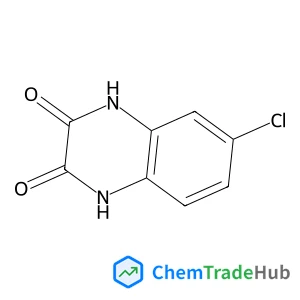
6-CHLORO-2,3-DIOXO-1,2,3,4-TETRAHYDROQUINOXALINE, 97
CAS Number:
169-14-2
Molecular Formula:
C8H5ClN2O2
Recommended Suppliers




Disclaimer
This page provides academic journal information for reference and research purposes only. We are not affiliated with any journal publishers and do not handle publication submissions. For publication-related inquiries, please contact the respective journal publishers directly.
If you notice any inaccuracies in the information displayed, please contact us at support@chemtradehub.com. We will promptly review and address your concerns.