3-(Methylamino)-1-phenyl-1-propanone hydrochloride (1:1)
CAS Number:
2538-50-3
Molecular Formula:
C10H14ClNO
P. Bishop
A straightforward synthesis of a transition metal-loaded derivative of the pollucite structure is presented, with non-centric cation ordering over the tetrahedral sites.
Samantha F. Douman, Onyinyechi V. Uhuo, Kefilwe V. Mokwebo, Nelia Sanga, Emmanuel I. Iwuoha
DOI: 10.1039/D2AN01357F
Hui Xi, Hanlin Jiang, Mario Juhas, Yang Zhang
DOI: 10.1039/D2AN01057G
Quan Yu, Jing Gao, Xiaohua Yu, Jianbo Shi, Lin Lin, Xiaohao Wang
DOI: 10.1039/D2AN01422J
Gary Hastings, Peter Krug, Ruili Wang, Jing Guo, Hari P. Lamichhane, Tian Tang, Yu-sheng Hsu, John Ward, David Katz, Julia Hilliard
DOI: 10.1039/B902154J
Tim J. Causon, Robert A. Shellie, Emily F. Hilder
DOI: 10.1039/B815886J
Taijie Zhan, Wenya Niu, Mengdong Cui, Hengxin Han, Ding Wang, Yi Xu
DOI: 10.1039/D2AN01288J
Guohua Qi, Xing Du, Xuan Yi, Minmin Wang, Hongyan Zhu, Dan Sun
DOI: 10.1039/D2AN01459A
Luiz Fernando Moreira, Marcos Roberto de Vasconcelos Lanza, Auro Atsushi Tanaka, Maria Del Pilar Taboada Sotomayor
DOI: 10.1039/B902273B
Xiaoqin Wu, Juanli Xi, Xuehong Wei, Caixia Yin
DOI: 10.1039/D2AN01865A
Andrea Dorsa, Qing Xie, Martin Wagner, Xiaoji G. Xu
DOI: 10.1039/D2AN01103D
When handling 4-(2-Furylmethyl)thiomorpholine 1,1-dioxide (CAS: 79206-94-3), it ...
When handling 4-Chloro-N-[2-(4-morpholinyl)ethyl]benzamide (CAS: 71320-77-9), it...
Waste containing this compound (CAS: 62921-74-8) should be handled according to ...
Waste containing (S)-Methyl 2-amino-3-cyclohexylpropanoate should be collected i...
This compound can be synthesized using a multi-step process involving the conjug...
There are several alternatives to (2E)-3-(3,4-Dichlorophenyl)acrylic acid in syn...
Ethyl 6-(2-nitrophenyl)imidazo[2,1-b][1,3]thiazole-3-carboxylate (CAS: 925437-84...
Waste containing 2-(1,3-Thiazol-2-yl)ethanamine (CAS: 18453-07-1) should be coll...
Methyl 5-iodo-2-methylbenzoate can be synthesized through the iodination of meth...
5-Chloro[1,2,4]triazolo[1,5-a]pyridine is commonly synthesized via the condensat...

ChemComm publishes urgent research which is of outstanding significance and interest to experts in the field, while also appealing to the journal’s broad chemistry readership. Our communication format is ideally suited to short, urgent studies that are of such importance that they require accelerated publication. Our scope covers all topics in chemistry, and research at the interface of chemistry and other disciplines (such as materials science, nanoscience, physics, engineering and biology) where there is a significant novelty in the chemistry aspects. Major topic areas covered include: Analytical Chemistry Catalysis Chemical Biology and medicinal chemistry Computational Chemistry and Machine Learning Energy and sustainable chemistry Environmental Chemistry Green Chemistry Inorganic Chemistry Materials Chemistry Nanoscience Organic Chemistry Physical Chemistry Polymer Chemistry Supramolecular Chemistry
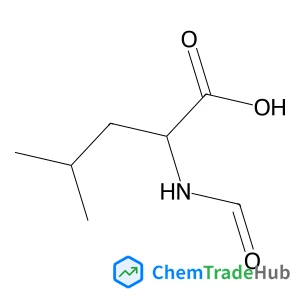
![4-{2-[4-(2-Methyl-2-propanyl)phenyl]ethoxy}quinazoline structure](https://static.chemtradehub.com/structs/120/120928-09-8-d3db.webp "4-{2-[4-(2-Methyl-2-propanyl)phenyl]ethoxy}quinazoline structure")