












![[4-(Heptyloxy)phenyl]boronic acid structure](https://static.chemtradehub.com/structs/136/136370-19-9-ad33.webp "[4-(Heptyloxy)phenyl]boronic acid structure")
Structure and low-frequency vibrational properties of (H2O)10 composed of a ring form of (H2O)4 and a cage form of (H2O)6
Literature Information
Publication Date
DOI
10.1039/A901104H
Impact Factor
3.676
Authors
View Original
Abstract
One minimum energy structure of the water decamer composed of a ring form of the water tetramer and a cage form of the water hexamer is calculated at the Hartree–Fock, MP2, and density functional theory levels using the 6-31++G(d,p) and/or aug-cc-pVDZ basis sets. It has been shown that the basic structure of the isolated water tetramer and hexamer is retained in the decamer structure irrespective of the levels of theory. As a result of the intercluster hydrogen bonds between the water tetramer and hexamer, two types of four-coordinated water molecules are formed in the decamer. We have further carried out frequency calculations for the water decamer as well as the water tetramer and hexamer to investigate how the intermolecular dynamics of the water clusters are affected by their size and the coordination environments of the constituent water molecules. It has been found that a two-band feature around 60 and 170 cm-1 can be seen in the vibrational density of states of the water decamer and that a similar feature can also be seen in those of the water tetramer and hexamer. These intermolecular modes around 60 and 170 cm-1 are described as the O···O···O bending and the O···O···O stretching vibrations of hydrogen bonds, respectively. On the basis of these calculated results, we then discuss the low-frequency Raman spectra of liquid water, which is also characterized by two bands in this frequency range.
Related Literature
Photochemical isomerization of 1,2,5-trisilabicyclo[3.2.0]hepta-3,6-diene to 1,4,7-trisilabicyclo[2.2.1]hepta-2,5-diene
Tadahiro Matsuno, Masaaki Ichinohe, Akira Sekiguchi
2003-04-22
Communication
DOI: 10.1039/B301536J
Structure and magnetism of the first strictly dinuclear compound containing paramagnetic 3d and 5f metal ions. Major influence of the CuII ion coordination on the exchange CuII–UIV interaction
Lionel Salmon, Pierre Thuéry, Eric Rivière, Jean-Jacques Girerd, Michel Ephritikhine
2003-02-25
Communication
DOI: 10.1039/B212635D
Photomediated asymmetric synthesis of (−)-cuparene
Richard S. Grainger, Aslam Patel
2003-03-31
Communication
DOI: 10.1039/B300815K
Opal gel templated synthesis of oblate titania opal materials
Lijun Ji, Jianhua Rong, Zhenzhong Yang
2003-04-02
Communication
DOI: 10.1039/B300825H
Synthesis, structure and reductive dechlorination of the C-centred phosphorus(iii) β-diketiminate PCl(Ph)L [L = C{C(Me)NC6H3Pri2-2,6}{C(Me)NHC6H3Pri2-2,6}]
Peter B. Hitchcock, Michael F. Lappert, Jacek E. Nycz
2003-04-16
Communication
DOI: 10.1039/B301294H
Reversible C–C bond formation: solid state structure of the aldol-like addition product of adamantanone to a 1,5-diazapentadienyllithium, and its solution state retro-aldol dissociation
Lee-Jon Ball, Anthony P. Dickie, Francis S. Mair, David A. Middleton, Robin G. Pritchard
2003-02-19
Communication
DOI: 10.1039/B211745B
Well-defined star-shaped calcite crystals formed in agarose gels
Dong Yang, Limin Qi, Jiming Ma
2003-04-16
Communication
DOI: 10.1039/B301197F
Halogen-induced selectivity in heterogeneous epoxidation is an electronic effect—fluorine, chlorine, bromine and iodine in the Ag-catalysed selective oxidation of ethene
Richard M. Lambert, Rachael L. Cropley, Alifiya Husain, Mintcho S. Tikhov
2003-04-16
Communication
DOI: 10.1039/B302620E
Effect of water on the catalytic behaviour of VPO in the selective oxidation of propane to acrylic acid
G. Landi, L. Lisi, J. C. Volta
2003-01-23
Communication
DOI: 10.1039/B211619G
You might also like
Compound Q&A
What precautions should be taken when handling 4-(2-Furylmethyl)thiomorpholine 1,1-dioxide (CAS: 79206-94-3)?
When handling 4-(2-Furylmethyl)thiomorpholine 1,1-dioxide (CAS: 79206-94-3), it ...
79206-94-34-(2-Furylmethyl)thi...
Compound Q&A
What precautions should be taken when handling 4-Chloro-N-[2-(4-morpholinyl)ethyl]benzamide (CAS: 71320-77-9)?
When handling 4-Chloro-N-[2-(4-morpholinyl)ethyl]benzamide (CAS: 71320-77-9), it...
71320-77-94-Chloro-N-[2-(4-mor...
Compound Q&A
How should waste containing 2-[2-(2-Methoxyethoxy)ethoxy]ethyl 4-methylbenzenesulfonate (CAS: 62921-74-8) be handled?
Waste containing this compound (CAS: 62921-74-8) should be handled according to ...
62921-74-82-[2-(2-Methoxyethox...
Compound Q&A
How should waste containing (S)-Methyl 2-amino-3-cyclohexylpropanoate be handled?
Waste containing (S)-Methyl 2-amino-3-cyclohexylpropanoate should be collected i...
40056-18-6(S)-Methyl 2-amino-3...
Compound Q&A
How is 5-({4-[(2S,4R)-4-Hydroxy-2-methyltetrahydro-2H-pyran-4-yl]-2-thienyl}sulfanyl)-1-methyl-1,3-dihydro-2H-indol-2-one (CAS: 166882-70-8) typically synthesized?
This compound can be synthesized using a multi-step process involving the conjug...
166882-70-85-({4-[(2S,4R)-4-Hyd...
Compound Q&A
Are there alternatives to (2E)-3-(3,4-Dichlorophenyl)acrylic acid (CAS: 7312-27-8) in synthesis?
There are several alternatives to (2E)-3-(3,4-Dichlorophenyl)acrylic acid in syn...
7312-27-8(2E)-3-(3,4-Dichloro...
Compound Q&A
How should Ethyl 6-(2-nitrophenyl)imidazo[2,1-b][1,3]thiazole-3-carboxylate (CAS: 925437-84-9) be stored?
Ethyl 6-(2-nitrophenyl)imidazo[2,1-b][1,3]thiazole-3-carboxylate (CAS: 925437-84...
925437-84-9Ethyl 6-(2-nitrophen...
Compound Q&A
How should waste containing 2-(1,3-Thiazol-2-yl)ethanamine (CAS: 18453-07-1) be handled?
Waste containing 2-(1,3-Thiazol-2-yl)ethanamine (CAS: 18453-07-1) should be coll...
18453-07-12-(1,3-Thiazol-2-yl)...
Compound Q&A
How is Methyl 5-iodo-2-methylbenzoate (CAS: 103440-54-6) typically synthesized?
Methyl 5-iodo-2-methylbenzoate can be synthesized through the iodination of meth...
103440-54-6Methyl 5-iodo-2-meth...
Compound Q&A
How is 5-Chloro[1,2,4]triazolo[1,5-a]pyridine (CAS: 1427399-34-5) typically synthesized?
5-Chloro[1,2,4]triazolo[1,5-a]pyridine is commonly synthesized via the condensat...
1427399-34-55-Chloro[1,2,4]triaz...
Source Journal
Physical Chemistry Chemical Physics

CiteScore:
5.5
Self-citation Rate:
10.3%
Articles per Year:
3036
Physical Chemistry Chemical Physics (PCCP) is an international journal co-owned by 19 physical chemistry and physics societies from around the world. This journal publishes original, cutting-edge research in physical chemistry, chemical physics and biophysical chemistry. To be suitable for publication in PCCP, articles must include significant innovation and/or insight into physical chemistry; this is the most important criterion that reviewers and Editors will judge against when evaluating submissions. The journal has a broad scope and welcomes contributions spanning experiment, theory, computation and data science. Topical coverage includes spectroscopy, dynamics, kinetics, statistical mechanics, thermodynamics, electrochemistry, catalysis, surface science, quantum mechanics, quantum computing and machine learning. Interdisciplinary research areas such as polymers and soft matter, materials, nanoscience, energy, surfaces/interfaces, and biophysical chemistry are welcomed if they demonstrate significant innovation and/or insight into physical chemistry. Joined experimental/theoretical studies are particularly appreciated when complementary and based on up-to-date approaches.
Recommended Compounds
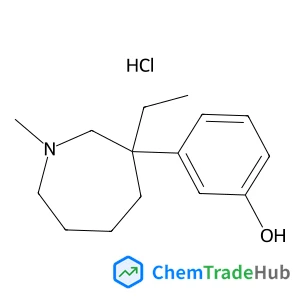
3-(3-Ethyl-1-methyl-3-azepanyl)phenol hydrochloride (1:1)
CAS Number:
59263-76-2
Molecular Formula:
C15H24ClNO
Recommended Suppliers






Disclaimer
This page provides academic journal information for reference and research purposes only. We are not affiliated with any journal publishers and do not handle publication submissions. For publication-related inquiries, please contact the respective journal publishers directly.
If you notice any inaccuracies in the information displayed, please contact us at support@chemtradehub.com. We will promptly review and address your concerns.