



AD
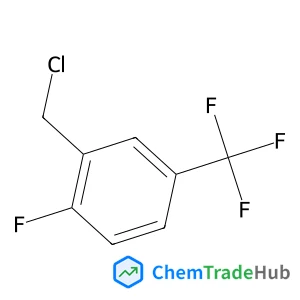
2-Fluoro-5-(trifluoromethyl)benzyl chloride(CAS: 883543-26-8)
CAS Number
Related Products
![2-Methyl-2-propanyl [(2R)-1-hydroxy-2-propanyl]carbamate](https://static.chemtradehub.com/structs/106/106391-86-0-8397.webp)

3-Bromo-2,2-bis(bromomethyl)-1-propanol
CAS Number: 1522-92-5


Cytisine hydrochloride
CAS Number: 6047-01-4

Atorvastatin Impurity 55
CAS Number: 141942-85-0

3-Hydroxy-D-tyrosine
CAS Number: 5796-17-8
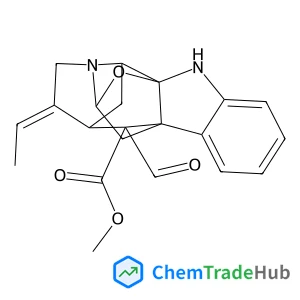
Picralinal
CAS Number: 20045-06-1

D-Arabinose
CAS Number: 9032-75-1
![(3aS,9R,9aS,9bS)-9-Hydroxy-6,9-dimethyl-3-methylene-3a,4,5,7,8,9,9a,9b-octahydroazuleno[4,5-b]furan-2(3H)-one](https://static.chemtradehub.com/structs/683/68370-47-8-daf4.webp)
Other Suppliers for 2-Fluoro-5-(trifluoromethyl)benzyl chloride




Basic Information
Molecular Formula
C8H5ClF4
Molecular Weight
212.57 g/mol
Physical Properties
Boiling Point
175℃
Density
1.372
Flash Point
69℃
Chemical Identifiers
SMILES
C1=CC(=C(C=C1C(F)(F)F)CCl)F
InChIKey
OZGWDDBROIXNRQ-UHFFFAOYSA-N
Database References
MDL Number
MFCD05864315
FAQ
2-Fluoro-5-(trifluoromethyl)benzyl chloride is a colorless to pale yellow liquid at room temperature. Its molecular weight is approximately 274.03 g/mol. It has a high boiling point of around 115°C and is slightly soluble in water. This compound is highly reactive due to the presence of the fluorine and trifluoromethyl substituents, making it prone to nucleophilic substitution reactions.
2-Fluoro-5-(trifluoromethyl)benzyl chloride is typically synthesized via the reaction of 2-fluoro-5-(trifluoromethyl)benzyl alcohol with thionyl chloride. This process involves the conversion of the alcohol to its chloride derivative under mild conditions, with high selectivity and yield. The reaction is usually conducted in a non-polar solvent to minimize side reactions.
2-Fluoro-5-(trifluoromethyl)benzyl chloride finds applications in the pharmaceutical industry for the synthesis of complex organic compounds, particularly in the development of drugs targeting specific molecular structures. It is also used in the polymer industry for the modification of polymers and in the semiconductor industry for the production of electronic materials. Its unique chemical properties make it useful in various analytical and sensor applications.
When handling 2-Fluoro-5-(trifluoromethyl)benzyl chloride, it is crucial to use appropriate personal protective equipment (PPE), including gloves, goggles, and a lab coat. Work should be carried out in a well-ventilated fume hood to minimize exposure. Spills should be managed carefully, with the area being neutralized and cleaned up according to the Material Safety Data Sheet (MSDS/SDS) guidelines. Proper disposal should follow local regulations to ensure environmental safety.
Safety Notice
Please verify product specifications and safety data before use. Contact the supplier for detailed safety information.
Always follow proper handling procedures
Contact Information
2423903095@qq.com