



AD
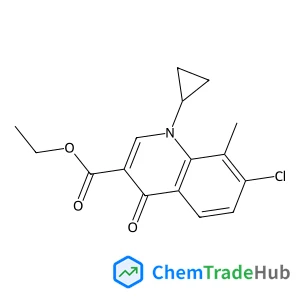
Ethyl 7-chloro-1-cyclopropyl-8-methyl-4-oxoquinoline-3-carboxylate(CAS: 103877-51-6)
CAS Number
Related Products
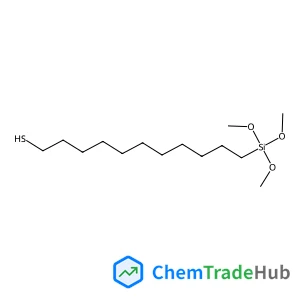
11-(Trimethoxysilyl)-1-undecanethiol
CAS Number: 877593-17-4
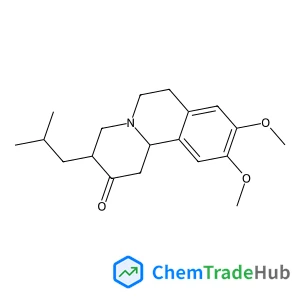
Tetrabenazine
CAS Number: 58-46-8
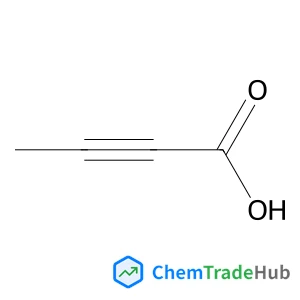
2-Butynoic acid
CAS Number: 590-93-2
Thymosin beta4
CAS Number: 77591-33-4
Other Suppliers for Ethyl 7-chloro-1-cyclopropyl-8-methyl-4-oxoquinoline-3-carboxylate


Basic Information
Molecular Formula
C16H16ClNO3
Molecular Weight
305.76 g/mol
Physical Properties
Density
1.362±0.06 g/cm3 (20 ºC 760 Torr),
Chemical Identifiers
SMILES
CCOC(=O)C1=CN(C2=C(C1=O)C=CC(=C2C)Cl)C3CC3
InChIKey
MUQYAFBHOLSOCY-UHFFFAOYSA-N
Database References
MDL Number
MFCD01912282
FAQ
Ethyl 7-chloro-1-cyclopropyl-8-methyl-4-oxoquinoline-3-carboxylate is a crystalline compound with a molecular weight of approximately 324.7 g/mol. It is slightly soluble in water but soluble in organic solvents like methanol and ethanol. The compound exhibits good stability under normal temperature and pressure conditions. However, it can undergo hydrolysis in the presence of moisture and acidic or basic conditions.
Ethyl 7-chloro-1-cyclopropyl-8-methyl-4-oxoquinoline-3-carboxylate is synthesized via a multistep process involving cyclization and acylation reactions. Commonly, this involves the condensation of 7-chloro-1-cyclopropyl-8-methyl-4-oxoquinoline with ethyl bromoacetate in the presence of a base. The reaction is typically carried out in an anhydrous organic solvent like toluene at elevated temperatures. The yield is around 75-85%.
Ethyl 7-chloro-1-cyclopropyl-8-methyl-4-oxoquinoline-3-carboxylate is primarily used in the pharmaceutical industry for intermediate steps in drug synthesis. It may also find applications in the polymer industry for the development of advanced materials and in the sensor industry for creating more sensitive detection devices. Additionally, it could be used in the semiconductor industry for specific chemical processes.
When handling Ethyl 7-chloro-1-cyclopropyl-8-methyl-4-oxoquinoline-3-carboxylate, it is crucial to wear appropriate personal protective equipment (PPE) such as gloves, goggles, and lab coat. Ensure the work is conducted in a well-ventilated area or a fume hood. Spills should be cleaned up using appropriate absorbents, and proper disposal should follow local waste regulations. Always refer to the Material Safety Data Sheet (MSDS) for detailed safety information.
Safety Notice
Please verify product specifications and safety data before use. Contact the supplier for detailed safety information.
Always follow proper handling procedures
Contact Information
13667159345@163.com