



AD
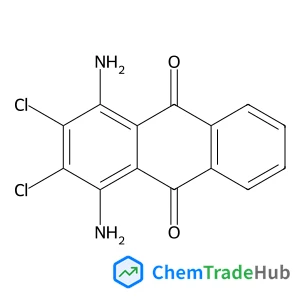
1,4-Diamino-2,3-dichloroanthracene-9,10-dione(CAS: 70956-27-3)
CAS Number
Related Products
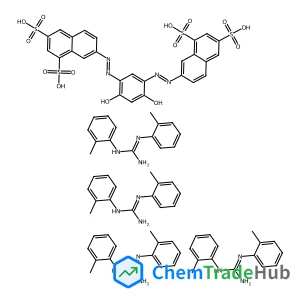
![1-Hydroxy-4-[(4-methylphenyl)amino]-9,10-anthraquinone](https://static.chemtradehub.com/structs/81-/81-48-1-18b4.webp)
![Methyl 4-cyano-5-[(E)-{5-cyano-2,6-bis[(3-methoxypropyl)amino]-4-methyl-3-pyridinyl}diazenyl]-3-methyl-2-thiophenecarboxylate](https://static.chemtradehub.com/structs/729/72968-71-9-d5e8.webp)
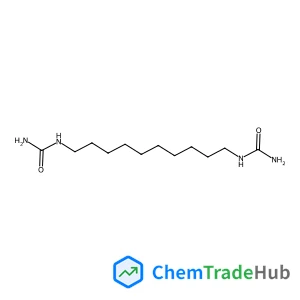
![2,2'-{1,2-Ethanediylbis[oxy-2,1-phenylene(E)-2,1-diazenediyl]}bis[3-oxo-N-(2-oxo-2,3-dihydro-1H-benzimidazol-5-yl)butanamide]](https://static.chemtradehub.com/structs/778/77804-81-0-cfb2.webp)
![(1,2-Ethanediyldi-4,1-phenylene)bis[(4-methylphenyl)methanone]](https://static.chemtradehub.com/structs/719/71902-17-5-a21b.webp)
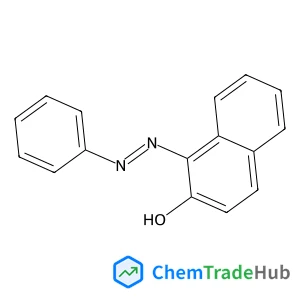
![2-Naphthalenol, 1-[[2-methyl-4-[(2-methylphenyl)azo]phenyl]azo]-](https://static.chemtradehub.com/structs/85-/85-83-6-98b2.webp)
Other Suppliers for 1,4-Diamino-2,3-dichloroanthracene-9,10-dione

Basic Information
Molecular Formula
C14H8N2O2Cl2
Molecular Weight
307.13 g/mol
Chemical Identifiers
SMILES
NC1C2=C(C(=O)C3C(C2=O)=CC=CC=3)C(N)=C(Cl)C=1Cl
InChIKey
KZYAYVSWIPZDKL-UHFFFAOYSA-N
FAQ
1,4-Diamino-2,3-dichloroanthracene-9,10-dione is a crystalline compound with a molecular weight of approximately 413.04 g/mol. It is poorly soluble in water but soluble in organic solvents such as dimethylformamide (DMF) and dimethyl sulfoxide (DMSO). The compound is known for its reactivity, particularly in its ability to form complexes with metal ions and its use as a chromophore in spectroscopy. Additionally, it exhibits photochemical properties useful in photodetection applications.
1,4-Diamino-2,3-dichloroanthracene-9,10-dione is typically synthesized by the condensation of dichloroanthracene and hydrazine in an acidic medium. The process involves the controlled substitution and amination reactions, yielding the compound in moderate to good yield. Catalysts such as sulfuric acid or p-toluenesulfonic acid are commonly used to improve the reaction selectivity and yield. The process is performed under mild conditions to avoid decomposition of the intermediate products.
1,4-Diamino-2,3-dichloroanthracene-9,10-dione finds applications in various industries due to its unique chemical properties. It is primarily used in the pharmaceutical sector for its potential as a photodynamic therapy agent. Additionally, it is utilized in the semiconductor industry for its photoelectrical properties and in the development of sensors for detecting various analytes in environmental and biomedical applications.
When handling 1,4-Diamino-2,3-dichloroanthracene-9,10-dione, strict safety measures should be followed. Wear appropriate personal protective equipment (PPE) including gloves, safety goggles, and a lab coat. This compound should be handled in a fume hood to minimize exposure to fumes and aerosols. In case of a spill, it should be cleaned up immediately using appropriate containment materials. Always consult the Safety Data Sheet (SDS) for detailed handling and emergency procedures. Due to its reactivity, proper storage in a cool, dry place away from direct sunlight is essential.
Safety Notice
Please verify product specifications and safety data before use. Contact the supplier for detailed safety information.
Always follow proper handling procedures
Contact Information
sales@hongyuchem.com