



AD
Ruthenium(2+) di(2,4-cyclopentadienide)(CAS: 1287-13-4)
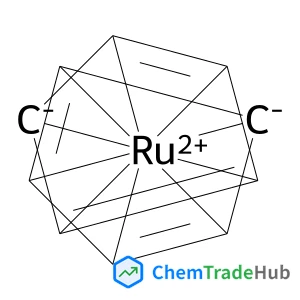
CAS Number
Related Products
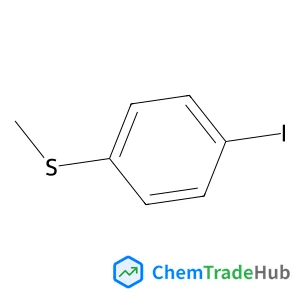
1-Iodo-4-(methylsulfanyl)benzene
CAS Number: 35371-03-0
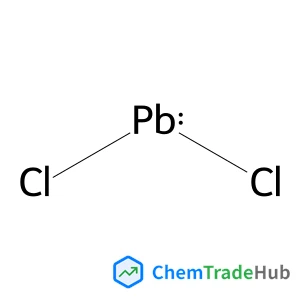
Dichloro-lambda~2~-plumbane
CAS Number: 7758-95-4
PUMICE STONE
CAS Number: 1332-09-8
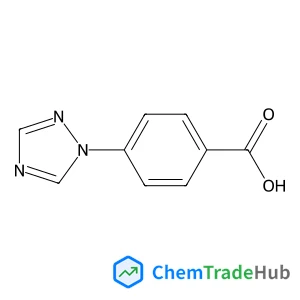
4-(1H-1,2,4-Triazol-1-yl)benzoic acid
CAS Number: 162848-16-0

2,3-Dibromobutane
CAS Number: 5408-86-6
SOYBEAN MEAL
CAS Number: 68308-36-1
![2-Chloro-N-[2-(2,6-dioxo-3-piperidinyl)-1,3-dioxo-2,3-dihydro-1H-isoindol-4-yl]acetamide](https://static.chemtradehub.com/structs/444/444287-84-7-fa4b.webp)
Other Suppliers for Ruthenium(2+) di(2,4-cyclopentadienide)







Basic Information
Molecular Formula
C10H10Ru
Molecular Weight
231.26 g/mol
EINECS
215-065-2
Physical Properties
Melting Point
199-201 °C(lit.)
Boiling Point
275.9°C
Flash Point
°C
Chemical Identifiers
SMILES
C12=C3[Ru+2]1456789(C%10=C6C7=C8[C-]9%10)C2=C4[C-]53
InChIKey
FZHCFNGSGGGXEH-UHFFFAOYSA-N
Database References
MDL Number
MFCD00001442
FAQ
Ruthenium(2+) di(2,4-cyclopentadienide) (CAS: 1287-13-4) is a crystalline solid with a molecular weight of approximately 218.11 g/mol. It has a low solubility in water but is more soluble in organic solvents. The compound shows moderate reactivity, particularly towards oxidizing agents. It is often used in coordination chemistry and catalysis. For more detailed properties, refer to spectroscopic data and literature on coordination compounds.
Ruthenium(2+) di(2,4-cyclopentadienide) is typically synthesized by the reaction of ruthenium(II) chloride with 2,4-cyclopentadienyl dihydride in the presence of a base. This process yields a complex that can be further characterized and used in various applications. The yield and selectivity can be optimized by controlling reaction conditions and using appropriate catalysts. Detailed synthesis procedures are available in the literature on coordination chemistry.
Ruthenium(2+) di(2,4-cyclopentadienide) (CAS: 1287-13-4) is used in various industries due to its unique electronic and catalytic properties. It is commonly found in pharmaceuticals for drug development, polymers for advanced materials, sensors for detection and analysis, and semiconductors for electronic devices. Its applications are expanding in areas like catalysis and material science.
When handling Ruthenium(2+) di(2,4-cyclopentadienide) (CAS: 1287-13-4), it is crucial to use personal protective equipment (PPE) such as gloves and goggles. Work should be conducted in a well-ventilated area or a fume hood. In case of a spill, clean up with appropriate tools and materials, ensuring not to inhale the dust. Refer to the Safety Data Sheet (SDS) for detailed handling and storage instructions. Always follow laboratory safety guidelines to avoid potential hazards.
Safety Notice
Please verify product specifications and safety data before use. Contact the supplier for detailed safety information.
Always follow proper handling procedures
Contact Information
Contact Person
Ludu
order@canspecsci.com