



AD
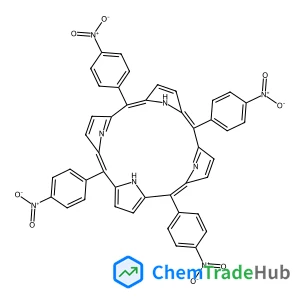
5,10,15,20-Tetrakis(4-nitrophenyl)porphyrin(CAS: 22843-73-8)
CAS Number
Related Products
![3-Cyclopropyl-1-(2-fluoro-4-iodophenyl)-5-hydroxy-6,8-dimethylpyrido[2,3-d]pyrimidine-2,4,7(1H,3H,8H)-trione](https://static.chemtradehub.com/structs/871/871700-24-2-c5dd.webp)
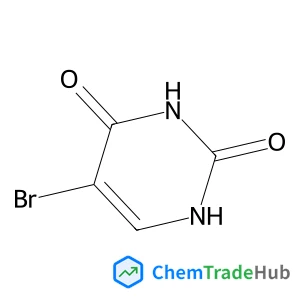
5-Bromo-2,4(1H,3H)-pyrimidinedione
CAS Number: 51-20-7
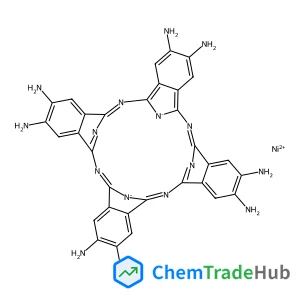
![3-Iodo-1H-pyrrolo[2,3-b]pyridine-4-carbonitrile](https://static.chemtradehub.com/structs/956/956485-59-9-1f04.webp)
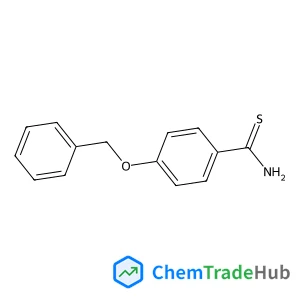
4-Benzyloxy-thiobenzamide
CAS Number: 161975-22-0
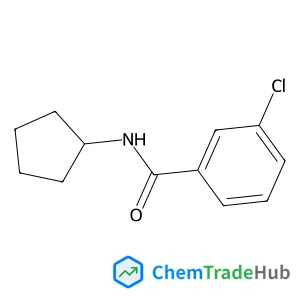
3-Chloro-N-cyclopentylbenzamide
CAS Number: 349128-33-2
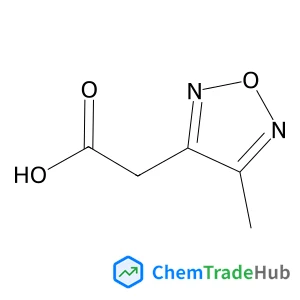
Other Suppliers for 5,10,15,20-Tetrakis(4-nitrophenyl)porphyrin




Basic Information
Molecular Formula
C44H26N8O8
Molecular Weight
794.7 g/mol
Physical Properties
Density
1.478
Chemical Identifiers
SMILES
C1=CC(=CC=C1C2=C3C=CC(=C(C4=NC(=C(C5=CC=C(N5)C(=C6C=CC2=N6)C7=CC=C(C=C7)[N+](=O)[O-])C8=CC=C(C=C8)[N+](=O)[O-])C=C4)C9=CC=C(C=C9)[N+](=O)[O-])N3)[N+](=O)[O-]
InChIKey
FVHZCBQLLFLQAG-UHFFFAOYSA-N
Database References
MDL Number
MFCD01548089
FAQ
5,10,15,20-Tetrakis(4-nitrophenyl)porphyrin (CAS: 22843-73-8) is a solid, crystalline compound with a molecular weight of approximately 788.12 g/mol. It is poorly soluble in water but soluble in organic solvents such as chloroform. This compound has strong absorption in the visible region, making it useful for spectroscopic studies. It exhibits relatively high reactivity towards electron acceptors and can participate in various redox reactions.
5,10,15,20-Tetrakis(4-nitrophenyl)porphyrin is synthesized through the condensation of 4-nitrophenyl chloroperoxidase with meso-tetraphenylporphyrin. The reaction involves the substitution of each phenyl group of the porphyrin with 4-nitrophenyl groups. This process typically requires a molar excess of 4-nitrophenyl chloroperoxidase and is conducted in non-aqueous solvents to enhance the reaction selectivity and yield.
5,10,15,20-Tetrakis(4-nitrophenyl)porphyrin (CAS: 22843-73-8) is used in various industries. It is particularly valuable in the pharmaceutical industry for its application in photochemistry and photodynamic therapy. In the semiconductor industry, it serves as a dopant for certain materials. Additionally, it is used in chemical sensors due to its high sensitivity and selectivity towards various analytes.
When handling 5,10,15,20-Tetrakis(4-nitrophenyl)porphyrin (CAS: 22843-73-8), it is important to wear appropriate personal protective equipment (PPE) such as gloves, safety goggles, and a lab coat. Work should be conducted in a fume hood to minimize inhalation risks. Spills should be cleaned up using appropriate absorbent materials, and the area should be well-ventilated. Always refer to the safety data sheet (SDS) for detailed handling and disposal information.
Safety Notice
Please verify product specifications and safety data before use. Contact the supplier for detailed safety information.
Always follow proper handling procedures
Contact Information
Contact Person
Fang Rui
wangkang@jskchem.com
Mobile
15221441005
Telephone
15221441005
Visit Website
https://www.jskchem.comAddress
No chemical compound information was provided to translate. Please provide the relevant chemical information for translation.