



AD
Erythromycin Stearate/Palmitate(CAS: 643-22-1)
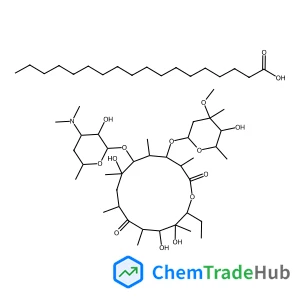
CAS Number
Related Products
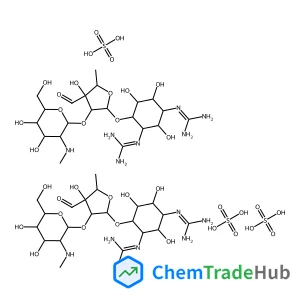
Streptomycin sulfate
CAS Number: 3810-74-0
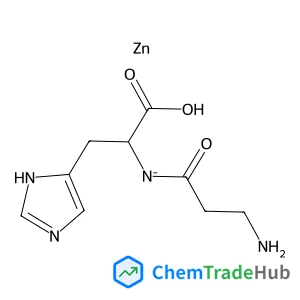
Polaprezinc
CAS Number: 107667-60-7
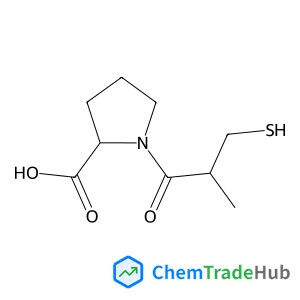
Captopril
CAS Number: 62571-86-2
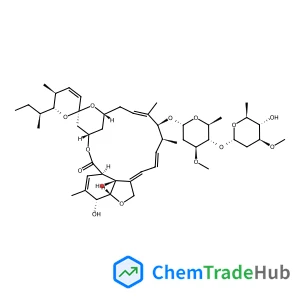
Abamectin (Mixture of Isomers)
CAS Number: 71751-41-2
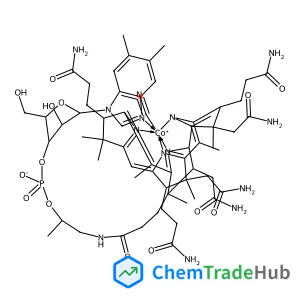
Vitamin B12
CAS Number: 68-19-9
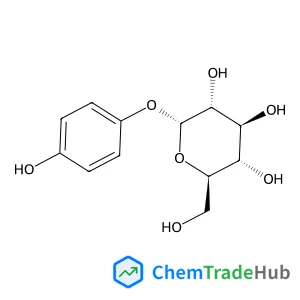
alpha-Arbutin
CAS Number: 84380-01-8
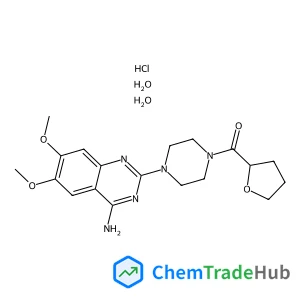
Terazosin hydrochloride dihydrate
CAS Number: 70024-40-7
Other Suppliers for Erythromycin Stearate/Palmitate


Basic Information
Molecular Formula
C37H67NO13.C18H36O2
Molecular Weight
1018.4 g/mol
Physical Properties
Melting Point
100-104°C
Chemical Identifiers
SMILES
CCCCCCCCCCCCCCCCCC(=O)O.CCC1C(C(C(C(=O)C(CC(C(C(C(C(C(=O)O1)C)OC2CC(C(C(O2)C)O)(C)OC)C)OC3C(C(CC(O3)C)N(C)C)O)(C)O)C)C)O)(C)O
InChIKey
YAVZHCFFUATPRK-YZPBMOCRSA-N
Database References
MDL Number
MFCD00084690
FAQ
Erythromycin Stearate/Palmitate (CAS: 643-22-1) is a semi-synthetic macrolide antibiotic. It has a crystalline form with a molecular weight of approximately 1000 g/mol. The compound is poorly soluble in water but soluble in organic solvents. It is relatively stable under acidic conditions but can be hydrolyzed in basic media. It is used in pharmaceuticals and as a preservative in cosmetics.
Erythromycin Stearate/Palmitate is synthesized through esterification reactions. The process involves esterifying erythromycin with stearic and palmitic acids. Commonly, this is done using a strong base like sodium hydroxide or potassium hydroxide as a catalyst. The reaction is typically carried out in an alcohol solvent, producing a mixture of esters which is then purified.
Erythromycin Stearate/Palmitate is primarily used in the pharmaceutical industry for its antimicrobial properties. It is also used in the cosmetics industry as a preservative. Additionally, it can be used in the food industry as a stabilizer or emulsifier. Its application in polymers and as a component in some sensors or semiconductors is less common.
When handling Erythromycin Stearate/Palmitate (CAS: 643-22-1), appropriate personal protective equipment (PPE) should be worn, including gloves, goggles, and a lab coat. The compound should be handled in a well-ventilated area or a fume hood to avoid inhalation. Spills should be cleaned up using appropriate absorbent materials. In case of skin contact, wash with soap and water. For more detailed information, refer to the safety data sheet (SDS).
Safety Notice
Please verify product specifications and safety data before use. Contact the supplier for detailed safety information.
Always follow proper handling procedures
Contact Information
1933138898@qq.com