



AD
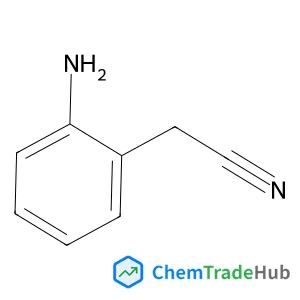
(2-Aminophenyl)acetonitrile(CAS: 2973-50-4)
CAS Number
Related Products
![(2R)-1-[(2-Methyl-2-propanyl)oxy]-1-oxo-3-(tritylsulfanyl)-2-propanaminium chloride](https://static.chemtradehub.com/structs/158/158009-03-1-72f2.webp)
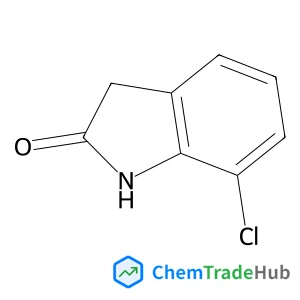
7-Chloro-1,3-dihydro-2H-indol-2-one
CAS Number: 25369-33-9
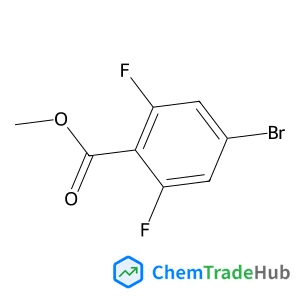
Methyl 4-bromo-2,6-difluorobenzoate
CAS Number: 773134-11-5
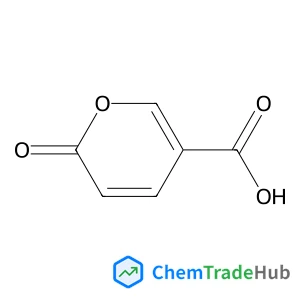
2-Oxo-2H-pyran-5-carboxylic acid
CAS Number: 500-05-0
![5-Bromo-1H-pyrrolo[2,3-b]pyridin-6-amine](https://static.chemtradehub.com/structs/119/1190322-18-9-0a9f.webp)
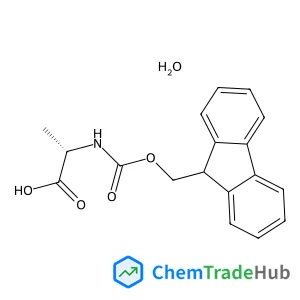
N-Fmoc-L-alanine Hydrate
CAS Number: 207291-76-7

Other Suppliers for (2-Aminophenyl)acetonitrile







Basic Information
Molecular Formula
C8H8N2
Molecular Weight
121.18 g/mol
Physical Properties
Melting Point
69-72 °C (lit.)
Boiling Point
302.2℃ at 760 mmHg
Density
1.12
Flash Point
136.5℃
Chemical Identifiers
SMILES
C1=CC=C(C(=C1)CC#N)N
InChIKey
LMDPYYUISNUGGT-UHFFFAOYSA-N
Database References
MDL Number
MFCD00091082
FAQ
(2-Aminophenyl)acetonitrile (CAS: 2973-50-4) is a crystalline compound with a molecular weight of approximately 162.17 g/mol. It has a low solubility in water (0.4 g/L at 25°C) but is soluble in organic solvents such as ethanol and acetone. The compound is moderately reactive, showing some reactivity towards nucleophiles and electrophiles. It is stable under normal storage conditions but should be protected from strong oxidizing agents and light.
(2-Aminophenyl)acetonitrile is typically synthesized via the reaction of 2-aminophenol with acetonitrile in the presence of a base such as sodium hydroxide. The reaction is carried out in an organic solvent at elevated temperature, and the product is isolated by filtration and recrystallization. The yield is typically around 70%-80%, and the selectivity is good, with minimal side products formed.
(2-Aminophenyl)acetonitrile (CAS: 2973-50-4) is primarily used in the pharmaceutical industry as a precursor for the synthesis of various drug compounds. It also finds applications in the polymer industry for the modification of polymer properties, in the sensor industry for developing gas sensors, and in the semiconductor industry for the production of organic semiconductors.
When handling (2-Aminophenyl)acetonitrile (CAS: 2973-50-4), it is important to use appropriate personal protective equipment (PPE) such as gloves, safety goggles, and a lab coat. The compound should be handled in a well-ventilated area or a fume hood to avoid inhalation. Spills should be cleaned up using appropriate absorbents and disposed of according to local regulations. Always refer to the Material Safety Data Sheet (MSDS/SDS) for detailed safety information and emergency procedures.
Safety Notice
Please verify product specifications and safety data before use. Contact the supplier for detailed safety information.
Always follow proper handling procedures

Contact Information
Contact Person
Leyan
product@leyan.com
Mobile
13525454349
Visit Website
https://www.leyan.com/Address
No. 3, Block 1999, Zhangheng Road, China (Shanghai) Free Trade Zone