



AD
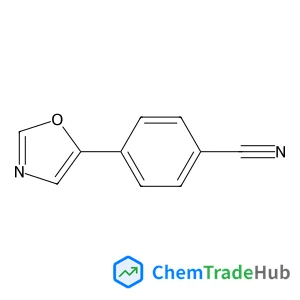
4-(1,3-Oxazol-5-yl)benzonitrile(CAS: 87150-13-8)
CAS Number
Related Products
![[3-(2-Hydroxyethyl)phenyl]boronic acid](https://static.chemtradehub.com/structs/647/647853-32-5-c363.webp)
![N-(Butylsulfonyl)-O-[4-(4-piperidinyl)butyl]-L-tyrosine hydrochloride hydrate](https://static.chemtradehub.com/structs/150/150915-40-5-1679.webp)
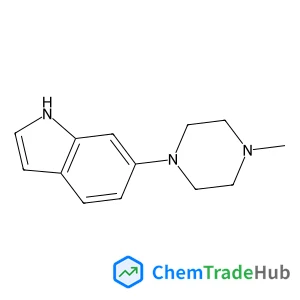
6-(4-methylpiperazin-1-yl)-1H-indole
CAS Number: 321745-04-4
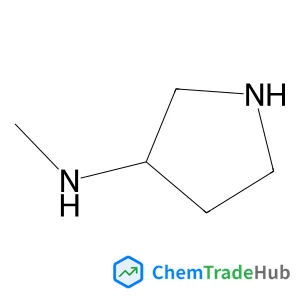
N-Methyl-3-pyrrolidinamine
CAS Number: 83030-08-4
![2-Chloro-N-[4-chloro-3-(2-pyridinyl)phenyl]-4-(methylsulfonyl)benzamide](https://static.chemtradehub.com/structs/879/879085-55-9-5abe.webp)

3-Nonyne
CAS Number: 20184-89-8
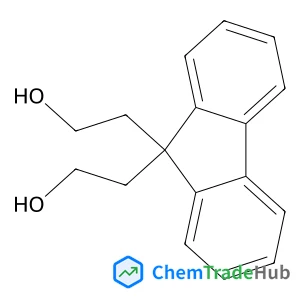
2,2'-(9H-fluorene-9,9-diyl)diethanol
CAS Number: 203070-78-4
![1,4-Dioxaspiro[4.5]dec-8-ylacetic acid](https://static.chemtradehub.com/structs/134/134136-04-2-8def.webp)
Other Suppliers for 4-(1,3-Oxazol-5-yl)benzonitrile





Basic Information
Molecular Formula
C10H6N2O
Molecular Weight
17.03 g/mol
Physical Properties
Boiling Point
344.2 ℃ at 760 mmHg
Flash Point
162℃
Chemical Identifiers
SMILES
N#CC1=CC=C(C2=CN=CO2)C=C1
InChIKey
LZMCNLOQTURTHS-UHFFFAOYSA-N
Database References
MDL Number
MFCD00084987
FAQ
4-(1,3-Oxazol-5-yl)benzonitrile (CAS: 87150-13-8) is a white crystalline solid with a molecular weight of approximately 198.16 g/mol. It is slightly soluble in water but miscible with organic solvents like ethanol and chloroform. Chemically, it is relatively stable but can react with strong bases and reducing agents. It has a melting point of 120-122°C and is used in various applications due to its physical and chemical properties.
4-(1,3-Oxazol-5-yl)benzonitrile (CAS: 87150-13-8) is typically synthesized via the condensation of 5-bromo-1,3-oxazole and benzonitrile in the presence of a base such as potassium carbonate or sodium hydroxide. The reaction is performed in an organic solvent like dimethylformamide (DMF) at elevated temperatures. The process yields a product with a yield of around 80-85%, and the reaction is monitored by thin-layer chromatography (TLC).
4-(1,3-Oxazol-5-yl)benzonitrile (CAS: 87150-13-8) is primarily used in the pharmaceutical industry for its potential in drug synthesis and as a building block for medicinal chemistry. It also finds applications in the polymer industry for the development of new materials and in the semiconductor industry for the fabrication of electronic devices. Additionally, it is used in sensor technology for detecting specific chemicals and in research for various analytical purposes.
When handling 4-(1,3-Oxazol-5-yl)benzonitrile (CAS: 87150-13-8), it is important to wear appropriate personal protective equipment (PPE), including gloves, goggles, and a lab coat. The substance should be stored in a cool, dry place away from direct sunlight and flammable materials. Reactions involving this compound should be conducted in a well-ventilated hood or fume cupboard to minimize exposure to fumes. In case of a spill, it should be immediately cleaned up using appropriate absorbent materials, and the area should be thoroughly washed with water. The Safety Data Sheet (SDS) provides detailed information on handling and storage procedures, and it is essential to consult this document before working with the compound.
Safety Notice
Please verify product specifications and safety data before use. Contact the supplier for detailed safety information.
Always follow proper handling procedures

Contact Information
Contact Person
Miss Xu
1986399151@qq.com
Mobile
15221998634
Telephone
021-59178156
Visit Website
https://www.yingxinbio.com/Address
Yugang Town Yiling Road 258 Lane C Zone