



AD
Diphenyl isophthalate(CAS: 744-45-6)
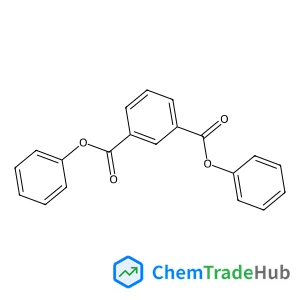
CAS Number
Related Products
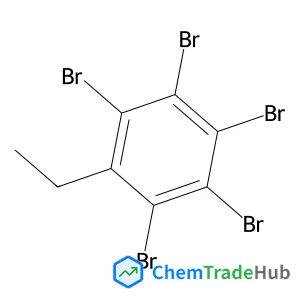
Benzene,1,2,3,4,5-pentabromo-6-ethyl-
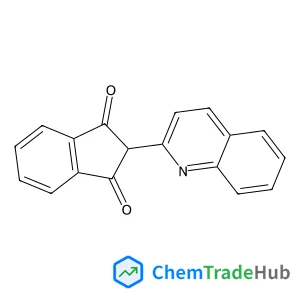
CAS Number: 85-22-3
![(2-METHYL-3-PHENYLPHENYL)METHYL (1S,3S)-3-[(Z)-2-CHLORO-3,3,3-TRIFLUOROPROP-1-ENYL]-2,2-DIMETHYLCYCLOPROPANE-1-CARBOXYLATE](https://static.chemtradehub.com/structs/826/82657-04-3-1a86.webp)
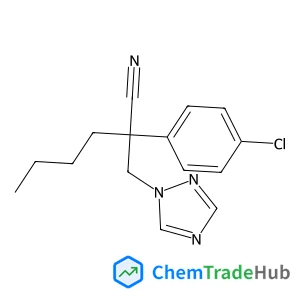
![(R)-8-chloro-1-methyl-2,3,4,5-tetrahydro-1H-benzo[d]azepine hydrochloride](https://static.chemtradehub.com/structs/846/846589-98-8-cb1a.webp)
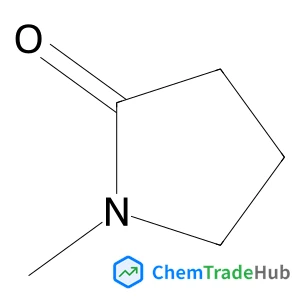
1-Methyl-2-pyrrolidinone
CAS Number: 872-50-4
![3-(~2~H_3_)Methyl-3H-imidazo[4,5-f]quinolin-2-amine](https://static.chemtradehub.com/structs/820/82050-10-0-0d66.webp)
![N,N'-Bis(2,3-dihydroxypropyl)-2,4,6-triiodo-5-[(methoxyacetyl)amino]-N-methylisophthalamide](https://static.chemtradehub.com/structs/733/73334-07-3-2422.webp)
Other Suppliers for Diphenyl isophthalate





Basic Information
Molecular Formula
C20H14O4
Molecular Weight
318.33 g/mol
Physical Properties
Melting Point
136-138 °C (lit.)
Boiling Point
275 ºC (10 mmHg)
Density
1,2 g/cm3
Flash Point
223 ºC
Chemical Identifiers
SMILES
C1=CC=C(C=C1)OC(=O)C2=CC(=CC=C2)C(=O)OC3=CC=CC=C3
InChIKey
FHESUNXRPBHDQM-UHFFFAOYSA-N
Database References
MDL Number
MFCD00046051
FAQ
Diphenyl isophthalate (CAS: 744-45-6) is a crystalline solid with a molecular weight of approximately 286.17 g/mol. It has a melting point of around 140°C and is slightly soluble in water but soluble in organic solvents like acetone and acetonitrile. The compound is relatively stable but can undergo hydrolysis in the presence of water and heat. It is not readily reactive under normal conditions but can react with strong bases to form phenylphenyl isophthalate salts.
Diphenyl isophthalate is typically synthesized by the esterification of isophthalic acid with diphenol. Commonly, this reaction is carried out in the presence of a catalyst such as sulfuric acid. The process involves mixing isophthalic acid and diphenol in the presence of the catalyst, followed by a series of refluxing steps to ensure complete esterification. The yield is generally high, and the purity of the product can be improved through recrystallization.
Diphenyl isophthalate (CAS: 744-45-6) is primarily used in the polymer industry as a component in the production of polyesters and as an intermediate in the synthesis of other chemical compounds. It also finds applications in the pharmaceutical industry, where it is used as a precursor in the synthesis of certain drugs. Additionally, it is used in the manufacturing of sensors and semiconductors due to its specific chemical and physical properties.
When handling Diphenyl isophthalate (CAS: 744-45-6), it is essential to wear appropriate personal protective equipment (PPE), including gloves and goggles. Work should be conducted in a well-ventilated area or a fume hood to minimize exposure. Spills should be handled with appropriate absorbent materials, and the area should be cleaned thoroughly. Always refer to the safety data sheet (SDS) for detailed information on handling and emergency procedures.
Safety Notice
Please verify product specifications and safety data before use. Contact the supplier for detailed safety information.
Always follow proper handling procedures
Contact Information
szxys126@126.com