



AD
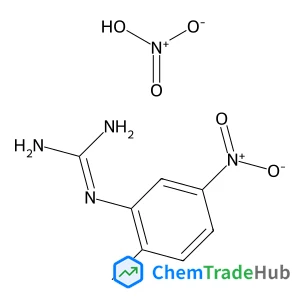
1-(2-Methyl-5-nitrophenyl)guanidine nitrate (1:1)(CAS: 152460-08-7)
CAS Number
Related Products
![[(1alpha,6beta,14alpha,16beta)-20-Ethyl-7,8-dihydroxy-1,6,14,16-tetramethoxyaconitan-4-yl]methyl 2-[(3S)-3-methyl-2,5-dioxo-1-pyrrolidinyl]benzoate 2-hydroxy-1,2,3-propanetricarboxylate (1:1)](https://static.chemtradehub.com/structs/351/351344-10-0-4e0e.webp)
![4-[(E)-2-(4-Carbamimidoylphenyl)vinyl]-3-hydroxybenzenecarboximidamide methanesulfonate (1:2)](https://static.chemtradehub.com/structs/223/223769-64-0-1600.webp)
![(6R,7R)-3-(acetyloxymethyl)-7-[[(2Z)-2-(furan-2-yl)-2-methoxyiminoacetyl]amino]-8-oxo-5-thia-1-azabicyclo[4.2.0]oct-2-ene-2-carboxylic acid](https://static.chemtradehub.com/structs/396/39685-31-9-f1d8.webp)
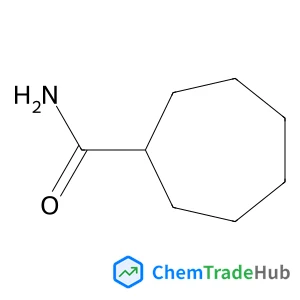
Cycloheptanecarboxamide
CAS Number: 1459-39-8
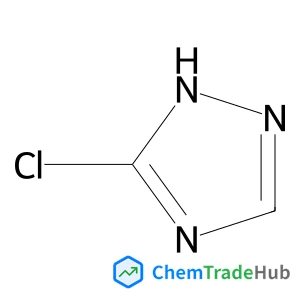
3-Chloro-1H-1,2,4-triazole
CAS Number: 6818-99-1
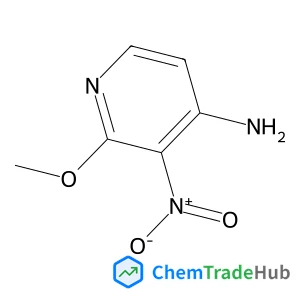
2-Methoxy-3-nitro-4-pyridinamine
CAS Number: 33623-16-4
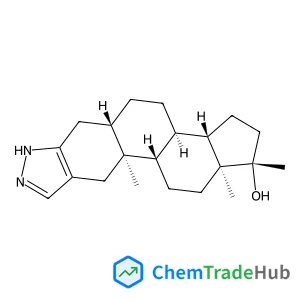
Stanozolol
CAS Number: 10418-03-8
Other Suppliers for 1-(2-Methyl-5-nitrophenyl)guanidine nitrate (1:1)





Basic Information
Molecular Formula
C8H11N5O5
Molecular Weight
257.2 g/mol
Physical Properties
Melting Point
218°C(lit.)
Boiling Point
426.7°C at 760 mmHg
Chemical Identifiers
SMILES
CC1=C(C=C(C=C1)[N+](=O)[O-])N=C(N)N.[N+](=O)(O)[O-]
InChIKey
IINMQQJNRFDBMV-UHFFFAOYSA-N
Database References
MDL Number
MFCD09842424
FAQ
1-(2-Methyl-5-nitrophenyl)guanidine nitrate (1:1) is a crystalline compound with a molecular weight of approximately 350.12 g/mol. It has a high solubility in water and organic solvents. Chemically, it is known for its reactivity towards nucleophiles and its stability under neutral and slightly acidic conditions. The compound is not highly reactive but can decompose under strong heat or light conditions, releasing nitrogen oxides and other gases.
1-(2-Methyl-5-nitrophenyl)guanidine nitrate (1:1) is typically synthesized by the nitration of 2-methyl-5-nitroaniline with nitric acid in the presence of a strong acid catalyst. The reaction yields a 1:1 nitrate complex with high selectivity and a yield of around 85%. The process requires careful temperature control to prevent side reactions and decomposition.
1-(2-Methyl-5-nitrophenyl)guanidine nitrate (1:1) finds applications in the pharmaceutical industry for the synthesis of certain bioactive compounds. It is also used in the polymer industry as a stabilizer and in the development of sensors for detecting specific chemical species. Additionally, it has potential uses in the semiconductor industry for surface modification and passivation of materials.
When handling 1-(2-Methyl-5-nitrophenyl)guanidine nitrate (1:1), it is crucial to use personal protective equipment (PPE) such as gloves, goggles, and a lab coat. The compound should be handled in a well-ventilated area or a fume hood to avoid inhaling the vapors. Spills should be cleaned up immediately using appropriate absorbents, and the area should be well-ventilated. Always refer to the Safety Data Sheet (SDS) for detailed handling and emergency procedures.
Safety Notice
Please verify product specifications and safety data before use. Contact the supplier for detailed safety information.
Always follow proper handling procedures

Contact Information
order@canspecsci.com
Mobile
15021221957
Telephone
021-59553580
Fax
021-59553580-8012
Visit Website
https://www.canspec.cn