



AD
bis(2-(aminooxy)acetic acid) hydrochloride(CAS: 2921-14-4)
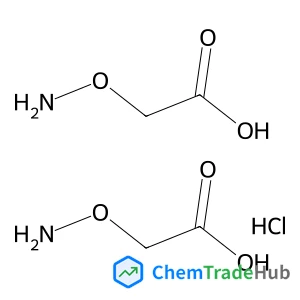
CAS Number
Related Products
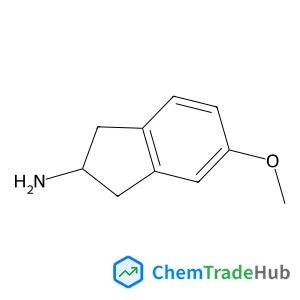
5-Methoxy-2-indanamine
CAS Number: 73305-09-6
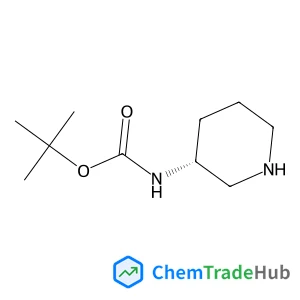
Alogliptin Impurity 15
CAS Number: 309956-78-3
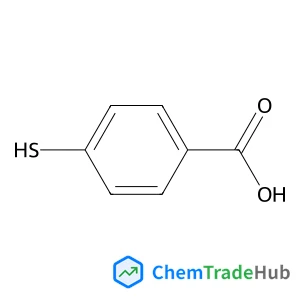
4-Sulfanylbenzoic acid
CAS Number: 1074-36-8
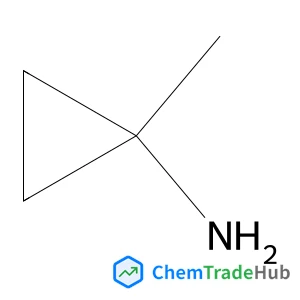
1-Methylcyclopropanamine
CAS Number: 22936-83-0
![Acetamide, N-[[(5S)-3-[3-fluoro-4-(4-morpholinyl)phenyl]-2-oxo-5-oxazolidinyl]methyl]-](https://static.chemtradehub.com/structs/165/165800-03-3-1ec8.webp)
![1-oxa-8-azaspiro[4.5]decane](https://static.chemtradehub.com/structs/176/176-92-1-9a3a.webp)
1-oxa-8-azaspiro[4.5]decane
CAS Number: 176-92-1
![[1,3-bis(2,4,6-trimethylphenyl)imidazolidin-2-ylidene]-dichloro-[(2-isopropoxyphenyl)methylene]ruthenium](https://static.chemtradehub.com/structs/301/301224-40-8-975f.webp)
Other Suppliers for bis(2-(aminooxy)acetic acid) hydrochloride







Basic Information
Molecular Formula
C4H11ClN2O6
Molecular Weight
218.59 g/mol
Physical Properties
Melting Point
156 °C (dec.) (lit.)
Chemical Identifiers
SMILES
C(C(=O)O)ON.C(C(=O)O)ON.Cl
InChIKey
KBXIJIPYZKPDRU-UHFFFAOYSA-N
Database References
MDL Number
MFCD00012955
FAQ
Bis(2-(aminooxy)acetic acid) hydrochloride (CAS: 2921-14-4) falls under the purview of various regulatory guidelines such as the Globally Harmonized System of Classification and Labelling of Chemicals (GHS) for hazardous substances. In the European Union, it is regulated by REACH, requiring companies to register substances above a certain tonnage threshold. Additionally, it is subject to FDA (Food and Drug Administration) and EPA (Environmental Protection Agency) regulations in the United States, governing its use in food and environmental protection respectively.
There are several alternatives to bis(2-(aminooxy)acetic acid) hydrochloride in synthesis, including other aminooxy compounds like bis(2-hydroxyethyl)amine and 1,2-diaminoethane. Other substitutes might involve the use of different acid chlorides or amine derivatives depending on the specific synthesis requirements. These alternatives can offer similar functionalities but with potentially different reactivity or solubility properties.
The market for bis(2-(aminooxy)acetic acid) hydrochloride (CAS: 2921-14-4) is driven by its applications in pharmaceuticals, as a precursor for the synthesis of various biologically active compounds. Research trends are focused on its use in drug development and as a stabilizer in biological assays. Recent studies highlight its potential in addressing challenges related to drug delivery and stability, indicating a growing demand in the pharmaceutical and biotechnology sectors.
Waste containing bis(2-(aminooxy)acetic acid) hydrochloride (CAS: 2921-14-4) should be collected in appropriate containers and disposed of according to local and international regulations. Proper incineration or professional waste disposal services are recommended to ensure safe handling. Environmental precautions include minimizing exposure to water sources and ensuring adequate ventilation during handling. Always consult the material safety data sheet (MSDS) for specific disposal instructions and safety measures.
Safety Notice
Please verify product specifications and safety data before use. Contact the supplier for detailed safety information.
Always follow proper handling procedures
Contact Information
info@systeambc.com