













An overview of recent developments in the determination of aluminium in serum by furnace atomic absorption spectrometry
Literature Information
Publication Date
DOI
10.1039/JA9860100281
Impact Factor
4.023
Authors
View Original
Abstract
There have been a large number of papers published on the determination of Al in serum and this paper discusses critically the frequent conflicting recommendations. A procedure is recommended for Al at the higher levels, between 20 and 300 µg l–1, required for dialysis patients, for which the graphite furnace provides very reliable results. Measurement of normal healthy serum levels, probably below 10 µg l–1, requires great care to prevent contamination. As the normal levels approach the detection limit of furnace AAS, modern technology is greatly advantageous.
Related Literature
Structural and mechanical parameters of lipid bilayer membranes using a lattice refined self-consistent field theory
2021-02-08
Paper
DOI: 10.1039/D0CP05597B
Is the H4 histone tail intrinsically disordered or intrinsically multifunctional?
2021-02-17
Paper
DOI: 10.1039/D0CP05405D
Blue-AsP monolayer as a promising anode material for lithium- and sodium-ion batteries: a DFT study
Jing Zhang, Yong-Fan Zhang, Yi Li, Yu-Rong Ren, Shuping Huang
2021-02-03
Paper
DOI: 10.1039/D0CP05879C
Influence of the MACl additive on grain boundaries, trap-state properties, and charge dynamics in perovskite solar cells
Yanru Guo, Shuai Yuan, Dongping Zhu, Man Yu, Hao-Yi Wang, Jun Lin, Yi Wang, Yujun Qin, Jian-Ping Zhang, Xi-Cheng Ai
2021-02-20
Paper
DOI: 10.1039/D0CP06575G
Pentagonal B2C monolayer with extremely high theoretical capacity for Li-/Na-ion batteries
Jianbo Gao
2021-02-23
Paper
DOI: 10.1039/D0CP06363K
Experimental and theoretical study on the impact of a nitrate group on the chemistry of alkoxy radicals‡
A. Novelli, C. Cho, H. Fuchs, A. Hofzumahaus, F. Rohrer, R. Tillmann, A. Kiendler-Scharr, A. Wahner, L. Vereecken
2021-03-02
Paper
DOI: 10.1039/D0CP05555G
Predicting OH stretching fundamental wavenumbers of alcohols for conformational assignment: different correction patterns for density functional and wave-function-based methods
Robert Medel, Martin A. Suhm
2021-02-25
Paper
DOI: 10.1039/D1CP00342A
Insights into the hydrogen bond network topology of phosphoric acid and water systems
Austėja Mikalčiūtė
2021-02-09
Paper
DOI: 10.1039/D0CP05126H
Comment on “Impact of water on the BrO + HO2 gas-phase reaction: mechanism, kinetics and products” by N. T. Tsona, S. Tang and L. Du, Phys. Chem. Chem. Phys., 2019, 21, 20296
Ronald Chow, Daniel K. W. Mok, John M. Dyke
2021-03-10
Comment
DOI: 10.1039/D0CP00222D
You might also like
Compound Q&A
What is the market or research trend for N-(4-Methoxybenzyl)-2-pyridinamine (CAS: 52818-63-0)?
N-(4-Methoxybenzyl)-2-pyridinamine (CAS: 52818-63-0) is increasingly being used ...
52818-63-0N-(4-Methoxybenzyl)-...
Compound Q&A
What precautions should be taken when handling Ethyl 4-(2-chlorophenyl)-1,3-thiazole-2-carboxylate (CAS: 1050507-06-6)?
When handling Ethyl 4-(2-chlorophenyl)-1,3-thiazole-2-carboxylate, appropriate p...
1050507-06-6Ethyl 4-(2-chlorophe...
Compound Q&A
What regulatory guidelines apply to diethyldiselane (CAS: 628-39-7)?
Diethyldiselane (CAS: 628-39-7) is classified under the Globally Harmonized Syst...
628-39-7Diethyldiselane
Compound Q&A
What is the market or research trend for oxocopper (CAS: 12053-18-8)?
The market for oxocopper (CAS: 12053-18-8) is primarily driven by its use in cat...
12053-18-8oxocopper; oxo-(oxoc...
Compound Q&A
What is the market or research trend for 5-{[(2-Methyl-2-propanyl)oxy]carbonyl}-5-azaspiro[2.4]heptane-7-carboxylic acid?
The market for 5-{[(2-Methyl-2-propanyl)oxy]carbonyl}-5-azaspiro[2.4]heptane-7-c...
1268519-54-55-{[(2-Methyl-2-prop...
Compound Q&A
What is 2-(1-Pyrrolidinyl)-4-pyridinamine (CAS: 35981-63-6)?
2-(1-Pyrrolidinyl)-4-pyridinamine is a chemical compound with the CAS number 359...
35981-63-62-(1-Pyrrolidinyl)-4...
Compound Q&A
What are the physical and chemical properties of 2-(3-Pyridinyl)-1-azabicyclo[2.2.2]octane (CAS: 91556-75-1)?
2-(3-Pyridinyl)-1-azabicyclo[2.2.2]octane (CAS: 91556-75-1) is a crystalline sol...
91556-75-12-(3-Pyridinyl)-1-az...
Compound Q&A
How is (S)-Alpha-allyl-proline hydrochloride (CAS: 129704-91-2) typically synthesized?
(S)-Alpha-allyl-proline hydrochloride is usually synthesized via a Wittig reacti...
129704-91-2(S)-Alpha-allyl-prol...
Compound Q&A
What is 3-Methyl-1,2-oxazole-5-carboxylic acid (CAS: 4857-42-5)?
3-Methyl-1,2-oxazole-5-carboxylic acid (CAS: 4857-42-5) is an organic compound w...
4857-42-53-Methyl-1,2-oxazole...
Compound Q&A
How is Lys-SMCC-DM1 (CAS: 1281816-04-3) typically synthesized?
Lys-SMCC-DM1 is synthesized via a multi-step process involving the coupling of S...
1281816-04-3Lys-SMCC-DM1
Source Journal
Journal of Analytical Atomic Spectrometry

CiteScore:
6.2
Self-citation Rate:
25.8%
Articles per Year:
254
The Journal of Analytical Atomic Spectrometry (JAAS) is the central journal for publishing innovative research on fundamentals, instrumentation, and methods in the determination, speciation and isotopic analysis of (trace) elements within all fields of application. This includes, but is not restricted to, the most recent progress, developments and achievements in all forms of atomic and elemental detection, isotope ratio determination, molecular analysis, plasma-based analysis and X-ray techniques. The journal welcomes full papers, communications, technical notes, critical and tutorial review articles, editorials, and comments, in addition to the Atomic Spectrometry Updates (ASU) literature reviews that are prepared by an expert panel. Submissions are welcome in the following areas, but note this list reflects the current scope and authors are strongly encouraged to contact the Editorial team if they believe that their work offers potentially new and emerging research relevant to the journal remit: Fundamental studies in the following. New and existing sources for atomic emission, absorption, fluorescence and mass spectrometry and those that provide both atomic and molecular information Sample introduction techniques for solids, liquids, gases Improvements in sensitivity, selectivity, precision, accuracy and/or robustness Isotope ratio measurements, including techniques for improving precision and mass bias correction Single channel and multichannel simultaneous detection systems Chemometrics, statistics, calibration techniques and internal standardisation Theoretical and numerical modelling of fundamental processes related to all of the above methodologies Novel or improved methodologies in areas of application including, but not limited to the following. Biosciences, including elemental, speciation and isotopic analysis in biological systems, immunoassays based on metal-labeled antibodies, bio-imaging, and nanoparticle toxicology Geochemistry Environmental science Materials science, including engineered nanoparticles and quantum dots Metrology, including reference materials Forensic analysis Food and agricultural sciences Energy Archaeometry Molecular analysis. Molecular sources for elemental and isotopic analysis Atomic sources for molecular analysis Atomic and molecular techniques simultaneously used for complementary chemical information All contributions are judged on originality and quality of scientific content, and appropriateness of length to content of new science.
Recommended Compounds
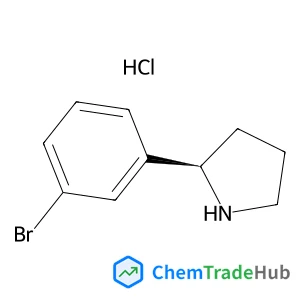
(2R)-2-(3-Bromophenyl)pyrrolidine hydrochloride (1:1)
CAS Number:
1391550-13-2
Molecular Formula:
C10H13BrClN
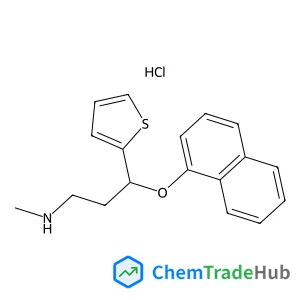
N-Methyl-3-(1-naphthyloxy)-3-(2-thienyl)-1-propanamine hydrochloride (1:1)
CAS Number:
1188266-11-6
Molecular Formula:
C18H20ClNOS
Recommended Suppliers




Disclaimer
This page provides academic journal information for reference and research purposes only. We are not affiliated with any journal publishers and do not handle publication submissions. For publication-related inquiries, please contact the respective journal publishers directly.
If you notice any inaccuracies in the information displayed, please contact us at support@chemtradehub.com. We will promptly review and address your concerns.