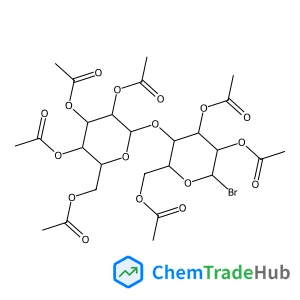
2,3,6-Tri-O-acetyl-4-O-(2,3,4,6-tetra-O-acetyl-beta-D-galactopyranosyl)-alpha-D-glucopyranosyl bromide
CAS Number:
4753-07-5
Molecular Formula:
C26H35BrO17
Chaoyang Zhou, Linqi Shi
Bacterial sepsis is a life-threatening condition caused by bacteria entering the bloodstream and triggering an immune response, underscoring the importance of early recognition and prompt treatment. Nanomedicine holds promise for addressing sepsis through improved diagnostics, nanoparticle biosensors for detection and imaging, enhanced antibiotic delivery, combating resistance, and immune modulation. However, challenges remain in ensuring safety, regulatory compliance, scalability, and cost-effectiveness before clinical implementation. Further research is needed to optimize design, efficacy, safety, and regulatory strategies for effective utilization of nanomedicines in bacterial sepsis diagnosis and treatment. This review highlights the significant potential of nanomedicines, including improved drug delivery, enhanced diagnostics, and immunomodulation for bacterial sepsis. It also emphasizes the need for further research to optimize design, efficacy, safety profiles, and address regulatory challenges to facilitate clinical translation.
Jürgen Bachl, Diego Sampedro, Judith Mayr
DOI: 10.1039/C7CP03529B
Takeyoshi Goto, Krzysztof B. Beć, Yukihiro Ozaki
DOI: 10.1039/C7CP01766A
M. M. Maitani, K. Tanaka, Q. Shen, T. Toyoda, Y. Wada
DOI: 10.1039/C7CP03593D
Jiying Liang, Xue Yu, Tiangang Yang, Menglu Li, Li Shen, Yue Jin, Hongyun Liu
DOI: 10.1039/C7CP04030J
Ting Hu, Jian Zhou, Jinming Dong
DOI: 10.1039/C7CP03558F
Kikuko Hayamizu
DOI: 10.1039/C7CP03647G
Nejc Hodnik, Francisco Ruiz-Zepeda, Martin Šala, Vid Simon Šelih, Tim Patrick Fellinger
DOI: 10.1039/C7CP03192K
I. M. Jauris, A. J. G. Zarbin, C. S. Umpierres, C. Saucier, E. C. Lima, S. B. Fagan, I. Zanella, F. M. Machado
DOI: 10.1039/C7CP04272H
C. Paduani, Andrew M. Rappe
DOI: 10.1039/C7CP02091K
6-(3-Fluorophenyl)picolinic acid is generally considered safe for laboratory use...
(3R)-3-Pyrrolidinol is used in the pharmaceutical industry as a precursor for dr...
When handling (4R,5R)-4,5-Diethoxycarbonyl-2,2-dimethyldioxolane (CAS: 59779-75-...
1-(6-Chloroimidazo[1,2-b]pyridazin-3-yl)ethanone is often synthesized via a mult...
The market for N-Ethyl-3,4-dimethylbenzylamine (CAS: 39180-83-1) remains steady,...
Tert-butyl 3-(pyrrolidin-1-yl)azetidine-1-carboxylate is a chemical compound wit...
1-Bromo-3-chloro-2,4-dimethoxybenzene (CAS: 1228956-93-1) falls under the classi...
The safety of 8-Bromo-2-methyl-3,4-dihydroisoquinolin-1(2H)-one (CAS: 1368622-07...
Benzyl [(3S)-2,6-dioxo-3-piperidinyl]carbamate is generally safe when handled wi...
1-{[4-(4,4,5,5-Tetramethyl-1,3,2-dioxaborolan-2-yl)phenyl]sulfonyl}pyrrolidine s...
Journal of Materials Chemistry A, B & C cover high quality studies across all fields of materials chemistry. The journals focus on those theoretical or experimental studies that report new understanding, applications, properties and synthesis of materials. The journals have a strong history of publishing quality reports of interest to interdisciplinary communities and providing an efficient and rigorous service through peer review and publication. The journals are led by an international team of Editors-in-Chief and Associate Editors who are all active researchers in their fields. Journal of Materials Chemistry A, B & C are separated by the intended application of the material studied. Broadly, applications in energy and sustainability are of interest to Journal of Materials Chemistry A, applications in biology and medicine are of interest to Journal of Materials Chemistry B, and applications in optical, magnetic and electronic devices are of interest to Journal of Materials Chemistry C. More than one Journal of Materials Chemistry journal may be suitable for certain fields and researchers are encouraged to submit their paper to the journal that they feel best fits for their particular article. Example topic areas within the scope of Journal of Materials Chemistry B are listed below. This list is neither exhaustive nor exclusive. Antifouling coatings Biocompatible materials Bioelectronics Bioimaging Biomimetics Biomineralisation Bionics Biosensors Diagnostics Drug delivery Gene delivery Immunobiology Nanomedicine Regenerative medicine & Tissue engineering Scaffolds Soft robotics Stem cells Therapeutic devices image block All articles published in Journal of Materials Chemistry B from 2019 onwards will be indexed in MEDLINE®. Articles that primarily focus on providing insight into the underlying science and performance of biomaterials within a biological environment are more suited to our companion journal, Biomaterials Science.
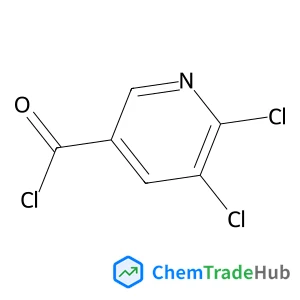
![(3R,4aR,7aS,9aR,10S,11R,13aR,13bS,15aS,15bR)-3,11-Dihydroxy-10-(hydroxymethyl)-4,4,7a,10,13a,15b-hexamethyl-1,2,3,4,4a,7,7a,8,9,9a,10,11,12,13,13a,13b,14,15,15a,15b-icosahydro-5H-naphtho[2',1':4,5]cyc
lohepta[1,2-a]naphthalen-5-one structure](https://static.chemtradehub.com/structs/538/53800-21-8-9f18.webp "(3R,4aR,7aS,9aR,10S,11R,13aR,13bS,15aS,15bR)-3,11-Dihydroxy-10-(hydroxymethyl)-4,4,7a,10,13a,15b-hexamethyl-1,2,3,4,4a,7,7a,8,9,9a,10,11,12,13,13a,13b,14,15,15a,15b-icosahydro-5H-naphtho[2',1':4,5]cyc
lohepta[1,2-a]naphthalen-5-one structure")